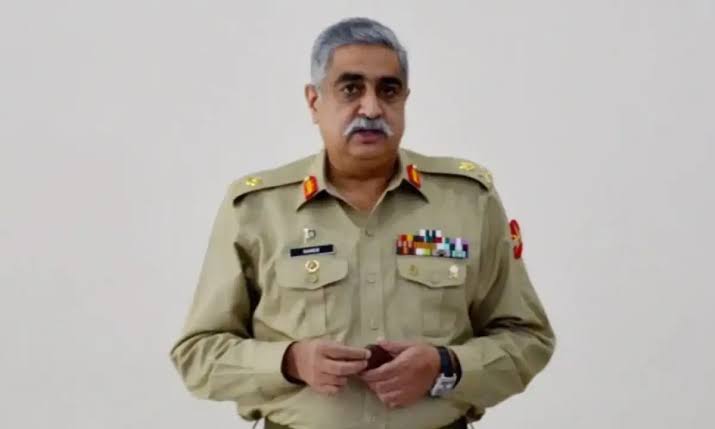
ISLAMABAD: A Pakistani security official, described as a former general with deep ties to the country’s intelligence apparatus, has emerged as an influential figure in shaping the White House’s position on Iran, according to a recent report by Intelligence Online.
The publication, a specialized outlet focused on global strategic intelligence, highlighted this development in an article dated February 20, 2026, titled “The Pakistani general helping shape Washington’s stance on Iran.”
The report identifies the official as Islamabad’s ambassador to Qatar, Muhammad Aamer, who serves as Pakistan’s envoy in Doha.
Muhammad Aamer, a career diplomat with a background in security matters, appears to function as a discreet channel for insights on Iran.
The article notes that this former general has been closely monitoring US-Iran talks, including the most recent indirect round held in Geneva earlier this week.
These negotiations centered on Iran’s nuclear program, particularly uranium enrichment thresholds, verification mechanisms, and potential sanctions relief.
Iran has maintained its position that domestic enrichment is a non-negotiable right for civilian purposes, rejecting demands for zero enrichment.
US negotiators have pushed for strict limits to prevent any breakout capability toward weaponization.
Pakistan’s role draws from its geographic proximity to Iran, shared border challenges, and its status as a nuclear-armed Muslim-majority state.
The ambassador’s involvement aligns with broader back-channel efforts, where Qatar often hosts sensitive regional dialogues due to its neutral mediation profile.
Intelligence Online references earlier coverage from November 21, 2025, on Field Marshal Asim Munir, Pakistan’s Chief of Army Staff, who became an “unexpected White House adviser on Iran.”
In that piece, Munir’s rapport with the Trump administration—built during South Asian de-escalation efforts—positioned him to offer perspectives on Tehran.
The publication described Munir’s knowledge of Iran’s dynamics as valuable, stemming from Pakistan’s historical engagements and intelligence networks.
However, the February 2026 update shifts focus to the ambassador in Qatar, suggesting layered channels within Pakistan’s diplomatic and security apparatus.
This ambassador has ties to intelligence circles, enabling him to provide informed assessments parallel to formal tracks.
The report underscores how such influence operates through discreet diplomacy, avoiding overt public involvement.
Pakistan has historically facilitated quiet contacts between Washington and Tehran, leveraging its position in the Muslim world.
Recent Geneva discussions showed limited progress on guiding principles but stalled on core disputes like ballistic missiles and proxy support.
Iran views missile capabilities as defensive and non-negotiable in nuclear talks.
US officials continue to explore trust-building steps amid regional volatility.
The ambassador’s monitoring role could inform White House calibrations between diplomatic pressure and potential escalation.
Analysts observe that Pakistan’s input helps contextualize Iranian intentions, given shared concerns over proliferation and Gulf stability.
Islamabad’s interest lies in preventing wider conflict that could destabilize its western frontier.
The report cites Pakistan’s quiet facilitation in past Oman-mediated rounds as precedent.
Muhammad Aamer’s posting in Qatar positions him ideally for such discreet exchanges, as Doha maintains open lines with Tehran.
This dynamic illustrates the intersection of military-intelligence legacies and diplomatic postings in Pakistan’s foreign policy.
Observers note potential questions about coordination between civilian diplomacy and security establishment inputs.
The White House’s receptivity reflects a pragmatic approach to leveraging regional expertise on Iran.
As talks proceed amid heightened tensions, Pakistan’s advisory role may prove instrumental in bridging gaps.
The outcome could influence non-proliferation trajectories across volatile regions.
Intelligence Online’s coverage, based on insider sources, emphasizes the behind-the-scenes nature of this influence.
Such reports highlight evolving US-Pakistan ties under the current administration, extending beyond traditional security cooperation.
The ambassador’s emerging profile adds nuance to Pakistan’s multifaceted engagement on the Iran file.