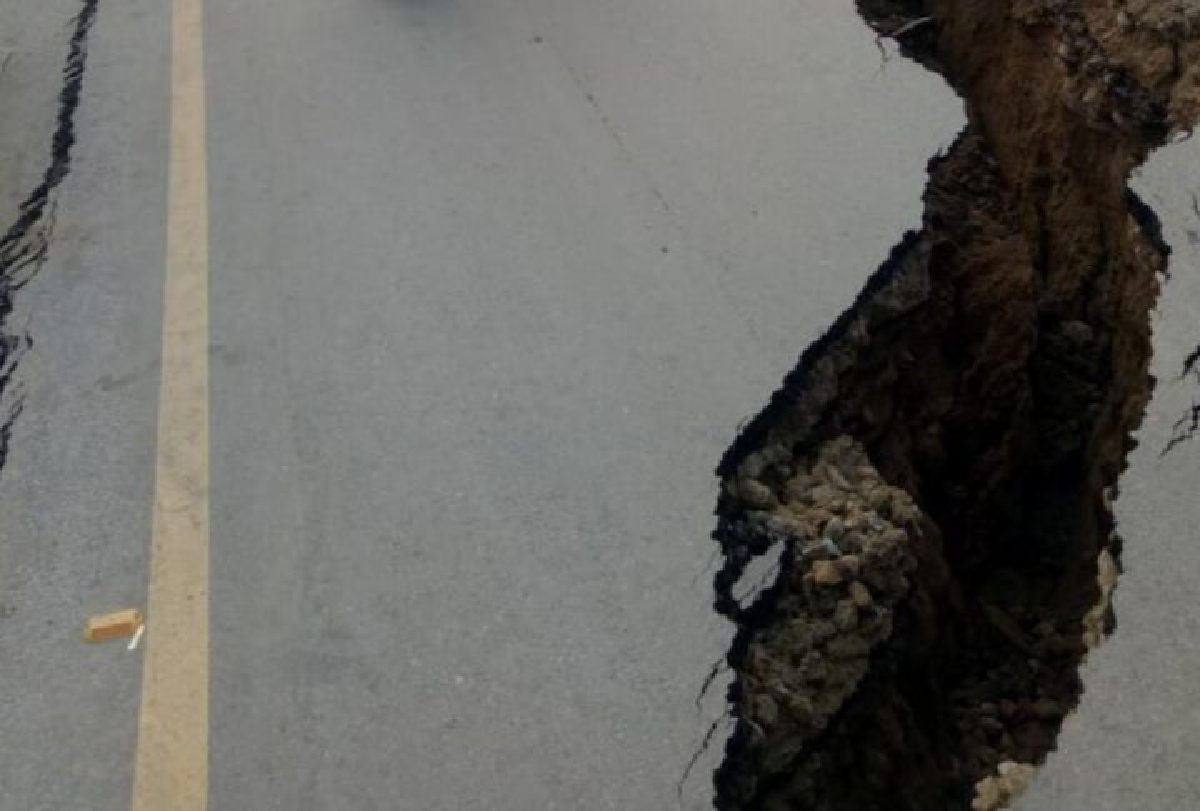
ISLAMABAD: A moderate 5.6-magnitude earthquake originating in Afghanistan’s Hindu Kush region shook parts of Khyber Pakhtunkhwa and Punjab on Friday evening, sending tremors through major cities including Peshawar and Islamabad.
The quake struck at approximately 6:10 pm local time, coinciding with iftar during Ramadan, which heightened panic among residents observing the fast. People rushed out of homes, shops, mosques, and other buildings as the ground swayed noticeably.
According to the Pakistan Meteorological Department (PMD), the epicentre was located in the Hindu Kush mountains of Afghanistan at coordinates around 35.55°N and 69.70°E. The focal depth stood at 73 kilometres, classifying it as an intermediate-depth event.
Such depths often result in wider but less intense surface shaking compared to shallow quakes. The moderate magnitude and greater depth likely prevented significant structural damage or casualties in Pakistan.
Initial assessments from authorities indicated no immediate reports of loss of life, injuries, or major property damage across affected areas. Rescue and assessment teams remained on alert for any delayed reports from remote districts.
In Khyber Pakhtunkhwa, strong tremors were widely felt in Peshawar, the provincial capital. Districts including Upper Dir, Lower Dir, Malakand, Swat, Shangla, Bajaur, Mohmand, Khyber, Charsadda, Nowshera, Mardan, Swabi, Abbottabad, Takht Bhai, Landi Kotal, Hangu, Kohat, and Kurram experienced the shaking.
Residents in many of these areas described the jolt as prolonged, lasting up to 30-40 seconds in some locations. Panic led to people evacuating multi-storey buildings and gathering in open spaces.
The tremors extended into Punjab province, notably affecting the federal capital Islamabad and nearby Rawalpindi. Residents in these urban centres reported mild to moderate swaying, with hanging objects moving visibly.
The Hindu Kush region, situated at the convergence of the Indian and Eurasian tectonic plates, ranks among the most seismically active zones globally. This collision zone generates frequent earthquakes, many of which transmit vibrations across borders into northern Pakistan.
Pakistan lies along active fault lines, making northern areas particularly vulnerable. Historical data from the PMD and international agencies show recurring moderate quakes in the Hindu Kush impacting Pakistani territory.
In recent years, similar events have occurred regularly. For instance, magnitude 5.6 to 5.8 quakes struck the same region multiple times in 2025, including events in April, August, and October, often felt in KP and Islamabad without major damage due to depth.
Earlier in 2026, a 5.6-magnitude quake in January affected Gilgit-Baltistan, causing limited casualties there. Another moderate tremor in February impacted Balochistan but remained distant from the current event.
Experts attribute the frequency to ongoing tectonic compression. The Indian plate pushes northward into Eurasia at about 4-5 centimetres annually, building strain released through earthquakes.
Intermediate-depth quakes like Friday’s, occurring 70-300 kilometres below the surface, produce broader felt areas but lower peak ground acceleration. This explains why the shaking reached urban centres yet caused no confirmed destruction.
The PMD’s National Seismic Monitoring Centre continues to track aftershocks and potential secondary hazards. Officials urged residents to stay vigilant for aftershocks, avoid damaged structures, and follow official advisories.
In urban areas, building codes updated after the devastating 2005 Kashmir earthquake aim to enhance resilience. However, enforcement in rural and semi-urban districts remains inconsistent.
Public awareness campaigns by the NDMA emphasise “drop, cover, and hold on” during shaking and preparedness kits for families. Friday’s event served as a reminder of the need for such measures.
As assessments continue, authorities confirmed the quake posed low humanitarian risk given its characteristics. No tsunami warning applied, as the event occurred inland.
The incident underscores the shared seismic risk between Afghanistan and Pakistan. Cross-border cooperation on early warning and data sharing could improve future response.
Pakistan’s vulnerability highlights the importance of investment in seismic retrofitting, community education, and monitoring networks to mitigate impacts from inevitable future events in this tectonically dynamic region.