ISLAMABAD – Prime Minister Imran Khan Wednesday, while regretting gnawingchasm betweenthe toiling masses and the elite club, called for according the highestregard to regular tax-payers who were contributing for the country’sdevelopment.
Addressing an awards distribution ceremony among the top tax-payers aschief guest, he said the government would ensure that their taxes would notbe spent on the extravagance of the ruling elite.He said through reforms in the relevant departments, the government couldcollect about Rs 8,000 billion in taxes.
The Prime Minister noted that those persons who contributed for thecountry’s development with their taxes, required a ‘VIP’ treatment.
Terming change in the mindset to pay taxes as vital for getting out of thefinancial woes, he warned if such a mindset was not changed, the country’ssituation would become murkier in future.
He referred to the deficit faced by the gas companies and said the bankswerenot ready to extend further loans to these entities, so the price ofutility had to be increased.
He called for collective contributions to ward off difficulties for thegeneral public.
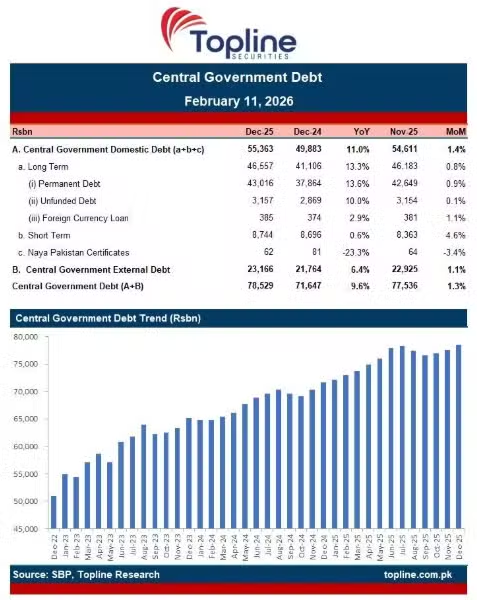
The Prime Minister expressed his dismay that out of 200 million population,only 1.7 million were the tax-payers and such amount could not bear theburden of the whole population. Moreover, only 72,000 people had declaredtheir earning ofRs 2 lac per month.
Read Top Stories
He said majority of the tax amount was collected through indirect taxes,leviedon things affecting the common man, which in his view was ‘a greatinjustice’.
Appreciating the role of tax-payers, he said in the Scandinavian countriesrichpeople contributed fifty percent in their GDP with regular payment oftaxes. They knew it very well that their tax money would be spentjudiciously and trickle down to the lower strata of society without endingon the rulers, he added.
The Prime Minister said the Riasat-e-Madina had laid down the concepts ofequitable distribution of wealth among the people.
He said the progressive tax system adopted by the European countries wasbased upon this system.