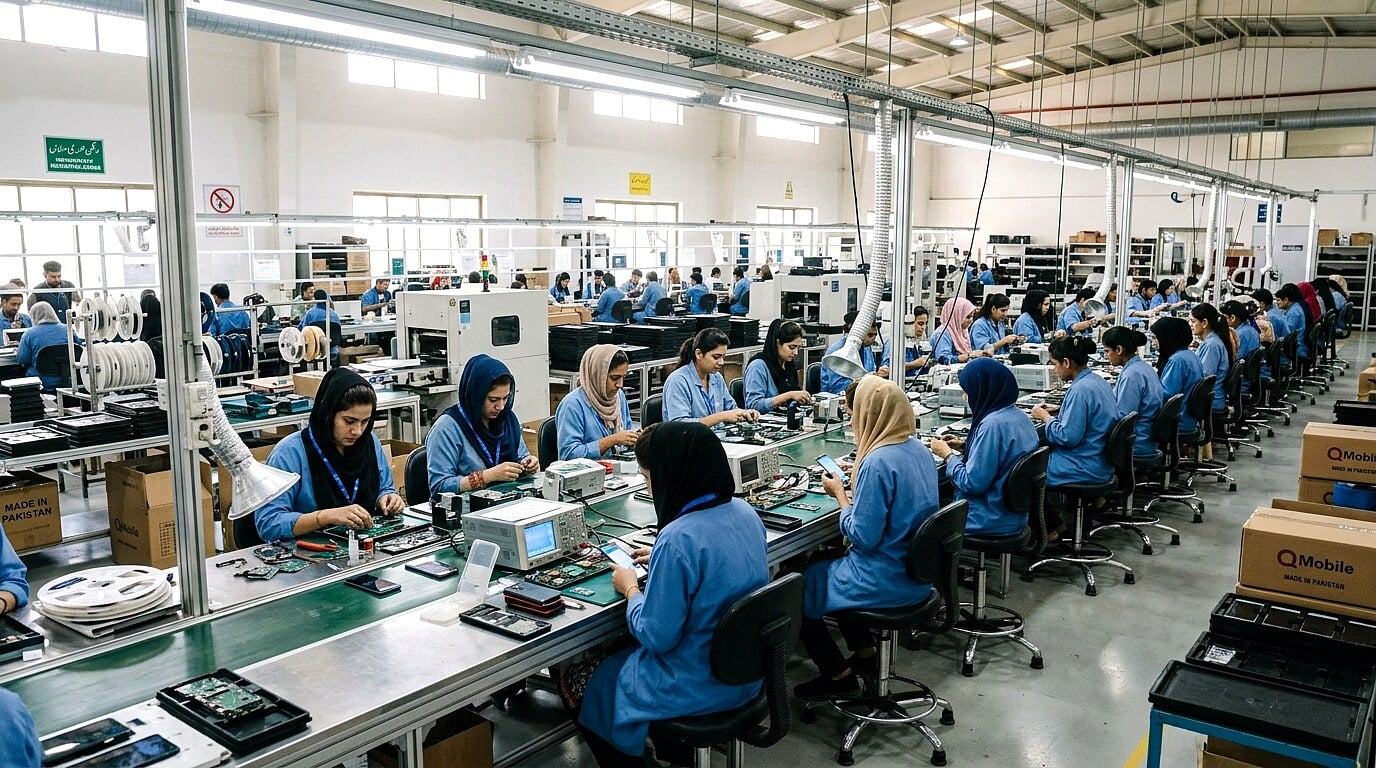




ISLAMABAD: Pakistan’s manufacturing sector is showing signs of revitalization, as evidenced by a significant uptick in the Large Scale Manufacturing (LSM) Index for September 2026. The data, released by the Pakistan Bureau of Statistics (PBS), indicates a 2.4 percent increase year-on-year, alongside a robust 3.2 percent growth month-on-month. The index reached 116.79, a notable rise from 114.00 in September of the previous year and an increase from 113.19 in August 2026.
This positive trend is largely attributed to impressive performances in several key industries. The automobile sector emerged as a frontrunner, boasting a remarkable growth rate of 29.3 percent. This surge reflects a growing consumer demand and a recovery in production capabilities within the sector. Following closely, the garments industry also made significant strides, recording a 17.7 percent increase. This growth not only highlights the resilience of the textile sector but also its critical role in Pakistan’s export economy.
The petroleum products sector contributed to the overall growth with a 7.6 percent rise, showcasing the ongoing recovery in energy production and consumption. Furthermore, cotton yarn production saw an increase of 4.7 percent, while cement production rose by 4.3 percent, indicating a steady demand in the construction sector. These figures collectively paint a picture of a manufacturing sector that is not only recovering but also expanding in key areas.
However, it is essential to note that the overall positive growth was somewhat tempered by declines in other industrial segments. The iron and steel production sector faced a significant downturn, experiencing a drop of 12.4 percent year-on-year. Similarly, fertilizer production saw an 8.4 percent decrease, raising concerns about the agricultural inputs necessary for sustaining crop yields.
Despite these challenges, the cumulative performance of the LSM Index during the first quarter of fiscal year 2027 (1QFY27) is encouraging. The index recorded a 2.1 percent growth compared to the same period last year, with the average LSM Index for 1QFY27 standing at 116.38, up from 114.02 in 1QFY26. This growth trajectory suggests that while certain sectors are struggling, the overall manufacturing landscape is on a path of recovery.
The implications of this growth are significant for Pakistan’s economy. A thriving manufacturing sector not only boosts employment but also enhances export potential, contributing to a more robust economic framework. As the country navigates through various economic challenges, the resilience shown by these key industries could play a pivotal role in stabilizing and strengthening the overall economy.
Looking ahead, questions remain about the sustainability of this growth. Will the positive momentum in the automobile and garments sectors continue? Can the iron and steel industries rebound from their current downturn? The answers to these questions will be crucial in determining the future of Pakistan’s manufacturing sector.