ISLAMABAD: India’s Ministry of External Affairs has sharply responded to fresh United States intelligence warnings on global nuclear risks by spotlighting Islamabad’s past record in a bid to amplify diplomatic pressure.
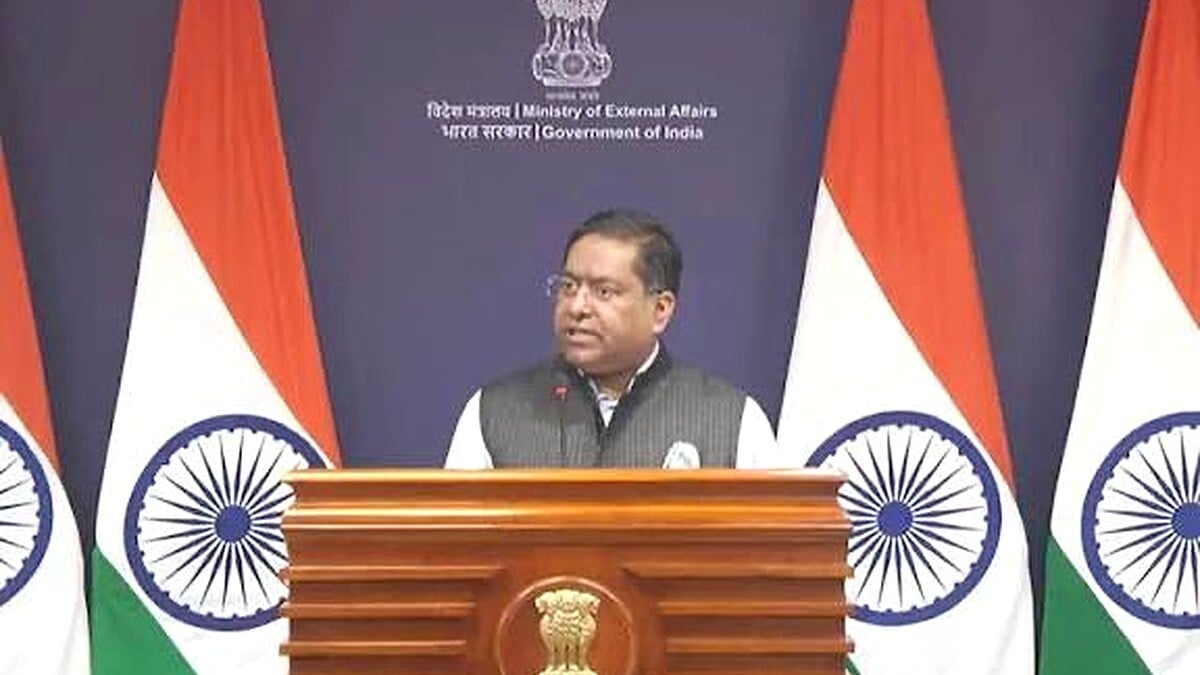
Spokesperson Randhir Jaiswal addressed media on the heels of Director of National Intelligence Tulsi Gabbard’s Senate briefing where Pakistan featured among key concerns alongside major powers.
Gabbard told the Senate Select Committee on Intelligence on March 18 2026 that Russia China North Korea Iran and Pakistan are advancing missile systems with nuclear and conventional payloads capable of reaching the US homeland.
She projected the number of such threatening missiles worldwide could surge beyond 16000 by 2035 from roughly 3000 today while noting Pakistan’s long-range ballistic work might evolve into intercontinental capabilities.
Jaiswal seized on the assessment to deliver a pointed critique quoting directly that as far as Pakistan is concerned they have a history they have a history of clandestine nuclear nonproliferation and statements like this again make it clear what kind of threat they pose to the world because of their clandestine nuclear operations.
The remark revives longstanding Indian accusations tied to events from the late 20th century when Pakistani scientist Abdul Qadeer Khan built an extensive supply network.
That network transferred uranium enrichment technology and centrifuge designs to Iran Libya and North Korea prompting United Nations sanctions and global scrutiny until its exposure around 2003 through intercepted shipments like those aboard the BBC China vessel.
Pakistan has consistently maintained that Khan operated as a rogue actor without state endorsement and that subsequent reforms dismantled any residual risks.
Research from the Federation of American Scientists estimates Pakistan’s current nuclear stockpile at approximately 170 warheads as of early 2026 a figure stable in recent years and focused overwhelmingly on regional deterrence.
Comparative data shows India holds around 180 warheads according to the same assessments with both nations having conducted overt tests in 1998 that ended decades of ambiguity.
Pakistan’s arsenal relies on a mix of aircraft delivered and land-based missile systems including solid-fuel Shaheen series ranging up to 2750 kilometres with the Shaheen-III and the MIRV-capable Ababeel under advanced development.
These platforms are managed under the National Command Authority with day-to-day oversight by the Strategic Plans Division which commands a dedicated paramilitary security force exceeding 25000 personnel specially vetted and trained for asset protection.
International observers including reports from the Arms Control Association note that Pakistan has invested heavily since 2001 in layered safeguards encompassing personnel reliability programmes two-man rules and segregated command structures to prevent unauthorised access.
No verified incidents of diversion or leakage have occurred from Pakistan’s facilities in over two decades despite persistent external commentary.
Jaiswal’s intervention arrives amid heightened India-Pakistan tensions where New Delhi often frames Islamabad’s deterrent posture as inherently destabilising while overlooking its own rapid modernisation of Agni-series missiles and expanding fissile production.
Diplomatic analysts observe that such exchanges risk overshadowing broader global trends where nine nuclear powers collectively manage over 12300 warheads with the United States and Russia alone accounting for nearly ninety percent.
Pakistan emphasises its doctrine centres on credible minimum deterrence against existential threats without pursuing first-use postures or arms races beyond parity needs.
The Strategic Plans Division further coordinates export controls and international engagement underscoring Islamabad’s alignment with non-proliferation norms despite remaining outside the Nuclear Non-Proliferation Treaty framework alongside India and Israel.
Recent missile tests including successful validations of extended-range systems in early 2026 demonstrate technical maturity yet remain calibrated within South Asian geography.
Gabbard’s testimony however broadens the lens by linking these developments to potential homeland risks for the United States a shift that has surprised some regional experts who viewed Pakistan’s programme as purely India-centric.
Indian officials have used the moment to rally narrative support ahead of multilateral forums where non-proliferation credentials are debated.
Yet data from the Stockholm International Peace Research Institute highlights that both South Asian neighbours continue incremental arsenal enhancements without evidence of aggressive proliferation in the current decade.
Pakistan’s civilian nuclear sector under International Atomic Energy Agency safeguards operates power plants supplying significant electricity while military components stay isolated under military oversight.
This separation has earned cautious recognition in technical circles for its discipline compared with historical cases elsewhere.
The latest verbal escalation nevertheless underscores fragile trust dynamics where one side’s security measures are cast by the other as perpetual threats.
Broader implications include challenges for confidence-building measures stalled since major crises and the need for dialogue on risk-reduction protocols involving hotlines and notification regimes.
As global attention fixates on missile proliferation trajectories analysts urge restraint to avoid miscalculation that could elevate regional flashpoints to nuclear thresholds.
Pakistan maintains that its programme serves solely defensive purposes preserving strategic stability in a neighbourhood marked by conventional asymmetries.
Jaiswal’s reference to clandestine operations echoes earlier briefings where India rejected cooperative overtures citing trust deficits rooted in past episodes.
Yet independent assessments affirm Pakistan’s post-Khan era features stringent internal audits intelligence vetting and physical perimeters that rank among the most robust in non-NPT states.
With missile inventories projected to mature further through systems like Ababeel the focus remains on responsible stewardship amid international monitoring.
The exchange between Washington New Delhi and Islamabad thus reflects layered perceptions where intelligence alerts intersect with bilateral rivalries and historical grievances.
Continued research and transparent data sharing could help contextualise capabilities and intentions reducing the scope for politicised interpretations.
Ultimately the episode highlights how nuclear narratives continue shaping South Asian geopolitics even as global stockpiles evolve under modernisation pressures across multiple capitals.