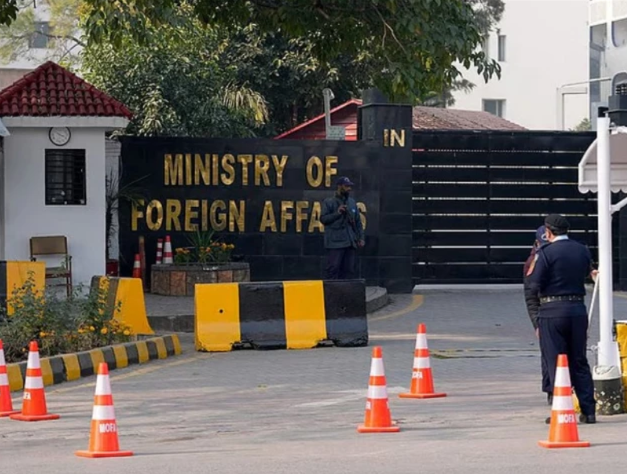
ISLAMABAD: Pakistan’s Foreign Office summoned the Afghan Deputy Ambassador on Monday to deliver a strong demarche over the recent terrorist attack in Bajaur district that martyred 11 security personnel.
The protest comes amid escalating concerns that Afghan territory continues to serve as a safe haven for militants launching cross-border strikes against Pakistan.
Foreign Office spokesperson Tahir Andrabi stated that the Afghan diplomat received an official note expressing Islamabad’s deep concern over the use of Afghan soil to orchestrate the assault.
The attack occurred on February 16 when militants affiliated with Fitna al-Khawarij, also known as Tehrik-i-Taliban Pakistan (TTP), rammed an explosives-laden vehicle into a joint security forces and law enforcement checkpost in Bajaur.
Security forces responded swiftly, eliminating 12 militants in the ensuing exchange of fire.
The incident also claimed the life of a minor girl and injured several civilians, including women and children, as nearby structures sustained damage from the blast.
TTP militants claimed responsibility for the vehicle-borne suicide attack followed by a fire raid on the post.
This marks yet another deadly operation in Khyber Pakhtunkhwa province, which borders Afghanistan and has witnessed a surge in such violence in recent years.
Pakistan has repeatedly highlighted that the TTP leadership remains based in Afghanistan, where the group operates with apparent impunity.
Andrabi emphasized that despite multiple assurances from the Afghan side, no concrete or tangible actions have been taken to dismantle these networks.
The spokesperson condemned the attack in the strongest terms, describing it as a heinous act carried out by elements whose entire command structure functions from across the border.
Bajaur district, located in the former Federally Administered Tribal Areas, has long been a hotspot for militant activity due to its proximity to Afghanistan’s Kunar and other provinces.
Recent years have seen a sharp rise in TTP attacks inside Pakistan, with the group exploiting porous borders and alleged sanctuaries.
Official data indicates that terrorism-related incidents have intensified since 2021, following political changes in Afghanistan.
Pakistan’s security forces have conducted numerous intelligence-based operations to counter this threat, yet cross-border facilitation persists as a core challenge.
The summoning of the Afghan diplomat underscores Islamabad’s frustration with the lack of progress on bilateral commitments to eliminate terrorist safe havens.
Such diplomatic protests have become more frequent as attacks continue to target military and law enforcement personnel.
The Bajaur incident follows a pattern of vehicle-borne improvised explosive device attacks combined with direct assaults on security installations.
These tactics aim to inflict maximum casualties while testing the resolve of Pakistani forces.
In response to the attack, the Inter-Services Public Relations described the militants’ attempt to breach the checkpost as cowardly and confirmed that vigilant troops foiled the designs decisively.
The martyrdom of 11 personnel highlights the ongoing sacrifices made by Pakistan’s security apparatus in defending national borders.
Civilian casualties, including the death of a child, add to the tragedy and underscore the indiscriminate nature of such terrorism.
Pakistan maintains that lasting peace and stability in the region require sincere cooperation from Afghanistan to deny space to anti-Pakistan elements.
Without effective action against TTP bases and leadership in Afghanistan, such incidents are likely to recur, further straining bilateral ties.
The Foreign Office reminded the Afghan side that continued tolerance of terrorist activities undermines regional peace and bilateral relations.
Islamabad has conveyed that it expects immediate, concrete steps to address these legitimate security concerns.
This latest diplomatic engagement reflects Pakistan’s commitment to pursuing all avenues, including dialogue, while reserving the right to defend its sovereignty.
The international community has also noted the rise in cross-border militancy, with reports highlighting Afghanistan’s role as a hub for various terrorist outfits.
As violence persists, pressure mounts for verifiable measures to curb the TTP’s operational freedom.
Pakistan’s stance remains firm: the use of Afghan territory for attacks against its citizens cannot be tolerated indefinitely.
The Bajaur attack and subsequent protest serve as a stark reminder of the unresolved security dilemmas plaguing Pak-Afghan relations.
Addressing these issues demands urgent and meaningful cooperation to prevent further loss of life on both sides of the border.