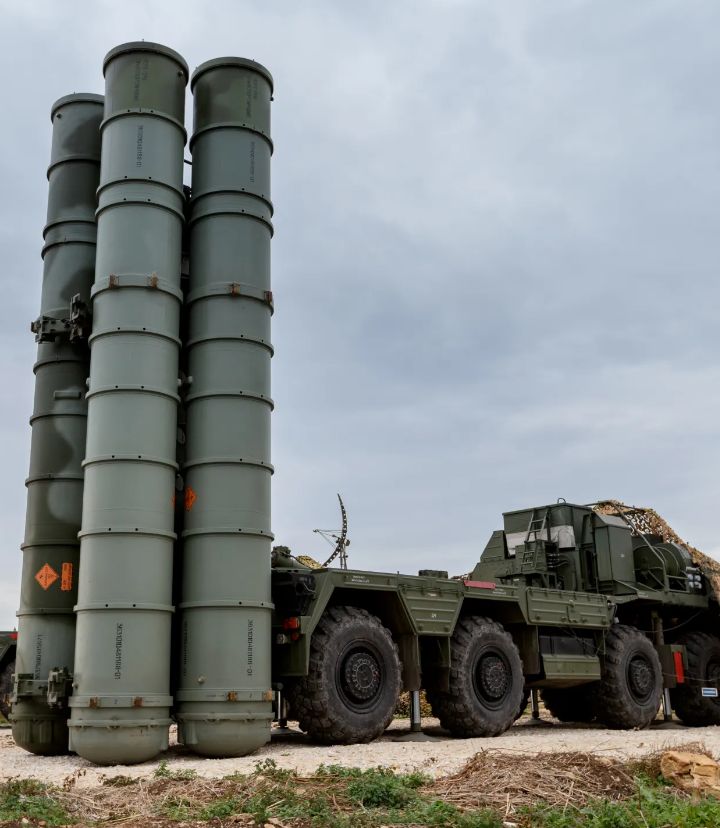
ISLAMABAD: India’s ambitious air defence modernisation programme has come under renewed scrutiny after debris recovered in Ukraine in January 2026 was identified as a 48N6E2 surface-to-air missile — the export variant of the S-400 system that Russia is contractually supplying to New Delhi. The discovery has triggered questions over whether missiles originally intended for India may have been redirected for use in the ongoing Ukraine conflict, raising fresh concerns about delivery timelines, stockpile adequacy and system performance.
According to open-source defence assessments published earlier this year, debris analysis confirmed that the missile bore the “E” suffix, denoting the export configuration of the 48N6E2 interceptor associated with the S-400 Triumf system. At present, India remains the only country with which Russia maintains active contracts for the supply of new S-400 systems and associated missile packages. This has intensified speculation that export-designated munitions may have been repurposed for battlefield use amid reported Russian ammunition shortages.
The S-400 Triumf, developed by Russia’s Almaz-Antey defence conglomerate, is marketed as one of the world’s most advanced long-range air defence systems, capable of engaging aircraft, cruise missiles and ballistic threats at distances of up to 400 kilometres, depending on the missile type deployed. However, export versions such as the 48N6E2 are widely believed to offer reduced performance parameters compared to the domestic configurations used by Russian forces.
India signed its landmark S-400 contract with Russia in 2018, committing approximately $5.4 billion for five regiments. The procurement was seen as a cornerstone of New Delhi’s layered air defence strategy, particularly in view of its regional security environment. Deliveries began in late 2021, but progress has reportedly been slower than initially projected, with not all contracted units yet operational.
Defence observers note that delays have already extended well beyond original timelines, in part due to geopolitical disruptions and supply chain pressures stemming from the Ukraine war. The emergence of evidence that export-designated missiles are being used in active combat has further complicated the picture. If missiles intended for foreign clients are indeed being diverted, replenishment schedules for India could face additional strain.
The issue gains added relevance in the context of India’s reported missile expenditure during Operation Sindoor in May 2025, a brief but intense escalation with Pakistan. While official figures remain undisclosed, analysts suggest that a significant number of surface-to-air interceptors were launched during the episode, prompting New Delhi to reassess its inventory requirements and consider fresh orders to rebuild reserves.
Indian defence planners are understood to be weighing the need for additional missile procurement to both replenish expended stocks and prepare for the induction of remaining S-400 units. Yet the prospect of placing new orders at a time when existing deliveries remain incomplete could prove politically and strategically sensitive.
Performance debates have also resurfaced. Independent military assessments of the S-400’s operational record in Ukraine have been mixed, with questions raised about its effectiveness against certain categories of advanced aerial threats. These concerns, combined with the system’s reported underwhelming outcomes in regional crises, have fuelled discussion over whether reliance on a single foreign supplier exposes India to strategic vulnerabilities.
Another technical dimension involves the distinction between domestic and export variants. The 48N6E2 missile, while capable, reportedly features a shorter maximum engagement range than Russia’s top-tier interceptors. Export versions may also be subject to modified radar integration and software limitations. For India, which has positioned the S-400 as a strategic equaliser in the region, any constraints associated with export-grade systems could affect operational planning.
Beyond performance metrics, the broader geopolitical context cannot be ignored. Western sanctions on Russia have complicated financial transactions, logistics chains and component sourcing for advanced weapons systems. Although India has maintained a balanced diplomatic stance, the sustainability of long-term defence cooperation under mounting international pressure remains a subject of debate in policy circles.
There is also the question of opportunity cost. India has simultaneously invested in indigenous air defence projects and diversified procurement channels, including closer engagement with Western suppliers. However, the scale and cost of the S-400 programme mean it will remain central to India’s air defence architecture for years to come.
For Russia, the reported battlefield use of export-designated missiles underscores the strain placed on its defence-industrial base by prolonged conflict. For India, it highlights the risks inherent in long-gestation contracts tied to a supplier engaged in high-intensity warfare.
As New Delhi considers whether to expand its S-400 inventory, it must weigh immediate operational needs against delivery uncertainties and evolving performance assessments. With original orders still incomplete nearly eight years after signing, any additional procurement could face extended timelines.
The episode serves as a reminder that in contemporary geopolitics, arms contracts are not merely commercial agreements but strategic commitments intertwined with global conflict dynamics. For India, the S-400 remains both a symbol of strategic autonomy and a test of supply reliability in an increasingly volatile world.