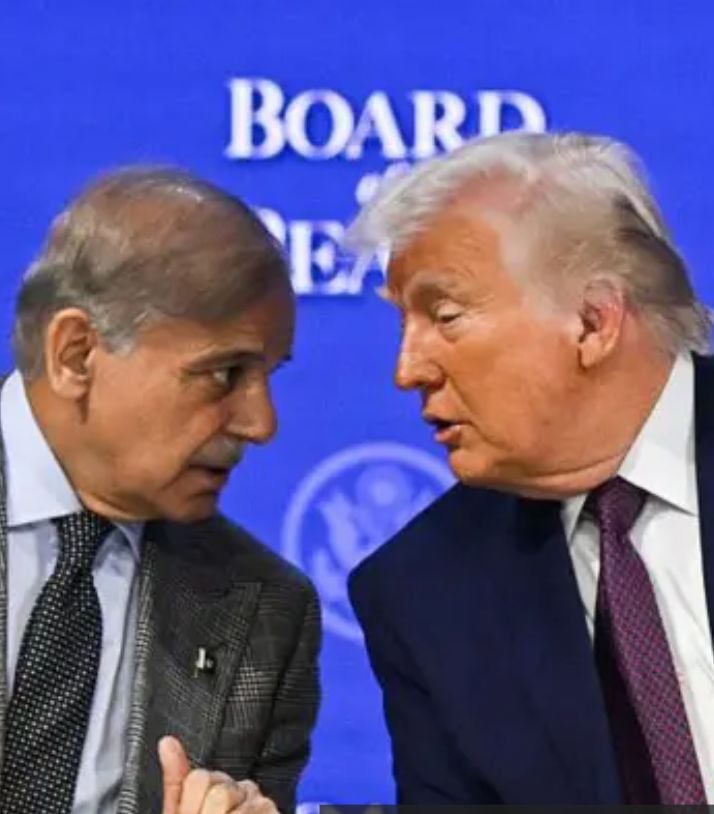
ISLAMABAD: US President Donald Trump announced on Thursday that nine member nations of the newly formed Board of Peace have collectively pledged more than $7 billion in aid for the reconstruction and relief of Gaza, a territory devastated by prolonged conflict.
The announcement came during Trump’s address at the inaugural meeting of the Board of Peace in Washington, where representatives from over 40 countries gathered to discuss postwar stabilization and rebuilding efforts in the Palestinian enclave.
The contributing countries include Kazakhstan, Azerbaijan, the United Arab Emirates, Morocco, Bahrain, Qatar, Saudi Arabia, Uzbekistan, and Kuwait, a group largely comprising Muslim-majority states from Central Asia, the Gulf, and North Africa.
Trump expressed gratitude to these nations, describing each dollar committed as an investment in regional stability and a hopeful future for harmony in the Middle East.
He emphasized that the pledges represent a meaningful step toward addressing the immense humanitarian needs in Gaza following two years of intense warfare between Israel and Hamas.
Experts estimate the total cost of rebuilding Gaza’s infrastructure, housing, and essential services at around $70 billion, making the $7 billion pledge a significant but initial contribution toward that goal.
In addition to the international commitments, Trump revealed that the United States would contribute $10 billion to the Board of Peace itself, though specifics on allocation remained unclear during his remarks.
He characterized the US pledge as modest compared to the far greater expenses associated with prolonged war and ongoing military engagements.
The Board of Peace, launched earlier this year under Trump’s initiative, aims to oversee ceasefire implementation, humanitarian aid distribution, and long-term reconstruction in Gaza while potentially addressing other global conflicts.
The inaugural session highlighted additional commitments beyond funding, including troop pledges from several countries for an international stabilization force intended to secure the territory post-ceasefire.
Indonesia, Morocco, Kazakhstan, Kosovo, and Albania have reportedly agreed to deploy personnel to this force, while Egypt and Jordan have offered to train local police units as part of broader security arrangements.
These security contributions underscore efforts to prevent a power vacuum that could allow militant groups to regain influence in Gaza.
The fragile ceasefire currently in place has enabled increased humanitarian access, with reports indicating over 4,200 aid trucks entering the enclave weekly in recent periods.
Despite this progress, challenges persist, including repeated violations of truce terms, internal governance issues, and the disarmament of Hamas fighters.
Trump’s initiative has drawn mixed reactions internationally, with some allies expressing caution over the Board of Peace potentially duplicating or rivaling existing United Nations mechanisms for conflict resolution and aid coordination.
The United Nations Office for the Coordination of Humanitarian Affairs is separately raising an additional $2 billion for Gaza support, complementing the Board of Peace efforts.
FIFA has also committed to raising $75 million for sports-related projects aimed at youth rehabilitation and community rebuilding in the territory.
Analysts view the involvement of Gulf states like Saudi Arabia, the UAE, Qatar, Bahrain, and Kuwait as particularly notable, given their historical roles in regional diplomacy and previous aid contributions to Palestinian causes.
Central Asian nations such as Kazakhstan and Uzbekistan, along with Azerbaijan, bring a broader geographic diversity to the funding coalition.
Morocco’s participation aligns with its recent normalization ties with Israel and growing engagement in Middle Eastern affairs.
Trump framed the collective pledges as a demonstration of global cooperation outside traditional multilateral frameworks, crediting his administration’s diplomacy for mobilizing these resources.
The president reiterated that the war in Gaza is effectively over, though on-ground realities suggest ongoing tensions and enforcement hurdles for the ceasefire.
Humanitarian organizations continue to highlight the dire conditions in Gaza, including widespread destruction of homes, hospitals, schools, and water infrastructure.
Rebuilding efforts will require not only financial resources but also coordinated governance to ensure aid reaches civilians effectively and transparently.
The Board of Peace’s structure and operational details are still evolving, with questions remaining about its relationship to existing bodies like the UN and how funds will be disbursed.
Trump concluded his address by expressing optimism that these commitments mark the beginning of a new era of stability and prosperity for Gaza and the broader region.
As discussions continue in the coming weeks, the success of these pledges will depend on sustained international follow-through and progress in implementing the ceasefire’s core provisions.