ISLAMABAD: Iranian Consul General in Karachi Akbar Isa Zadeh has confirmed that the Strait of Hormuz remains fully open for Pakistani ships, providing reassurance amid heightened regional instability.
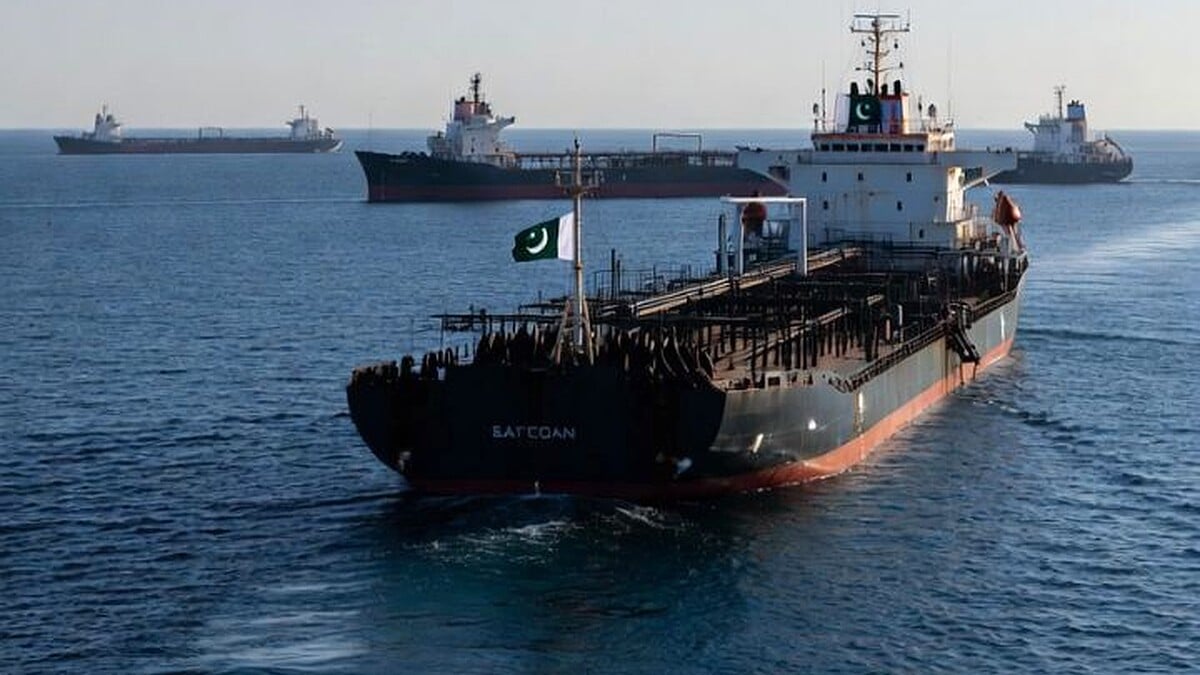
The statement comes as a Pakistan-flagged oil tanker successfully navigated the strategic waterway, marking a significant development in commercial shipping routes.
Akbar Isa Zadeh made the remarks in an interview with a private television channel, emphasizing that vessels from Pakistan face no restrictions.
He explained that ships carrying crude oil or liquefied natural gas can transit the strait after coordinating with Iranian authorities.
The consul general highlighted that Pakistan and several other countries enjoy permitted access, underscoring selective application of transit rules.
He clarified that the strait stays closed only to nations involved in aggression against Iran, specifically naming the United States and Israel along with their allies.
This position aligns with broader Iranian statements from Foreign Minister Abbas Araghchi, who described the waterway as open to global trade except for adversaries.
Recent events have tested these claims, with a Pakistan-bound Aframax tanker named Karachi completing a transit on March 15.
Ship-tracking data from platforms like MarineTraffic and Bloomberg showed the vessel loading crude oil at Das Island in Abu Dhabi before entering the strait.
The tanker sailed along the Iranian side, passing between Larak and Qeshm islands while broadcasting its Automatic Identification System signal openly.
This made it the first non-Iranian cargo vessel to transit publicly since the escalation of the US-Israeli conflict with Iran in early March.
The Karachi, operated by the Pakistan National Shipping Corporation, carried approximately 110,000 tonnes of crude and headed toward Karachi port.
Officials expect its arrival shortly, demonstrating practical implementation of the assured safe passage.
Iranian authorities appear to have granted clearance, allowing the ship to hug the coast under what analysts describe as an approved route.
This development reflects ongoing diplomatic coordination between Islamabad and Tehran.
Pakistan has maintained a balanced stance in the conflict, expressing solidarity with Iran while safeguarding its energy import needs.
The successful transit has drawn appreciation from Iranian officials, including gratitude expressed for Pakistan’s support.
Reports indicate that about 90 ships have crossed the strait since the conflict intensified, including some affiliated with Iran, China, Greece, and now Pakistan.
Vessels from India have also navigated the passage recently through negotiations.
Such movements suggest that Iran maintains control over the chokepoint while permitting select international traffic.
The Strait of Hormuz handles around one-fifth of global oil consumption, making any disruption a major concern for energy markets.
Pakistan relies heavily on imported crude through this route, with disruptions potentially affecting fuel supplies and prices domestically.
The consul general’s assurance aims to ease concerns among Pakistani importers and shipping companies.
Coordination with Iranian government remains essential for future transits, as stated by Akbar Isa Zadeh.
This mechanism allows continued flow for friendly nations without broad closure.
Experts note that Iran’s Revolutionary Guard Corps oversees maritime security in the area, deciding vessel permissions case by case.
The public transit of the Karachi tanker, without turning off signals, indicates negotiated safety guarantees.
This contrasts with many other ships that disable tracking for caution amid threats.
Pakistan’s diplomatic tightrope walking has evidently yielded results, preserving access to vital Gulf oil supplies.
The episode highlights the importance of bilateral ties between Pakistan and Iran in navigating geopolitical challenges.
As regional tensions persist, such confirmations from Iranian representatives help stabilize commercial expectations.
The development also underscores Pakistan’s strategic position in maintaining energy security channels.
Future shipments may follow similar patterns, relying on prior coordination to ensure uninterrupted passage.
Akbar Isa Zadeh’s statement reinforces that the strait functions normally for Pakistan, countering fears of complete blockade.
This clarity benefits traders, refiners, and consumers dependent on Gulf energy flows.
The incident serves as evidence that selective openings persist despite broader restrictions.
Pakistan National Shipping Corporation’s role in the successful voyage highlights institutional preparedness.
Overall, the confirmation signals continued viability of the route for Pakistani maritime interests.