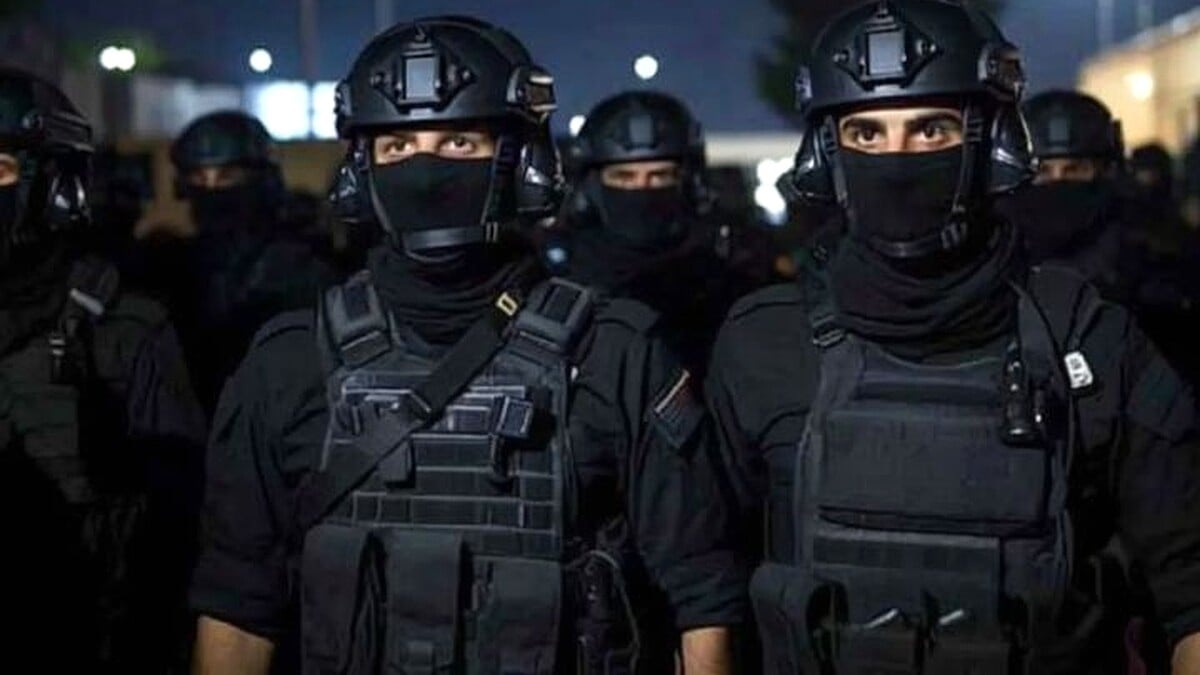
ISLAMABAD: Iranian state-affiliated media reported on Tuesday that Special Operations Forces of the Islamic Revolutionary Guard Corps executed a covert operation deep inside Israeli territory, successfully targeting a senior member of Israel’s security cabinet.
The claim, originating from Fars News Agency closely linked to the IRGC, described the strike as precise and definitive, occurring just hours before the report’s dissemination.
Fars News did not identify the targeted individual, referring only to a prominent figure within Israel’s security cabinet responsible for strategic wartime decisions.
The assertion surfaces against the backdrop of intense direct confrontation between Iran and Israel, which erupted on February 28 following joint US-Israeli airstrikes that eliminated Supreme Leader Ali Khamenei and numerous senior commanders.
Since the conflict’s onset, both sides have engaged in reciprocal targeted eliminations, missile exchanges, and aerial campaigns aimed at degrading military capabilities.
Recent Israeli actions include confirmed strikes that killed Ali Larijani, secretary of Iran’s Supreme National Security Council, and Gholamreza Soleimani, head of the Basij paramilitary force, according to Israeli announcements and partial Iranian confirmations.
Iran has responded with multiple ballistic missile and drone barrages targeting Israeli population centers, military sites, and allied facilities in the Gulf region.
The reported special forces operation marks a notable departure from Iran’s primary reliance on long-range weaponry, indicating potential advancement in covert insertion and exfiltration capabilities within hostile territory.
No official Israeli response has confirmed or refuted the claim, consistent with past dismissals of similar Iranian assertions as psychological warfare or disinformation.
Israeli authorities have frequently labeled unverified reports of leadership targeting as propaganda designed to rally domestic support amid battlefield setbacks.
Analysts observe that such claims often coincide with heavy Iranian losses, serving to project resilience and deter further escalation.
The ongoing war has featured massive aerial superiority asserted by US and Israeli forces over Iranian airspace, with repeated strikes on missile production, air defense networks, and command infrastructure.
Iran’s retaliatory strikes have included cluster munitions and advanced ballistic systems like the Sejjil, though most have been intercepted by Israeli defenses with limited casualties reported.
The security cabinet in Israel plays a central role in authorizing major military responses, making any successful targeting a potential disruption to decision-making processes.
If verified, the operation would demonstrate Iran’s ability to conduct high-risk ground actions far beyond its borders, a feat previously limited to proxy networks in neighboring countries.
The absence of independent corroboration highlights persistent challenges in verifying special operations claims during active conflict.
Social media platforms have rapidly amplified the Fars report, with posts on Instagram, X, and other networks spreading the narrative accompanied by calls for retaliation.
Regional security experts caution that confirmation of such an infiltration could trigger intensified Israeli counter-operations, potentially expanding the theater beyond current aerial and missile domains.
Casualties continue to mount on both sides, with Iranian sources emphasizing civilian impacts from strikes and Israeli reports focusing on intercepted threats.
International mediation efforts, including those involving Oman and Egypt, have stalled amid mutual rejection of ceasefire proposals by key parties.
The personal targeting of leadership figures underscores the conflict’s increasingly asymmetric and high-stakes nature.
Whether this claim represents a genuine breakthrough or another layer of information warfare remains uncertain as developments unfold in real time.
Further statements from involved militaries are expected to clarify the situation amid the rapidly evolving regional crisis.