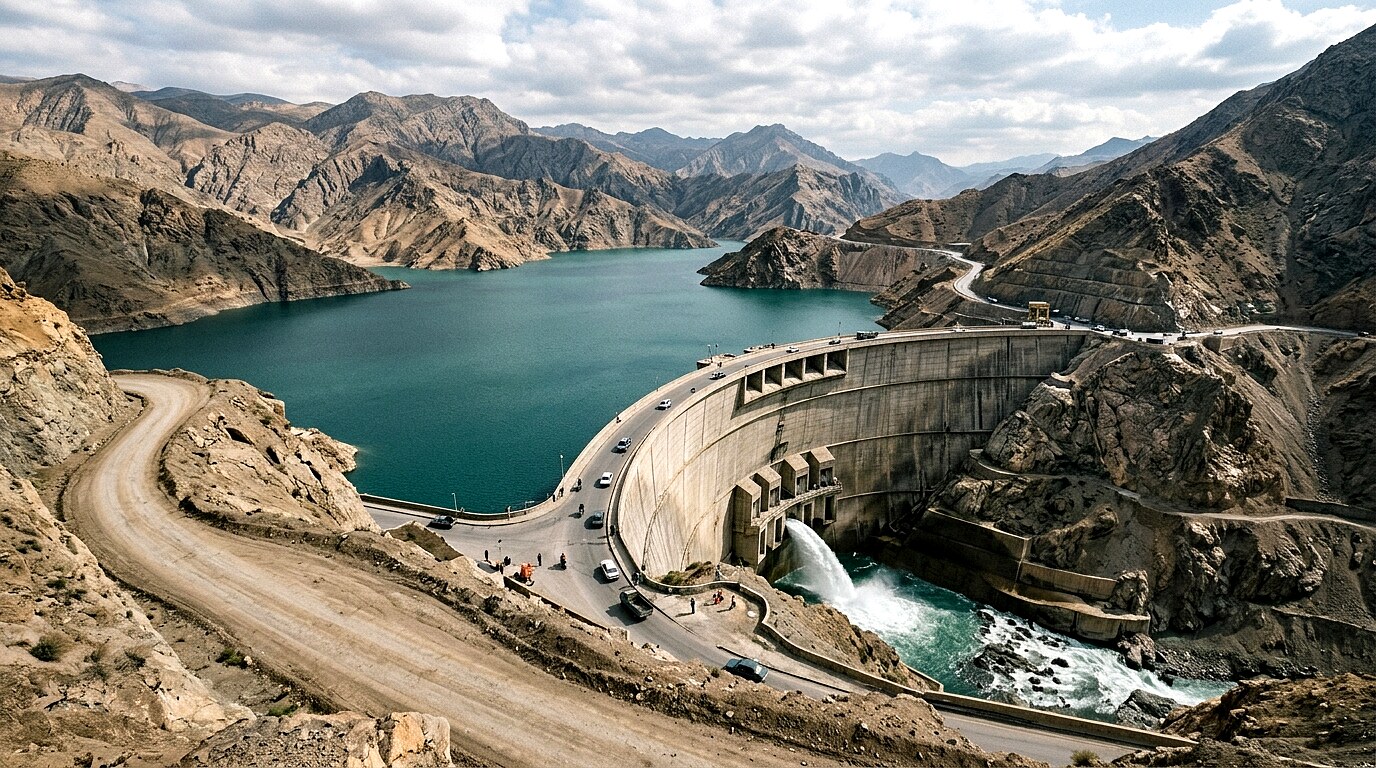




ISLAMABAD: In a striking development, Iran’s parliament speaker, Mohammad Bagher Ghalibaf, has raised alarms regarding potential military strikes on Iranian dams, linking them to a broader controversy surrounding missile bases. His warning comes in the wake of an article published by the New York Times that suggests the U.S. and Israel may be preparing to target Iran’s civilian infrastructure under the guise of military necessity.
Ghalibaf’s concerns were voiced on November 17, when he shared the New York Times piece titled “Airstrikes on Iran missile sites may shed light on justification for dams.” The article posits that Iran’s extensive dam construction could be serving dual purposes, potentially supporting military operations while addressing a national water crisis. Ghalibaf’s response indicates a growing unease within Iranian leadership regarding the implications of these discussions.
The article, authored by Sanam Mahoozi and Erika Solomon, explores the intersection of Iran’s water management projects and its military capabilities. While it does not provide conclusive evidence linking dams to missile sites, it raises critical questions about Iran’s infrastructure strategy. Ghalibaf’s reaction reflects a broader sentiment among Iranian officials who perceive these discussions as precursors to justifying attacks on civilian infrastructure.
In his remarks, Ghalibaf emphasized a new principle: “Any dam, port, or power plant near a US or Israeli base is dual-use.” This statement underscores the Iranian regime’s determination to counter any perceived threats to its infrastructure, framing them as potential military targets.
The controversy surrounding Iran’s dams has garnered attention from various analysts. Esfandyar Batmanghelidj, founder of the Bourse & Bazaar Foundation, expressed skepticism about the narrative linking dams to military facilities. He pointed out that only a fraction of Iran’s numerous dams are equipped with turbines for electricity generation, suggesting that the motivations behind dam construction are more complex than military utility. Batmanghelidj argues that vested interests, including those linked to the Islamic Revolutionary Guard Corps (IRGC), play a significant role in the proliferation of these projects.
Furthermore, he highlighted the geographical context of many dams, noting that they are often situated in mountainous regions where military installations are also located. This overlap, he argues, does not necessarily imply a direct connection between the two, but rather reflects the natural landscape of Iran.
Middle East security expert Danny Citrinowicz also weighed in on the discussion, noting that Iran has strategically invested in underground facilities and independent water and electricity supplies to sustain its missile operations. While he acknowledged that a definitive link between dam projects and missile facilities has yet to be established, he suggested that such a strategy aligns with Iran’s broader military objectives.
Source: Jerusalem Post