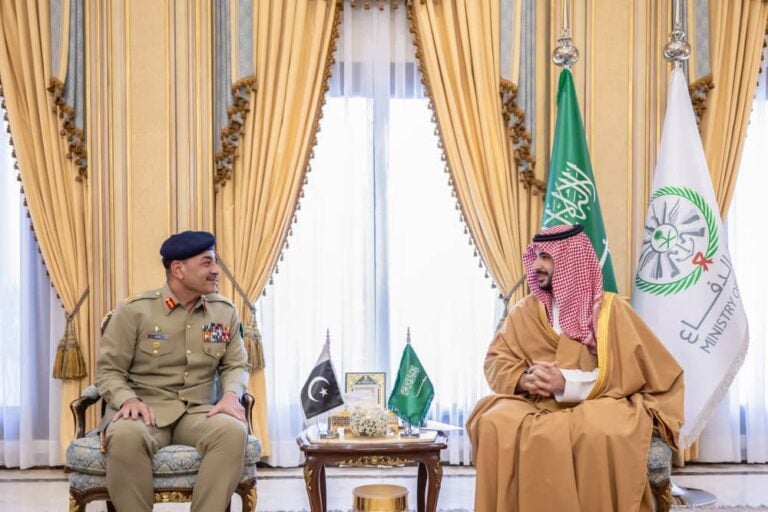
BEIJING – The last week’s official visit of Chinese foreign minister toPakistan and his meetings with the political and military leadershipranging from cooperation on international affairs to defence and securitywas highly successful, as it has set the tone for taking collaborationbetween the two countries to new heights.
In a rapidly changing world order, Pakistan and China are becomingincreasingly important for each other. The geopolitical factors causingalliance shifts in Eurasia are the same reinforcing the partnership betweenPakistan and China, according to an article published by Global Times onMonday.The Chinese government decided to reach out to the new government that hastaken charge in Islamabad. China’s Foreign Minister Wang Yi made adelegation-level visit to Pakistan last week.
Wang’s meetings with Pakistani officials, including the president, primeminister and the military chief, indicate the extent of discussions thatranged from cooperation on international affairs to defence and security.
A highlight of Wang’s visit was the discussion on the situation inAfghanistan and how it can be improved to bring peace to the region. Sincestability in Afghanistan is related to security of Chinese projects abroadand a peaceful environment in Xinjiang, China has already been workingextensively with Pakistan to leverage Islamabad’s influence.
Pakistan is facing disparaging bids from the United States despite itsdecisive action in the war on terror. China has, on the other hand, timeand again supported efforts made by Pakistan in uprooting the menace ofterrorism. During this visit, Wang Yi appreciated Pakistan’s positive roleand active participation in issues pertaining to Afghanistan and regionalcooperation.The Chinese minister expressed solidarity with Pakistan several timesduring his visit. China as a good friend, a good partner and a goodneighbour, he stated, will resolutely stand with and hold Pakistan as apriority in its foreign policy.
Cooperation in international affairs and pushing for an all-weatherstrategic partnership were two of the points elaborated in the 10-pointconsensus achieved during the visit. The consensus mainly revolved aroundareas of defense cooperation, strategic partnership and communication.The newly formed Pakistani government is finalizing a strategy to meet itsambitious development goals.
Wang stated his government’s intent of providing all-out help in thisregard and discussed poverty alleviation which Imran Khan, Pakistan’s PrimeMinister, has already pointed out as one of his foremost domestic agenda.Achieving more balance in bilateral trade was also part of the discussions.
Read Top Stories


The upcoming China International Import Expo (CIIE) is offering Pakistan achance to increase its exports to China, grab the lucrative Chinese marketand adjust its trade balance.Pakistan can even reap added benefits as it has been invited as a guest ofhonor at the Expo. At the invitation of the Chinese government, Khan islikely to be paying an official visit to China in November which isexpected to coincide with the CIIE.
Another high point of the visit was a resolve by both countries tostrengthen the China-Pakistan Economic Corridor (CPEC). Pakistani ForeignMinister Shah Mehmood Qureshi assured his counterpart that CPEC was hisgovernment’s top priority.
Apart from providing socio-economic development, the mega project promisesto bridge Pakistan’s infrastructure gap, increase its industrial capacityand align it with global supply chains.
Detractors of Pakistan-China collaboration meanwhile did not miss out onthe chance of attempting to drive a wedge between the two countries. Awestern media report misquoted a Pakistani advisor over his government’splans on CPEC and the Belt and Road initiative (BRI).Pakistani officials were quick to issue a written rebuttal to the reportespecially its title. A strong rebuke from China, calling the reportill-intentioned, also doused a plethora of media stories which made thereport a base for their wishful thinking.
Relations between Pakistan and China have flourished in the thickest oftimes and amid the severest of criticism. Successive governments in bothcountries have built upon the efforts of their predecessors to solidify astrategic partnership that continues to grow despite the world’s changedpriorities.