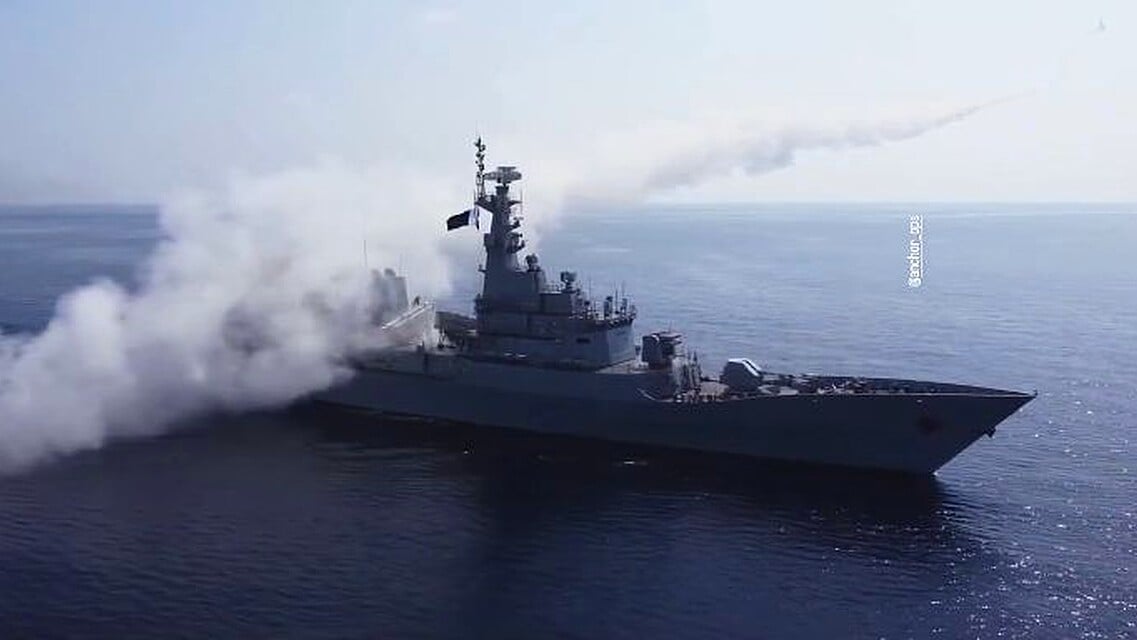
ISLAMABAD: In a display of growing operational prowess and indigenous defence advancements, a Pakistan Navy Zulfiquar-class guided missile frigate successfully launched an anti-ship cruise missile during recent drills in the North Arabian Sea, underscoring the force’s readiness to safeguard maritime interests amid evolving regional challenges.
The exercise highlighted the frigate’s potent armament suite, centred on proven surface-to-surface missiles integrated for multi-role operations. Such launches form part of routine yet strategic training to validate weapon systems, enhance crew proficiency, and affirm deterrence in vital sea lanes.
Zulfiquar-class frigates, locally known as F-22P or Sword class, represent a cornerstone of Pakistan Navy’s surface fleet. Built with Chinese collaboration under Project Sword, the four vessels—PNS Zulfiquar, PNS Shamsheer, PNS Saif, and PNS Aslat—entered service between 2009 and 2013, bolstering blue-water capabilities.
Each frigate displaces around 2,500 tons and measures 123 metres in length, equipped with advanced sensors including a Type 382 radar for air and surface search. Their primary offensive punch comes from two quad-cell launchers carrying C-802 anti-ship missiles, a subsonic system with a range exceeding 185 kilometres and a 165-kilogram warhead designed for sea-skimming flight to evade defences.
The C-802, also termed Eagle Strike, has undergone successful firings in past exercises, demonstrating accuracy against simulated targets. Recent integrations have expanded options, including provisions for indigenous systems like the Harbah cruise missile, which adds land-attack versatility.
Harbah, developed domestically, emerged as a subsonic turbojet-powered weapon capable of engaging ships and coastal targets. Initial tests occurred from fast attack craft, but adaptations for frigates enhance fleet flexibility.
More recently, the class has incorporated cutting-edge additions such as the P282 SMASH anti-ship ballistic missile. This indigenously produced system, test-fired multiple times from Zulfiquar platforms since late 2024 and into 2025, follows a quasi-ballistic trajectory reaching hypersonic speeds in terminal phase.
Official statements describe SMASH as precise against maritime and ground targets, with a reported range of approximately 350 kilometres. Its deployment on frigates marks a shift toward anti-access/area-denial strategies, complicating adversary naval movements in contested waters.
The North Arabian Sea remains a critical theatre for Pakistan Navy operations. Drills here address protection of exclusive economic zones, counter-piracy efforts, and responses to hybrid threats, including those from non-state actors.
Exercises often involve live weapon firings to test integration of systems like the FM-90N surface-to-air missiles for layered defence. Recent activities in January 2026 featured LY-80(N) firings from vertical launchers, engaging aerial targets at extended ranges and validating air defence readiness.
Such demonstrations align with broader modernisation. The navy has pursued self-reliance through organisations like the National Development Complex and Global Industrial and Defence Solutions, reducing import dependency while advancing missile technologies.
The Zulfiquar class bridges legacy platforms with emerging threats. Upgrades include improved communication domes and potential vertical launch adaptations, ensuring relevance against supersonic and ballistic challenges.
Regional dynamics influence these activities. The Arabian Sea hosts multinational exercises like AMAN, which in 2025 drew participation from nearly 60 nations, fostering interoperability and collective security against terrorism and organised crime.
Pakistan Navy’s focus on firepower display reaffirms commitment to seaward defence. Senior leadership, including the Chief of Naval Staff, frequently observes tests, emphasising technological prowess and resolve to protect national interests under all circumstances.
These drills contribute to strategic stability by showcasing credible conventional capabilities. As threats evolve—from drones to advanced missiles—sustained investment in platforms like Zulfiquar-class ensures operational edge.
The successful anti-ship missile launch serves as a reminder of Pakistan Navy’s maturation into a balanced force capable of power projection and defence in depth across its maritime domain.