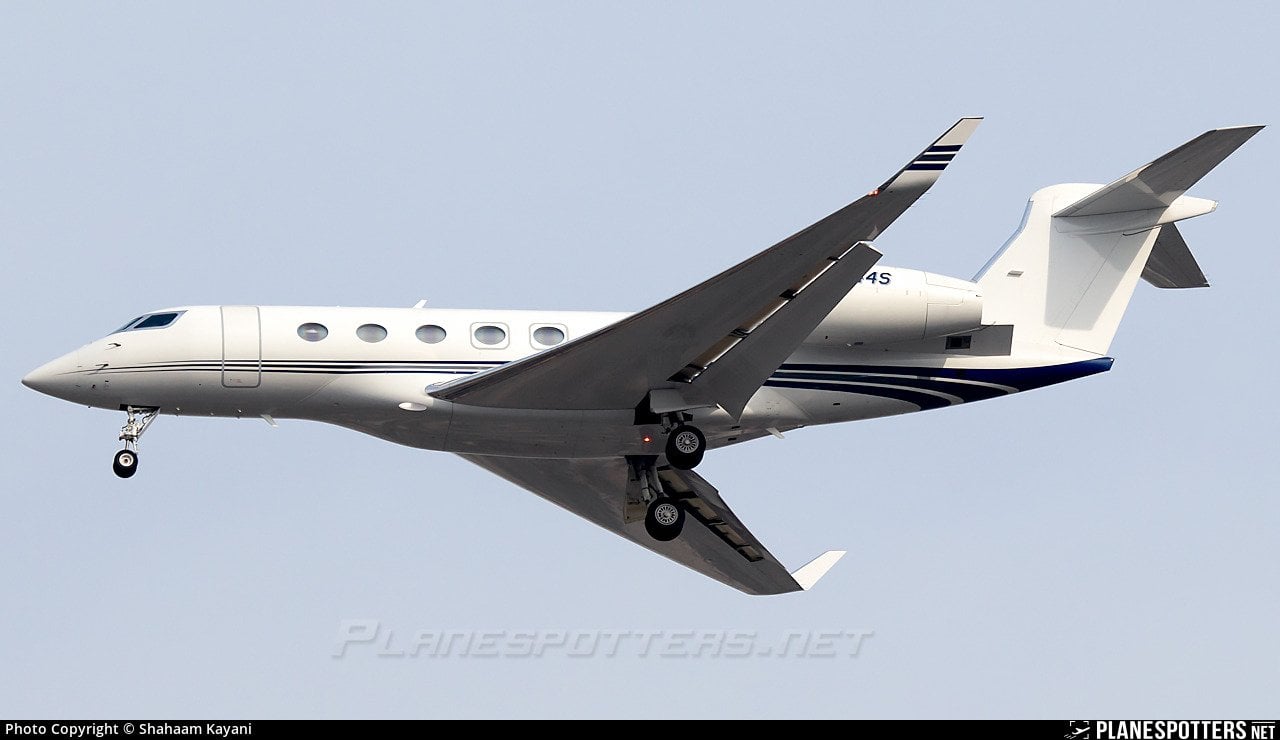
ISLAMABAD: The Punjab government has acquired a 2019-manufactured Gulfstream GVII-G500 business jet valued at an estimated $38-42 million for official VIP transport, a decision that has ignited widespread criticism amid Pakistan’s ongoing economic difficulties and the province’s substantial debt burden.
The acquisition, recently spotted at Allama Iqbal International Airport in Lahore, represents a significant upgrade to the provincial fleet previously reliant on older aircraft or federal and military resources. Punjab Chief Minister Maryam Nawaz confirmed the purchase through a public statement, noting that the province would no longer need to request aircraft from the federal government or Pakistan Air Force for official duties.
The Gulfstream GVII-G500, a high-performance large-cabin business jet, features a range of 5,000 to 5,300 nautical miles and a high-speed cruise capability of Mach 0.90. It accommodates up to 19 passengers in configurations suited for executive travel, equipped with advanced avionics including the Symmetry Flight Deck and twin PW814GA engines.
Reports indicate the aircraft is U.S.-registered and was manufactured in 2019, positioning it as a pre-owned yet modern addition to government assets. Pre-owned models of this type typically list between $34 million and $39 million, though final costs including modifications, registration, and operational setup may elevate the expenditure toward the higher end of estimates.
Critics have highlighted the timing of the purchase against Pakistan’s fragile economic landscape. The country continues to grapple with high inflation, rising poverty affecting nearly 45 percent of the population, and record unemployment levels. Punjab, as the most populous province, carries a debt exceeding Rs1.7 trillion, placing additional strain on public finances.
Social media commentary and opposition voices have questioned the priority given to luxury VIP transport. Former Sindh governor Mohammad Zubair described the jet as an unnecessary extravagance worth over Rs1,000 crore, arguing that resources should address pressing needs in health, education, and poverty alleviation rather than elite mobility.
The acquisition echoes past controversies surrounding provincial VIP expenditures. In 2016, similar plans under a previous Punjab administration drew scrutiny from the Pakistan Tehreek-e-Insaf over a proposed Rs2 billion executive jet, with questions raised about budget allocations and taxpayer burden.
More recently, the Punjab government faced backlash for spending Rs7.5 billion on 283 luxury vehicles for VIPs and officials, including bulletproof models and protocol cars, amid accusations of disconnect from public hardships.
Defenders of the decision maintain that the jet enhances administrative efficiency. By reducing dependence on external entities, it ensures reliable transport for the chief minister and senior officials during domestic and potential regional engagements. The aircraft replaces outdated models, potentially lowering long-term maintenance costs compared to frequent chartering or borrowing.
Operational expenses remain a point of contention. Industry sources suggest that maintaining and flying such aircraft incurs substantial annual costs, including fuel, crew training, insurance, and hangar facilities. Some estimates place routine flying budgets in the range of Rs80-86 crore, raising concerns about sustainability without dedicated provincial funding.
The move occurs alongside other ambitious provincial initiatives. The Punjab government has advanced plans for “Air Punjab,” a proposed provincial airline involving leased Airbus aircraft for domestic routes, with potential expansion internationally. While separate from the VIP jet, these projects reflect efforts to bolster transport infrastructure.
Public reaction has polarized along political lines. Supporters view the jet as a symbol of provincial autonomy and progress under the current leadership. Opponents, including social media users and analysts, label it emblematic of misplaced priorities in a nation confronting fiscal constraints and IMF-mandated austerity measures.
Pakistan’s broader economic context amplifies the debate. The federal government pursues privatization and revenue enhancement, while provinces manage devolved responsibilities under the 18th Amendment. Expenditures on non-essential assets risk undermining public trust in governance.
The Punjab administration has not yet released detailed procurement documents or justification reports. Transparency in funding sources and cost-benefit analysis could address criticisms and clarify whether the purchase aligns with fiscal responsibility.
As discussions continue, the acquisition underscores tensions between administrative necessities and public expectations in resource allocation. The Gulfstream’s deployment will likely face ongoing scrutiny as economic pressures persist across the country.