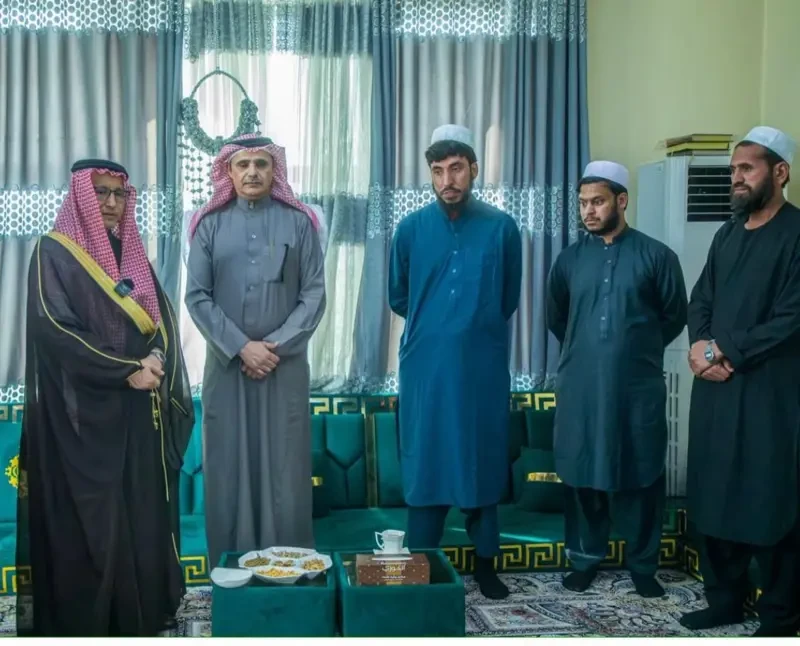
ISLAMABAD: The Taliban administration in Afghanistan has released three Pakistani soldiers who were captured during border clashes along the Durand Line in October last year, according to a statement from the group’s chief spokesman Zabihullah Mujahid.
Mujahid disclosed the development in an interview with BBC, attributing the release to mediation efforts by Saudi Arabia. He stated that the decision aligns with the Islamic Emirate’s policy of fostering positive relations with other nations.
The spokesman claimed the three soldiers were detained on October 12 during retaliatory operations conducted by Taliban forces along the southern Afghanistan border. These operations reportedly followed alleged violations and escalated tensions between the two countries.
Mujahid emphasized that the release occurred on the eve of Ramadan, describing the holy month as a time of mercy, forgiveness, and blessings. He highlighted Saudi Arabia’s role in hosting negotiations and facilitating the handover of the prisoners to a visiting delegation in Kabul.
In a formal statement issued by the Taliban government, the administration reiterated its commitment to maintaining constructive ties with all countries. It noted that the gesture responded to a request from the brotherly nation of Saudi Arabia, underscoring efforts to de-escalate regional friction.
The captives were handed over on Monday, coinciding with preparations for Ramadan, which began in late February this year. Mujahid asserted that the move demonstrated goodwill and a desire to avoid unnecessary confrontation.
Tensions between Pakistan and the Taliban-led Afghanistan have persisted since the latter’s return to power in 2021, primarily centered on the disputed Durand Line border. The 2,611-kilometer frontier has witnessed repeated skirmishes, often linked to cross-border militant activities.
In October 2025, heavy clashes erupted after accusations of airspace violations and airstrikes. Taliban sources claimed their forces killed 58 Pakistani soldiers and wounded 30 others in retaliatory actions across multiple locations.
Pakistani military authorities countered with reports of significant casualties on the Afghan side, stating that over 200 Taliban and affiliated fighters were neutralized. Both sides alleged the capture or destruction of numerous border posts during the exchanges.
A temporary ceasefire was agreed upon shortly afterward, mediated in part by regional actors including Qatar and Saudi Arabia. Despite intermittent talks, including sessions in Riyadh, comprehensive resolutions have remained elusive.
The release of the three soldiers marks a rare positive development amid ongoing strains. Mujahid maintained that no Pakistani forces had captured Afghan personnel during the conflict, framing the prisoner release as a unilateral act of leniency.
Pakistan’s government and military have not issued an official comment on the release as of now. Sources indicate that verification processes and diplomatic channels are likely underway to confirm the soldiers’ return and condition.
The incident underscores the fragile nature of Pakistan-Afghanistan relations, exacerbated by security concerns over groups such as the Tehrik-i-Taliban Pakistan (TTP). Islamabad has repeatedly accused Kabul of providing safe havens to militants launching attacks inside Pakistan.
Taliban officials have denied such allegations, insisting that border issues stem from Pakistan’s policies and unaddressed disputes over the Durand Line, which Afghanistan has historically refused to recognize.
Saudi Arabia’s involvement reflects its broader diplomatic role in South Asia and the Middle East. The kingdom has hosted multiple rounds of dialogue between Pakistani and Taliban representatives in recent months, aiming to stabilize the frontier and prevent further escalation.
Observers note that such mediations often yield short-term gestures like prisoner exchanges but struggle to address root causes, including militant sanctuaries and fencing along the border.
The release ahead of Ramadan carries symbolic weight in Islamic tradition, where acts of clemency are encouraged during the month of fasting and reflection. Taliban statements framed the decision within this religious context.
Broader regional dynamics, including Pakistan’s internal security challenges and Afghanistan’s quest for international legitimacy, continue to influence bilateral interactions. The prisoner release may serve as a confidence-building measure, though skepticism remains regarding long-term impact.
Analysts suggest that sustained dialogue, potentially involving other mediators, will be essential to prevent recurrence of border violence. The prolonged closure of key frontier crossings has already affected trade and humanitarian access.
As Ramadan commences, the gesture offers a momentary respite in an otherwise strained relationship. Whether it translates into broader de-escalation remains to be seen, pending responses from Islamabad and further developments on the ground.