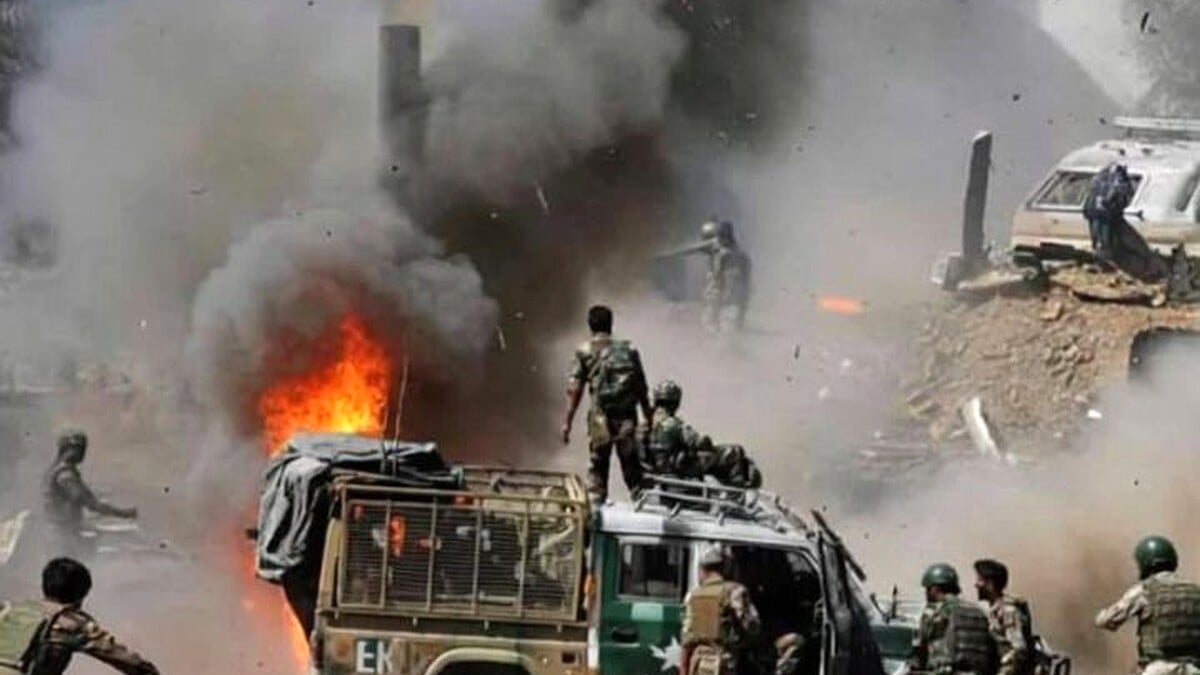
ISLAMABAD: At least Six Pakistani soldiers were martyred in a roadside explosion involving a remote-controlled improvised explosive device in the Killi Bakhtiyar Luni area of Dukki district, Balochistan province. The troops belonged to a unit returning from an operation aimed at eradicating illegal poppy cultivation fields.
The blast occurred as the soldiers travelled in their vehicle after completing the anti-narcotics mission. Official sources confirmed the incident, highlighting the use of a remotely detonated bomb as the cause of the fatalities.
Balochistan has witnessed a surge in such attacks on security personnel in recent years. Roadside improvised explosive devices remain a favoured tactic among militant groups operating in the province.
Data from security assessments show that districts like Dukki, Kech, and Awaran frequently report ambushes on military convoys using these explosives. In 2025 alone, multiple operations against poppy fields required heavy security due to heightened risks.
Pakistan’s anti-narcotics efforts have intensified following shifts in regional opium production. After Afghanistan’s opium cultivation declined by 20 per cent in 2025 to 10,200 hectares according to UNODC reports, poppy farming migrated to Balochistan.
High-resolution surveys identified over 8,100 hectares of poppy in limited areas of Balochistan in 2025. Authorities destroyed cultivation on 33,000 acres across districts including Killa Abdullah, Pishin, Dukki, and others in coordinated drives.
In one 2025 operation in Pishin district, approximately 60 acres were eradicated. Another in Barshore tehsil cleared similar areas, with forces facing resistance during these missions.
The Dukki incident aligns with patterns where anti-poppy operations provoke militant responses. Militant outfits exploit ungoverned spaces and narcotics trade routes to fund activities.
Concurrently, six Iranian soldiers were reported killed in an attack by terrorist groups in Iran’s Sistan and Baluchestan province, bordering Pakistan’s Balochistan. The assault reflects shared vulnerabilities along the frontier.
Militant groups like Jaish al-Adl and Baloch separatist factions operate across the porous border. Cross-border incidents have included attacks on convoys and security posts in both countries.
Recent months saw Iranian forces kill militants in operations near the border, while Pakistani actions targeted hideouts. In 2025, several IRGC members died in ambushes in Sistan and Baluchestan.
The timing of these attacks coincides with the ongoing war involving Iran, now in its third week. US and Israeli strikes have targeted Iranian infrastructure, prompting Iranian missile retaliations and Gulf disruptions.
Reports indicate heavy missile exchanges and drone usage in the conflict, with strikes reaching cities like Hamadan. The escalation has heightened instability in border regions.
Analysts note that regional turmoil can embolden local militants. Porous borders facilitate movement of fighters and weapons, potentially linking insurgencies to broader geopolitical tensions.
In Balochistan, security forces conducted large-scale operations in early 2026 following coordinated militant attacks. Pakistani military reported killing over 145 militants in 40-hour battles after assaults that claimed dozens of lives.
These included civilian casualties and attacks on infrastructure. The BLA claimed responsibility for several strikes in districts across the province.
The Dukki explosion adds to casualties among forces engaged in both counter-insurgency and anti-narcotics roles. Poppy eradication remains critical as illicit cultivation funds militancy and trafficking networks.
Authorities continue investigations into the blast to identify perpetrators and strengthen intelligence. Enhanced patrols and community coordination aim to reduce vulnerabilities in high-risk districts.
The concurrent events in Sistan and Baluchestan underscore the interconnected nature of threats. Both nations face challenges from groups exploiting border areas amid wider regional conflict.
Security personnel’s sacrifices highlight the persistent dangers in maintaining stability. Efforts persist to dismantle militant networks and curb narcotics as sources of instability.