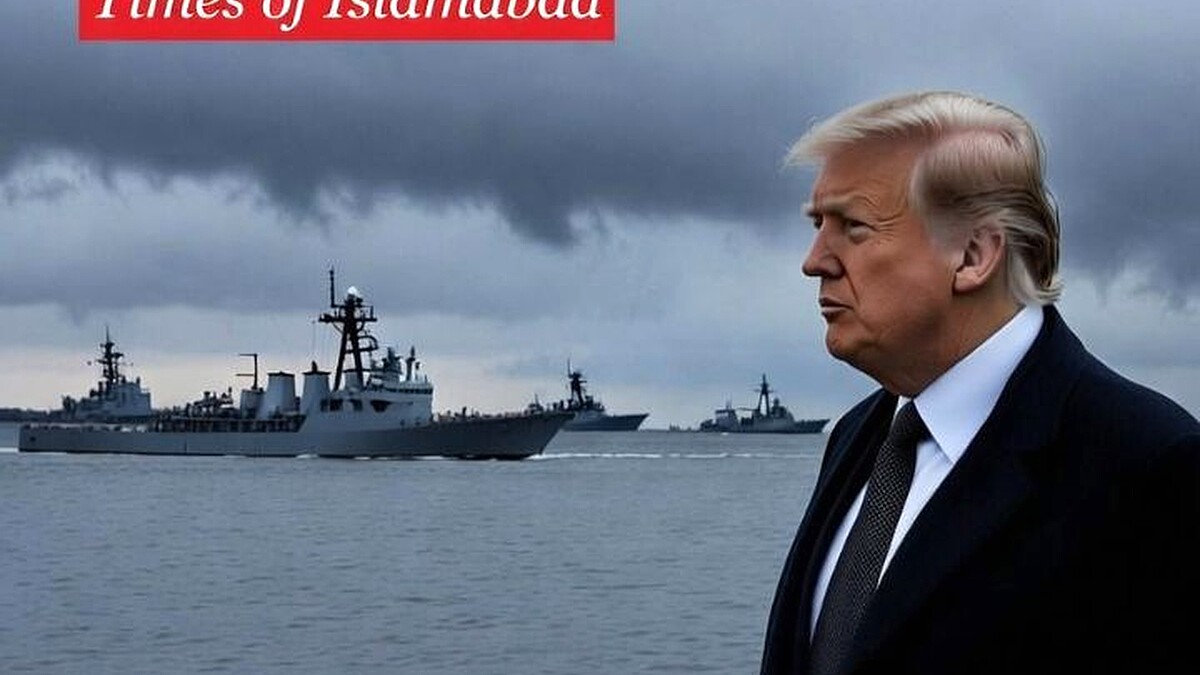
ISLAMABAD: In a major setback for United States President Donald Trump, key international allies including Australia, the United Kingdom, France, Canada and China have refused to deploy naval warships to reopen the Strait of Hormuz, the critical chokepoint for global oil supplies disrupted by the ongoing US-Israel war against Iran.
Australia’s Transport and Infrastructure Minister Catherine King stated unequivocally on March 16 that her country would not send ships to the region. She emphasized that no formal request had been received from the US and that Australia was not contributing to such efforts despite recognizing the strait’s importance for global energy flows.
This announcement follows President Trump’s repeated public appeals over the weekend for a multinational naval coalition. On his Truth Social platform, Trump urged nations heavily reliant on Hormuz oil—explicitly naming China, France, Japan, South Korea and the UK—to dispatch warships and help keep the passage “open and safe.” He described the Iranian actions as an “artificial constraint” and vowed US support for any participating countries.
The Strait of Hormuz handles approximately one-fifth of the world’s seaborne oil trade. Since the conflict intensified in late February with coordinated US and Israeli strikes on Iranian targets, Iran has effectively blockaded the strait for vessels linked to the US, Israel and their allies. Iranian officials have declared the waterway open only to non-hostile shipping, while threatening immediate destruction of enemy tankers.
Reports indicate at least 16 commercial vessels have faced attacks in the strait since hostilities began, leading to a near-total halt in tanker traffic for Western-aligned nations. Global oil prices have surged dramatically, prompting emergency releases from International Energy Agency reserves to mitigate supply shocks.
France has firmly ruled out sending warships amid the escalating violence. Defence officials in Paris stressed a preference for de-escalation and no deployment of vessels while the conflict rages. Similarly, the UK has expressed reluctance, with Prime Minister Keir Starmer focusing discussions with Trump on alternatives such as minesweeping drones rather than full naval commitments.
Canada has remained silent on any positive response, aligning with the broader pattern of hesitation among NATO partners. China, a major importer of Iranian oil, has urged restraint without pledging military involvement. Beijing has reportedly engaged in separate talks with Tehran on ensuring safe passage for its own shipments but has avoided joining any US-led operation.
President Trump’s calls have intensified pressure on allies. He warned that failure to support the US could lead to a “very bad future” for NATO and hinted at potential economic repercussions. Despite these threats, no country has publicly committed warships, leaving the burden primarily on American naval forces already escorting limited traffic.
The war, now in its third week, has seen US strikes on Iranian oil infrastructure, including Kharg Island, Iran’s main export terminal. Trump has threatened further attacks “just for fun” if disruptions continue. Iran has vowed retaliation, warning of broader strikes on energy assets tied to the US and its partners across the region.
Energy experts note that prolonged closure could exacerbate global inflation and strain economies dependent on Middle Eastern crude. Australia’s decision reflects a strategic focus on Indo-Pacific priorities over distant Middle East commitments, a stance echoed in earlier refusals to join Red Sea operations.
The lack of allied naval support underscores deep divisions in the international response to the conflict. While the US pushes for collective action to restore shipping freedom, most nations prioritize avoiding entanglement in what many view as an escalatory phase.
Iran’s Foreign Minister Abbas Araghchi has rejected negotiation overtures, insisting Tehran will defend itself “as long as it takes.” US officials predict the war may conclude in weeks, but the Hormuz impasse remains a flashpoint with no immediate resolution in sight.
This collective refusal marks a significant diplomatic blow for President Trump, highlighting limits to US influence in rallying global partners for military action in the Gulf. As oil markets remain volatile and shipping risks high, the path to reopening the strait appears increasingly uncertain without broader cooperation.