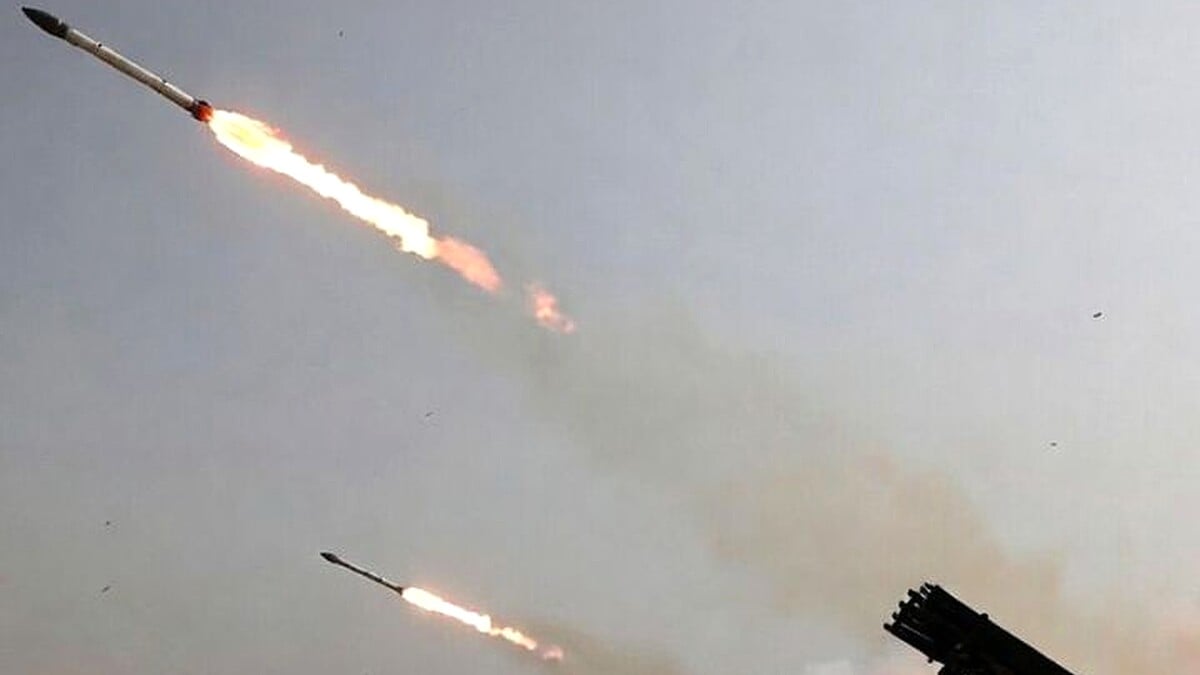
ISLAMABAD: A recent revelation has raised fresh concerns over Afghanistan’s evolving military ambitions under Taliban rule, as reports indicate the group is actively preparing to develop missiles with a range of 200 to 300 kilometres, relying on external technical assistance.
The disclosure, originating from credible international media scrutiny, points to a structured effort by the Islamic Emirate’s defence apparatus to enhance its ballistic and guided projectile systems beyond current short-range capabilities.
Such a range would enable strikes reaching deep into neighbouring territories, potentially altering the strategic balance in South and Central Asia where border frictions have intensified.
Experts note that the Taliban administration has already demonstrated progress in guided rocket technology, with successful tests of systems like the Milan Konkursi (9M135) anti-tank guided missile conducted in Kabul as early as January 2025.
These tests involved trained operators and targeted armoured vehicles, low-flying aircraft, and naval assets, marking a step towards more sophisticated weaponry integration.
The pursuit of longer-range missiles aligns with broader efforts to modernise forces inherited from the previous Afghan government, including captured advanced equipment following the 2021 withdrawal.
Analysts highlight that foreign expertise plays a pivotal role in this endeavour, as the Taliban lack indigenous industrial capacity for complex missile design, propulsion systems, guidance mechanisms, and warhead integration.
Assistance likely draws from sympathetic or opportunistic actors in the region, where technical know-how in rocketry and ballistics exists in established defence programmes.
This development occurs against a backdrop of escalating confrontations with Pakistan, where cross-border strikes and retaliatory actions have become frequent since late 2025.
Pakistan’s military has conducted air operations inside Afghan territory targeting alleged militant hideouts, prompting Taliban vows of stronger responses.
A missile capability extending 200-300 kilometres would place key Pakistani urban centres and military installations within potential reach, heightening deterrence calculations on both sides.
Regional security observers point out that such systems could include adaptations of existing short-range ballistic or cruise missile designs, modified for greater distance through improved fuel efficiency and trajectory control.
The Taliban’s defence ministry has not publicly confirmed the specific 200-300 km programme, yet its pattern of incremental testing suggests deliberate progression.
Previous acquisitions from fallen Afghan National Defence and Security Forces stockpiles provided a foundation, including various rocket artillery and guided munitions left behind in 2021.
International assessments indicate the group has focused on reverse-engineering and upgrading these assets with external input to overcome technical limitations.
The involvement of specialists underscores the challenges of indigenous development in a resource-constrained environment, where access to precision components, testing facilities, and simulation tools remains restricted.
This push for extended-range strike power coincides with the Taliban’s consolidation of control and efforts to project strength amid internal stabilisation and external isolation.
No country formally recognises the Kabul administration comprehensively, though pragmatic engagements continue with neighbours and select powers.
The missile initiative risks further complicating diplomatic normalisation, as it could be perceived as provocative in an already volatile neighbourhood.
Pakistan has repeatedly accused the Taliban of harbouring anti-state elements, leading to military escalations that claimed civilian lives on both sides.
In response, Taliban officials have framed their defence enhancements as necessary for sovereignty protection against perceived aggression.
Defence analysts warn that a successful 200-300 km missile would shift dynamics, potentially prompting pre-emptive concerns from affected states and renewed calls for arms control measures.
The programme’s reliance on foreign experts also raises questions about proliferation risks, as technology transfer could extend to non-state actors in unstable regions.
Despite these advancements, the Taliban’s overall military remains geared towards asymmetric warfare, with limited air defence and conventional projection.
Long-range missiles would represent a qualitative leap, demanding sustained investment in training, logistics, and command structures.
Regional powers monitor these developments closely, as they intersect with ongoing counter-terrorism priorities against groups like the Islamic State-Khorasan Province.
The pursuit reflects a strategic evolution from guerrilla tactics to state-like deterrence, influenced by lessons from past conflicts and current border realities.
As tensions persist, the international community faces the challenge of balancing humanitarian engagement with security imperatives in Taliban-governed Afghanistan.
The revelation serves as a reminder that military modernisation under the current regime continues unabated, with implications for peace and stability across borders.