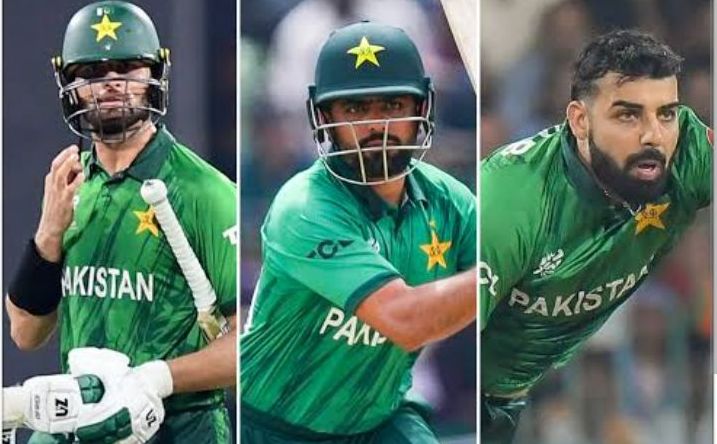
ISLAMABAD: Pakistan cricket stands at a critical crossroads following a humiliating 61-run defeat to India in the T20 World Cup 2026 Group A match at Colombo’s R Premadasa Stadium, prompting calls for sweeping changes that could see star players Babar Azam, Shaheen Shah Afridi and others dropped from the national side.
The loss, where India posted 175 for 7 powered by Ishan Kishan’s explosive 77 off 40 balls before bundling Pakistan out for 114 in 18 overs, exposed deep flaws in the team’s batting and bowling under pressure. Babar Azam managed only five runs before being dismissed attempting an unnecessary slog, while Shaheen Shah Afridi conceded 31 runs in two overs without significant impact.
Former captain Shahid Afridi, showing no favouritism even toward his son-in-law Shaheen, demanded immediate action. He stated that if the decision rested with him, he would bench Babar, Shaheen and Shadab Khan for the upcoming match against Namibia, urging the Pakistan Cricket Board to inject fresh blood and build confidence among younger players.
Echoing this sentiment, former batter Mohammad Yousuf declared that time was up for the senior trio. He emphasized that Pakistan’s T20 squad required new performers rather than relying on inconsistent veterans who deliver against weaker opponents but falter in high-stakes encounters.
The performance against India marked a continuation of struggles in major tournaments. Pakistan’s recent record includes early exits in the 2023 ODI World Cup, 2024 T20 World Cup and 2025 Champions Trophy, where they failed to win a single group-stage match despite hosting the event.
In 2025, Pakistan’s T20I win rate hovered around 53 percent across 17 matches, an improvement from 29 percent in 2024 but still reflecting inconsistency. The team reached the Asia Cup final that year but lost to India, highlighting persistent issues against top opposition.
Selectors have already shown willingness to experiment. Babar Azam and Mohammad Rizwan were demoted from Category A to Category B in the PCB’s 2025-26 central contracts, with no player awarded the top tier. Both were excluded from the Asia Cup squad earlier, signaling a shift toward merit-based selections and youth integration.
Chief selector Aaqib Javed defended including Babar in the T20 World Cup 2026 squad despite form concerns, citing the need for a balanced unit. However, the Colombo defeat has intensified pressure on such decisions.
Critics point to tactical missteps and failure to adapt in big matches. Babar’s struggles at number four and Shaheen’s inability to contain runs in death overs have drawn particular ire. Shadab Khan’s expensive over and modest batting contribution further compounded the problems.
The PCB faces mounting calls to overhaul the T20 setup. Legends like Shoaib Akhtar have labeled the leadership incompetent, while fans express frustration over repeated failures in ICC events.
Pakistan’s upcoming fixture against Namibia offers a potential testing ground for changes. Afridi advocated playing untried talents to foster long-term growth, arguing that repeated chances for seniors have not yielded results.
Broader structural issues plague the team. Frequent captaincy changes, inconsistent selection policies and poor away performances have eroded confidence. The 2025 Champions Trophy hosting brought financial strain, with reported losses of around USD 85 million, adding to administrative pressures.
Despite these challenges, emerging players in domestic circuits and junior teams provide hope. The Pakistan Shaheens’ victory in the Rising Stars Asia Cup 2025 demonstrated potential in the pipeline.
Whether the PCB acts on the demands for radical overhaul remains uncertain. The coming weeks will reveal if Babar Azam, Shaheen Afridi and other seniors retain their places or make way for a rebuilt side aimed at future success.
The debate underscores a pivotal moment for Pakistan cricket, where clinging to past glories risks further decline, while bold renewal could restore competitiveness on the global stage.