ISLAMABAD – Pakistani Prime Minister Imran Khan warned of “consequences” ifnuclear-armed Pakistan ends up losing a conventional war to itsnuclear-armed rival and neighbor India.
Asked in an Al Jazeera interview to set the record straight on whetherPakistan would hit India with nuclear weapons in case of a large-scaleconflict, Khan began with the disclaimer that he would never be the one toattack.
*“Pakistan would never start a war, and I am clear: I am a pacifist. I amanti-war,”* he said.
However, the prime minister quickly added that when two nuclear-armedstates *“fight a conventional war, there is every possibility that it isgoing to end up into nuclear war.”* And while he described it as*“unthinkable,”* his next hint sent a clear message about what Pakistan maydo if it’s losing a conventional war against India.
*“If say Pakistan, God forbid, we are fighting a conventional war, we arelosing, and if a country is stuck between the choice: either you surrenderor you fight ‘til death for your freedom – I know Pakistanis will fight todeath for their freedom.”*
*So when a nuclear-armed country fights to the end, to the death, it hasconsequences.*
link
Read Top Stories

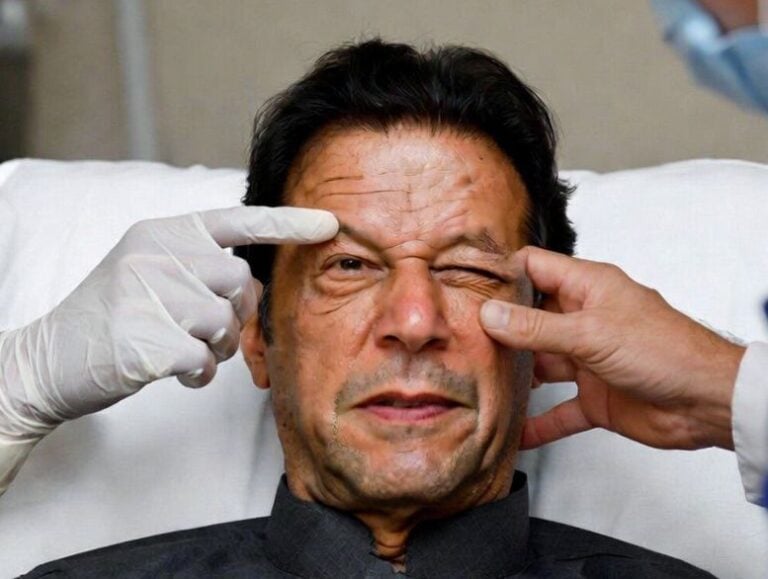
Khan has repeatedly warned in recent weeks that the standoff between Indiaand Pakistan over disputed Kashmir risks spiraling into a nuclear conflictunless foreign powers intervene, along with the UN. There has also beensome confusion in the media about Pakistan’s nuclear strategy.
Earlier this month, Khan vowed not to use nuclear weapons first againstIndia. His spokesperson later said that his words were *“taken out ofcontext,”* and there is *“no change”* in Pakistan’s nuclear stance – whichreportedly does not rule out a first strike against overwhelmingconventional force.
Bitter rivals India and Pakistan have fought three major conventional warssince the mid-1940s, along with several smaller border skirmishes. Most ofthe clashes are centered around the Kashmir region, where cross-bordershelling frequently takes place along the Line of Control (LoC).link
The neighbors edged close to a full-blown war in February. New Delhi sentwarplanes into Pakistan to bomb what it said were camps of Islamistinsurgent group Jaish-e-Mohammed (JeM), which had carried out numerousterrorist attacks on Indian soil. Islamabad accused India of violating itssovereignty. The hostilities ultimately led to intense shelling from bothsides and open aerial combat.
The countries eventually made several friendly overtures but theirrelations hit another low last month, after India revoked theself-governing status of the part of Kashmir it controls. India claims themove will help curb terrorism and boost Kashmir’s economy. Pakistan saysthat ending Kashmir’s autonomy is against international law and will leadto violence in the region.