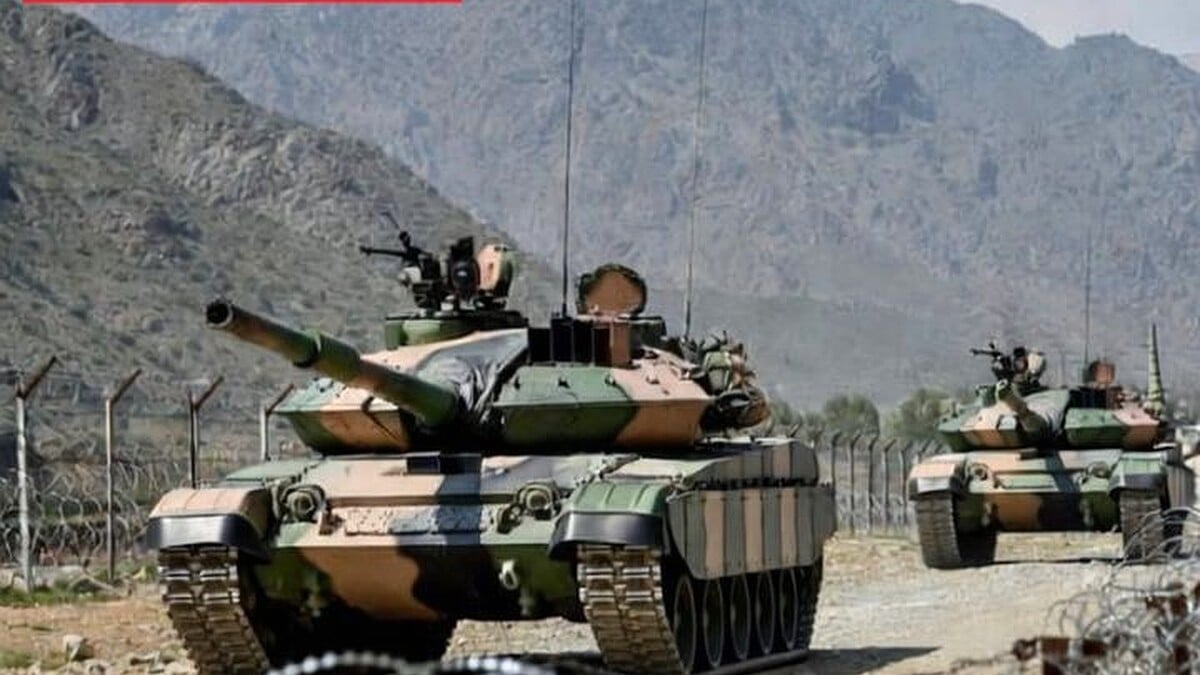
ISLAMABAD: Pakistan’s Ministry of Information and Broadcasting has categorically rejected recent claims by the so-called Afghan Ministry of Defence that Taliban forces captured Pakistani military checkposts and inflicted significant damage, terming these assertions as entirely false and fabricated.
The ministry described the Taliban propaganda as a deliberate attempt to mislead the Afghan public, who continue to suffer directly from the policies and actions of these terror sponsors.
In a statement issued on Saturday, the ministry highlighted that no credible or verifiable evidence has ever supported similar claims made by the Taliban regime in the past.
Whenever such assertions have undergone scrutiny, they have consistently proven inaccurate and baseless.
The latest claim, shared through Taliban channels including images and statements alleging the capture of a post and the killing of 14 Pakistani soldiers, fits this recurring pattern of misinformation.
Pakistan’s fact-checking mechanisms, including the ministry’s dedicated account, swiftly countered the narrative by labelling it as “false as always” and designed specifically to divert attention from the actual losses inflicted on militant groups and their affiliates.
Information Minister Attaullah Tarar reinforced this position, stating that these false claims lack any foundation or basis in reality.
He emphasized that the ministry regularly updates the public on damages and casualties sustained by the Afghan Taliban and their extension, often referred to as Fitna al-Khawarij, backed by irrefutable pictorial and video evidence.
This ongoing border tension stems from a broader escalation along the Durand Line, where cross-border incidents have intensified since early 2026.
Pakistan has conducted targeted operations against militant hideouts in Afghan territory, responding to attacks originating from across the border.
These operations aim to neutralize threats posed by groups like the Tehrik-i-Taliban Pakistan (TTP), which Islamabad accuses the Taliban regime of harbouring.
In contrast, Afghan Taliban spokespersons have repeatedly issued statements claiming retaliatory successes, including captures of Pakistani positions in provinces such as Kunar, Nangarhar, Kandahar, and Paktia.
Such declarations often include unverified figures of Pakistani casualties and seized installations, yet independent verification has remained elusive.
Pakistan maintains that its forces have inflicted heavy losses on opposing elements while suffering minimal setbacks.
The ministry stressed that information regarding counterterrorism actions is shared cautiously to avoid compromising operational security.
This approach ensures accuracy and prevents the spread of unconfirmed reports that could fuel further instability.
The Afghan population, facing economic hardships and internal challenges under Taliban rule, remains the primary audience for these propaganda efforts.
By projecting military victories against Pakistan, the regime seeks to bolster domestic morale amid widespread discontent over governance failures and restrictions.
However, the absence of tangible proof undermines these narratives, as previous similar claims have collapsed under examination.
Pakistan has consistently urged the Taliban administration to prevent its soil from being used against neighbouring states.
Failure to address safe havens for militants has contributed to the cycle of violence along the shared frontier.
Diplomatic channels continue to emphasize the need for restraint and dialogue to de-escalate the situation.
The international community, including regional stakeholders, has expressed concern over the potential for wider instability arising from these clashes.
Pakistan’s response remains measured, focused on defending its sovereignty while avoiding unnecessary escalation.
The ministry reiterated its commitment to transparency in communicating verified developments to counter disinformation campaigns.
As the border dynamics evolve, accurate reporting becomes essential to separate facts from fabricated stories.
This latest rebuttal underscores Islamabad’s resolve to challenge propaganda that distorts the reality on the ground.