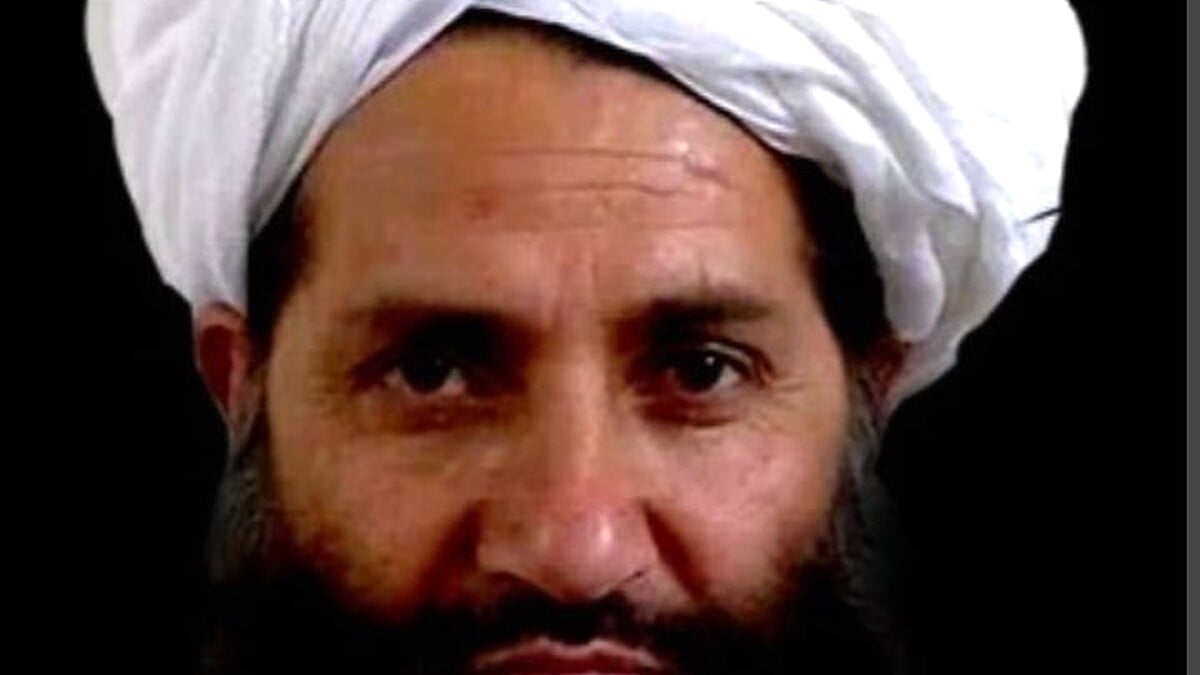
ISLAMABAD: Former CIA officer Sarah Adams has claimed that Pakistan’s military launched a targeted strike on the hiding location of Taliban Supreme Leader Haibatullah Akhundzada at Camp Gecko in Kandahar province, marking a dramatic escalation in cross-border tensions.
The claim surfaced amid ongoing hostilities between Islamabad and the Taliban-led Afghan government, with recent Pakistani airstrikes hitting multiple sites in Afghanistan, including areas around Kandahar.
Adams, a former CIA targeting officer known for her counterterrorism analysis, stated that the operation aimed directly at Akhundzada’s current base, where he has reportedly been sheltering for weeks in a heavily fortified underground setup.
Early unconfirmed reports from the incident suggest around 25 fatalities and over 30 injuries among security personnel and others present at the site.
The strike reportedly struck surface-level structures, potentially sparing Akhundzada himself due to his deep underground positioning and multi-layered protective detail.
Camp Gecko, historically significant as the former compound of Taliban founder Mullah Omar, was seized by US forces in 2001 during Operation Rhino and later served as a US special operations base known as Firebase Maholic.
The location in Kandahar has long been associated with Taliban leadership hideouts, though its current use by Akhundzada remains a point of speculation in intelligence circles.
Pakistan’s military actions come against the backdrop of intensified border clashes, including airstrikes under operations targeting Tehrik-i-Taliban Pakistan (TTP) sanctuaries inside Afghanistan.
Tensions have risen sharply in recent months, with Pakistan accusing the Taliban of harboring TTP militants responsible for attacks inside Pakistani territory.
The Afghan side has condemned such incursions as violations of sovereignty, reporting civilian casualties in some strikes, including on refugee camps in Kandahar.
No official statement from Pakistan’s Inter-Services Public Relations (ISPR) has confirmed or denied the specific targeting of Akhundzada at Camp Gecko.
Taliban spokespersons have previously dismissed similar rumors of attacks on their supreme leader as disinformation campaigns designed to sow division.
Akhundzada, who rarely appears in public and communicates mostly through audio messages, maintains a reclusive existence with elaborate security protocols involving trusted inner circles and dispersed command structures.
Analysts note that any successful move against him could trigger internal power struggles within the Taliban, given his role as the ultimate authority on policy and religious interpretation.
Pakistan has justified its cross-border operations as defensive measures to counter terrorism spillover, particularly from TTP bases in Afghan provinces bordering Balochistan and Khyber Pakhtunkhwa.
The escalation follows repeated diplomatic failures to resolve the TTP issue, with Pakistan pushing for stronger action from Kabul.
Regional observers warn that further strikes risk broader instability, potentially drawing in other actors amid fragile post-2021 dynamics in Afghanistan.
Adams’ allegation, shared via social media and intelligence commentary channels, aligns with her recent assessments of Taliban internal vulnerabilities and external pressures.
Her background includes work on high-profile terrorism cases, lending weight to her claims in some quarters, though they await independent verification.
Casualty figures remain fluid, with no detailed breakdown from Afghan sources on whether high-value targets were affected.
The incident underscores the volatile Pakistan-Afghanistan relationship, strained by historical mistrust, border disputes, and militant safe havens.
Diplomatic channels remain active, but military options appear increasingly prominent as both sides prioritize security imperatives.
The international community continues to monitor developments closely, concerned about humanitarian impacts and the potential for wider conflict.
As details emerge, the alleged strike at Camp Gecko highlights the high stakes in the ongoing shadow war along the Durand Line.