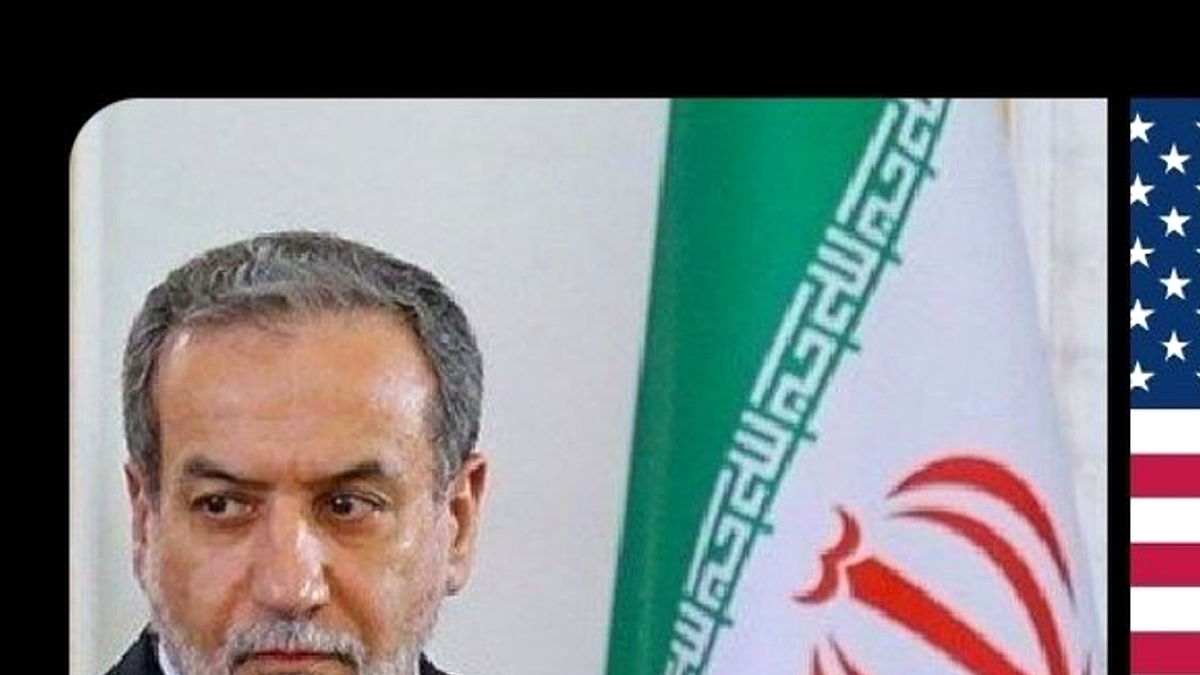
ISLAMABAD: Iran’s Foreign Minister Abbas Araghchi has announced that Tehran stands ready to engage with regional countries in establishing a joint investigative committee to examine recent strikes across the Middle East and determine whether targeted sites were linked to American interests or otherwise.
In an interview with the London-based newspaper The New Arab published on Sunday, Araghchi emphasized that Iran’s military actions have exclusively focused on United States bases and related interests in retaliation for prior assaults launched from those locations against Iranian territory.
The minister asserted that Tehran possesses intelligence suggesting the United States and Israel have conducted operations from certain sites directed toward Arab nations, potentially as part of a broader strategy to escalate tensions.
Araghchi specifically highlighted claims that Washington has developed a drone modeled after Iran’s Shahed series, designated as Lucas, which he said is being deployed to strike positions in Arab countries.
He described the information as under ongoing review but stressed the need for transparent examination to prevent misattribution and further regional instability.
This proposal comes against the backdrop of the ongoing US-Israeli military campaign against Iran, now in its third week following initial strikes on February 28 that targeted multiple Iranian sites and resulted in significant casualties, including the reported death of Supreme Leader Ali Khamenei.
Iran has responded with waves of ballistic missiles and drones aimed at Israel and US-allied facilities in Bahrain, Jordan, Kuwait, Qatar, Saudi Arabia, Turkey, and the United Arab Emirates.
Gulf states have reported intercepting numerous projectiles, with some incidents causing injuries and damage, though civilian areas have largely been avoided in Iranian claims.
Araghchi reiterated that Tehran has refrained from targeting civilian or residential zones in neighboring countries, framing its operations as defensive and proportionate.
The foreign minister’s call for a joint committee aligns with efforts by regional actors to mediate de-escalation, though progress remains unclear amid continued exchanges of fire.
Separately, Iran’s Khatam al-Anbiya Central Headquarters issued a statement accusing adversaries of replicating the Shahed-136 drone design and employing a modified variant named Lucas to attack unrelated targets in regional states, including Turkey, Iraq, and Kuwait.
The headquarters described the tactic as a diabolical plot to frame Iran and erode trust with its neighbors.
Spokesperson Ebrahim Zolfaghari rejected attributions of recent incidents to Tehran, noting that Iran openly claims responsibility when it conducts strikes.
Such allegations echo historical precedents cited by Iranian officials, including Israel’s 1954 Lavon Affair, where covert operations sought to strain relations between Egypt and Western powers.
No independent verification of the Lucas drone’s existence or deployment has emerged from Western or neutral sources, with claims primarily circulating through Iranian state media and allied outlets.
The US and Israel have not publicly responded to the specific accusations regarding drone replication or false-flag operations.
Analysts observe that the Shahed-136, a low-cost kamikaze drone widely exported and used in conflicts such as Ukraine, has become a focal point in discussions of asymmetric warfare capabilities.
Iran’s proposals for joint probes may aim to shift diplomatic narratives and engage Gulf states wary of escalation spilling into their territories.
Recent threats from Tehran urging evacuation of major UAE ports underscore the broadening scope of the conflict, with accusations that American forces utilize regional infrastructure for operations against Iran.
Oil facilities on Iran’s Kharg Island have faced direct strikes, prompting Tehran to label certain Gulf assets as legitimate targets.
The war has disrupted global energy markets, driven up prices, and strained international shipping through the Strait of Hormuz.
Araghchi’s statement reflects Tehran’s strategy to portray itself as open to dialogue on verification while maintaining a firm defensive posture.
Regional responses to the investigative committee idea have yet to materialize publicly, though mediators continue indirect channels.
As hostilities persist without clear off-ramps, the proposal highlights deepening mistrust and the potential for miscalculation in an already volatile theater.
Observers note that collaborative mechanisms could offer a rare avenue for de-escalation if mutual interests align, though entrenched positions on all sides complicate prospects.
The conflict’s trajectory remains uncertain, with military actions continuing alongside diplomatic signaling from multiple capitals.
Iran’s outreach underscores efforts to isolate blame and rally regional solidarity against perceived external interference.