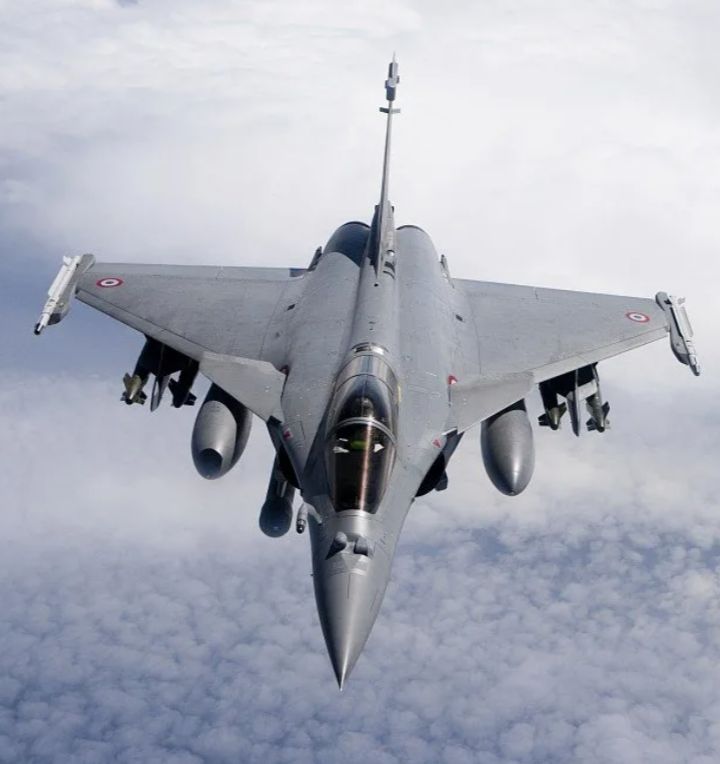
ISLAMABAD: Hindustan Aeronautics Limited has formally denied recent media reports suggesting that the proposed mega-deal for additional Rafale fighter jets would involve significant production at its facilities in India.
The clarification from HAL comes amid heightened expectations for a major boost to the Indian Air Force’s capabilities through the acquisition of 114 Rafale multirole fighters from France’s Dassault Aviation.
Media outlets had reported that the Defence Acquisition Council approved the procurement, with around 20 aircraft to be delivered in fly-away condition by 2030 and the remaining jets manufactured in India through a collaboration between Dassault and HAL.
These reports positioned the deal, valued at approximately Rs 3.25 lakh crore, as a landmark step under India’s Make in India initiative, promising technology transfer and up to 50-60 per cent indigenous content.
HAL, however, stated in official filings to stock exchanges that it has received no such official communication from the Ministry of Defence or Dassault Aviation regarding any manufacturing partnership or role in the proposed contract.
The company emphasised that as of now, no formal discussions or notifications have taken place concerning production of the Rafale jets at its sites.
This denial casts doubt on earlier assumptions that HAL would lead local assembly efforts, similar to past expectations tied to India’s defence self-reliance goals.
The Indian Air Force currently operates 36 Rafale jets acquired in a 2016 deal, with deliveries completed by late 2024, and has recently contracted 26 Rafale-M naval variants for carrier operations.
The proposed 114 additional jets aim to address critical squadron shortages, as the IAF faces a depleting fleet amid regional security challenges.
Analysts note that reliance on foreign platforms has become necessary due to delays in indigenous programmes like the Tejas Mk-1A, hampered by engine supply issues from GE Aerospace.
HAL’s production rates for Tejas variants remain below targets, prompting urgency for proven multirole fighters like the Rafale to fill operational gaps.
The Rafale, known for its advanced avionics, beyond-visual-range capabilities, and versatility in air-to-air and air-to-ground missions, has been a cornerstone of IAF modernisation since its induction.
Reports indicate the new deal could include provisions for progressive localisation, starting with assembly and moving towards higher indigenous components.
However, HAL’s statement highlights a potential shift, with speculation that private sector partners, such as those in existing joint ventures with Dassault, might play a larger role instead.
This development raises questions about the extent of technology transfer and benefits to state-owned entities under the strategic partnership model.
Defence experts point out that excluding or minimising HAL’s involvement could limit knowledge accumulation in high-end aerospace manufacturing within public sector undertakings.
It may also affect long-term indigenisation targets, as HAL has historically been central to aircraft production and maintenance in India.
The timing of HAL’s denial coincides with preparations for high-level engagements, including French President Emmanuel Macron’s visit to India, where defence cooperation features prominently.
The deal’s clearance by the Defence Acquisition Council marks initial approval, but commercial negotiations, cost finalisation, and Cabinet Committee on Security endorsement remain pending.
Observers suggest that the absence of official confirmation on production partners indicates ongoing deliberations between New Delhi, Paris, and industry stakeholders.
For the Indian Air Force, the priority remains rapid induction to maintain combat readiness against evolving threats.
The Rafale fleet’s integration has already enhanced operational flexibility, with capabilities in electronic warfare, precision strikes, and network-centric operations.
Any delay or revision in production plans could impact timelines for squadron build-up.
Broader implications include India’s strategic ties with France, which have deepened through successive defence pacts and joint exercises.
The proposed acquisition would position India as one of the largest operators of the Rafale outside France.
Defence ministry statements affirm commitment to majority manufacturing in India, aligning with self-reliance policies.
Yet HAL’s position underscores the need for clarity to avoid misinformation and ensure stakeholder alignment.
As negotiations progress, the focus will remain on balancing immediate operational needs with long-term industrial growth.
The outcome will shape India’s aerospace ecosystem and its approach to future high-value procurements.