*MUNICH, GERMANY: *Global spending on defence rose by four per cent in2019, the largest growth in 10 years, led by big increases in the US andChina, a study said on Friday.
The International Institute for Strategic Studies (IISS) said the rise wasfuelled by growing rivalries between big powers, new military technologiesand rumbling conflicts from Ukraine to Libya.
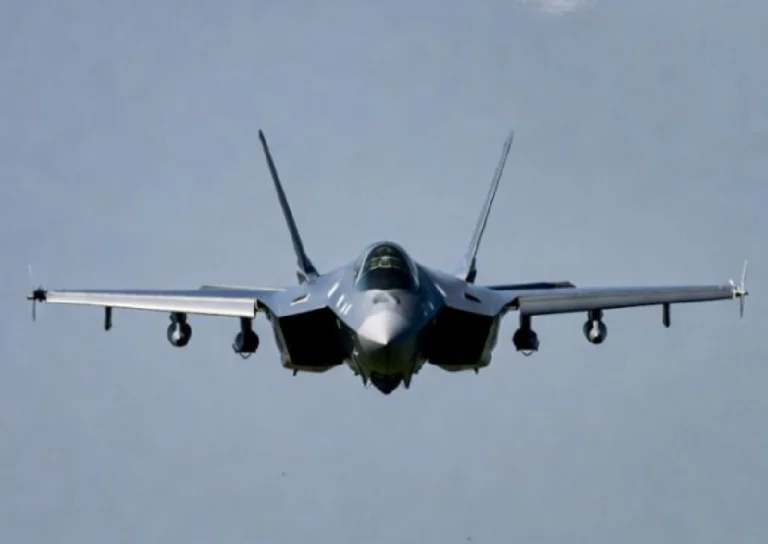
Beijing’s military modernisation programme, which includes developing newhard-to-detect hypersonic missiles, is alarming Washington and helpingdrive US defence spending, the IISS said.
Its annual “Military Balance” report said the increase alone in US spendingfrom 2018 to 2019, $53.4 billion, was almost as big as Britain’s entiredefence budget.
“Spending rose as economies recovered from the effects of the financialcrisis, but increases have also been driven by sharpening threatperceptions,” IISS chief John Chipman said, launching the report at theMunich Security Conference.
Both the US and China increased spending by 6.6 percent, the report said,to $684.6 billion and $181.1 billion respectively.
Europe — driven by ongoing concerns about Russia — stepped up by 4.2percent, but this only brought the continent’s defence spending back to2008 levels, before the global financial crisis saw budgets slashed.
European Nato members have been seeking to increase spending to placatePresident Donald Trump, who has repeatedly accused them of freeloading onthe US.
Trump has railed at European allies, particularly Germany, for not livingup to a 2014 Nato pledge to spend two percent of GDP on defence.
The mercurial president’s anger over spending has fuelled concern about hiscommitment to the transatlantic alliance, culminating in an explosive 2018summit where he launched a blistering public attack on Germany in atelevised meeting with Chancellor Angela Merkel.
Giving the opening address at the annual security gathering, GermanPresident Frank-Walter Steinmeier warned that Trump’s “America First”strategy had shaken up the international order and fuelled insecurity.
“We are witnessing today an increasingly destructive momentum in globalpolitics,” Steinmeier said.
Read Top Stories
“Every year we are getting further and further away from our goal ofcreating a more peaceful world through international cooperation.”
Key elements of the international order that developed after the SecondWorld War have come under increasing challenge.
The collapse last year of the Cold War-era Intermediate-Range NuclearForces (INF) treaty and the doubts surrounding the renewal of the New STARTarms reduction treaty, which expires in 2021, have contributed to the moodof instability, the IISS report said.
China’s programme of military modernisation — described by the IISS as“striking for its scale, speed and ambition” — has unsettled Washington aswell as its allies in the Pacific.
In October, Beijing showed off new technologies including its DF-17hypersonic glide vehicle, designed to deliver warheads at huge speeds so asto avoid interception.
Russia, pursuing its own modernisation project, has already announced theentry into service of its own hypersonic missile system.
Dubbed Avangard, the system has been tested at speeds of Mach 27, orroughly 33,000 kilometres (20,500 miles) per hour, according to Moscow.
Hypersonic missiles are worrying Western officials, because they are sofast and so manoeuvrable that they make existing defence systems uselessand give almost no warning of attack.
A senior Nato official warned that in a hypersonic missile strike, it maynot even be clear what the target is “until there’s a boom on the ground”.
Elsewhere, spending in Asia is booming — growing more than 50 per cent in adecade, rising from $275 billion in 2010 to $423bn in 2019 in real terms asthe continent’s economic success has allowed countries to invest more intheir militaries. -APP/AFP