Pakistan’s military modernization is entering a new era, with the PakistanAir Force (PAF) asserting that it now possesses “hypersonic missilecapabilities” as part of a sweeping upgrade of its aerial and missilearsenal (Defense Newslink,Daily Pakistan English Newslink).Although specifics remain scarce, these developments signal Islamabad’sintent to bolster its deterrence posture amid evolving regional threats.
Since at least early 2024, the PAF has publicly stated its integration ofhypersonic-capable weapons—defined as missiles capable of traveling betweenMach 5 and Mach 25—into its inventory (Daily Pakistan English Newslink,pakpositive.pklink).Analysts point to the Chinese CM-400AKG as a likely candidate. Claimed toreach Mach 4.5–5.5, the CM-400AKG may straddle the line betweenhigh-supersonic and hypersonic speeds (Defence Security Asialink).
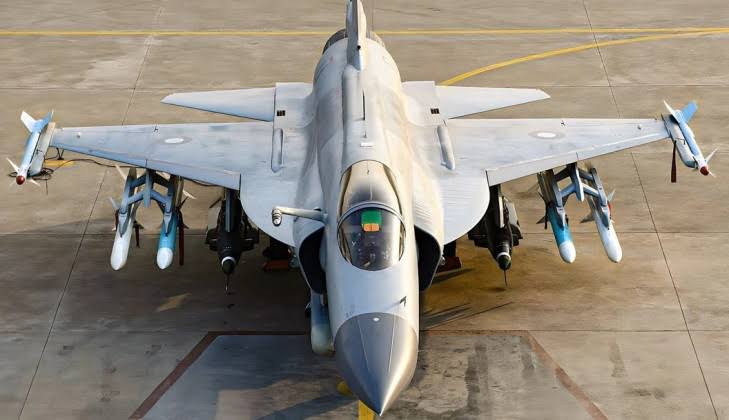
In mid-May 2025, Pakistan released footage of a JF-17 Thunder fighterjet—co-produced with China—armed with CM-400AKG missiles, which Islamabadclaimed had destroyed an Indian S-400 defense battery at Adampur Air Base.However, Indian officials promptly rejected the claim, calling itdisinformation (Defence Security Asialink,AP Newslink).
Behind the scenes, Pakistan is believed to be exploring the acquisition orco-development of more advanced systems, namely China’s DF-17 medium-rangeballistic missile equipped with a hypersonic glide vehicle (HGV), capableof Mach 5–10 speeds and enhanced maneuverability.
Analysts underscore the strategic logic behind Pakistan’s pursuit ofhypersonic technology: to counter India’s increasingly sophisticatedmissile defense network—including S-400, Barak-8, and Akash systems—byacquiring weapons capable of low-altitude, high-speed penetration thatconventional interceptors struggle to handle (Sputnik Indialink,ciss.org.pklink).
While Pakistan’s public narrative emphasizes modernisation, self-reliance,and strategic parity, its actual capability—both technologically andoperationally—remains subject to scrutiny, with key developments yet to beindependently verified (ciss.org.pklink,Indian Defence Research Winglink,Sputnik Indialink).——————————Strategic Impact and Regional Implications
Pakistan’s reported integration of hypersonic-capable systems, even iflimited or provisional, could alter South Asia’s deterrence dynamic. Suchcapabilities offer:
–
Read Top Stories

*Rapid penetration* of layered air defenses. –
*Precision strikes* on critical military infrastructure. –
*Psychological leverage* in strategic messaging.
Should Pakistan eventually deploy a system such as the DF-17, the strategicbalance would likely tilt, forcing India to accelerate its own hypersonicand counter-hypersonic measures.——————————
While official details remain sparse, Pakistan’s hypersonic ambitions areclear: to create a modernized, agile deterrent that addresses both real andperceived asymmetries in regional power. The true advancement, however,will only be known once independent assessments—technical orobservational—confirm operational deployment.