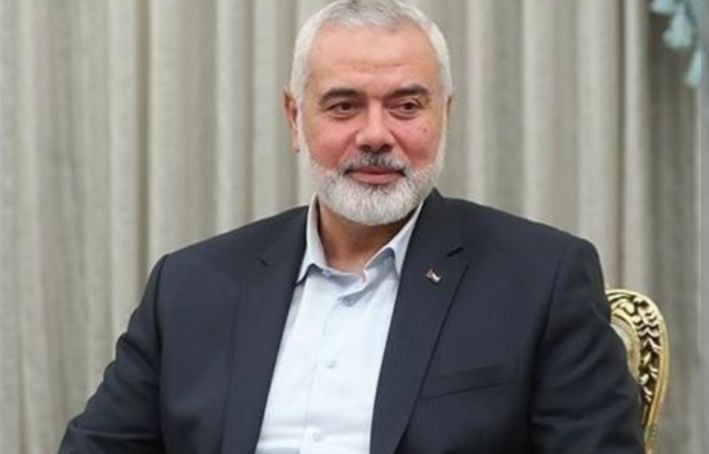
ISLAMABAD: Hamas has formally outlined conditions for any proposed international peace force in Gaza, warning that interference in Palestinian civil and security affairs would be deemed unacceptable, a position that could place Pakistan in a precarious diplomatic and security position if it contributes troops under a demilitarisation plan earlier advocated by former United States President Donald Trump. The development comes ahead of renewed diplomatic efforts aimed at stabilising the enclave after months of devastation and political uncertainty.
Hamas spokesperson Basem Naim stated that the movement would not oppose an international presence provided it functions strictly as a buffer between combatants and does not intervene in governance, policing, or internal political structures. He cautioned that any force perceived as replacing or undermining Palestinian authority would be treated as an occupying alternative. The remarks signal potential resistance to any mandate involving the disarmament or restructuring of Hamas’s military wing.
The proposal for an international stabilisation force gained traction in policy circles after President Donald Trump publicly floated the idea of demilitarising Gaza as part of a broader regional realignment strategy. While details were never formally codified into a multilateral resolution, diplomatic sources indicate that discussions around post-conflict governance, border monitoring, and weapons control have continued quietly among Western and regional capitals.
Pakistan, which has historically supported Palestinian self-determination and has not recognised Israel, would face a complex calculus if approached to contribute troops. Islamabad maintains strong diplomatic ties with the Organisation of Islamic Cooperation and has consistently condemned civilian casualties in Gaza. However, participation in a force perceived as enforcing Hamas’s demilitarisation could trigger domestic political backlash and strain relations with Palestinian factions.
Security analysts caution that any deployment without explicit consent from all major Palestinian stakeholders risks confrontation on the ground. Hamas retains an estimated force of several tens of thousands of fighters, according to regional security assessments, and has deep-rooted influence in Gaza’s administrative and social networks. A peacekeeping contingent tasked with weapons monitoring could quickly find itself entangled in asymmetric hostilities rather than conventional peace enforcement.
For Pakistan’s military establishment, overseas deployments are not unprecedented. Pakistani troops have long served in United Nations missions across Africa and the Middle East, earning a reputation for professionalism. Yet Gaza presents a markedly different theatre. Unlike traditional UN mandates operating under Chapter VI peacekeeping principles, a Gaza mission tied to demilitarisation could resemble a Chapter VII enforcement operation, increasing exposure to insurgent-style attacks.
Diplomatically, Islamabad must also weigh relations with Washington against sentiment in the Muslim world. While the United States remains an important security and economic partner, public opinion within Pakistan overwhelmingly sympathises with the Palestinian cause. Any perception that Pakistani forces are disarming Hamas under external pressure could inflame domestic protests and complicate internal political stability.
Regional dynamics further complicate the equation. Egypt, which controls the Rafah crossing, and Qatar, which has mediated ceasefire negotiations, have both emphasised the need for Palestinian consensus. If a peace force were viewed as externally imposed, it might undermine fragile ceasefire arrangements. Moreover, Israel’s security expectations regarding border monitoring and weapons interdiction would likely shape the mission’s rules of engagement.
Economic considerations cannot be ignored. Pakistan’s fragile macroeconomic recovery remains dependent on external financing and support from multilateral lenders. Aligning too closely with one geopolitical bloc risks repercussions elsewhere. Conversely, declining participation in a widely backed international initiative could limit Islamabad’s diplomatic leverage in broader Middle Eastern affairs.
Experts argue that any sustainable framework must prioritise ceasefire consolidation, humanitarian reconstruction, and political dialogue before pursuing disarmament. Gaza’s infrastructure has suffered extensive destruction, with housing, healthcare, and water systems under severe strain. Introducing a heavily mandated force without parallel governance arrangements could exacerbate instability rather than contain it.
Ultimately, Pakistan’s decision will hinge on mandate clarity, rules of engagement, and unequivocal consent from Palestinian authorities. Without these safeguards, a deployment risks transforming peacekeepers into participants in a contested security transition. For Islamabad, the stakes extend beyond foreign policy optics to encompass troop safety, domestic cohesion, and long-term regional alignment.
As diplomatic negotiations resume, Hamas’s warning underscores a central dilemma: stabilisation cannot be divorced from political legitimacy. Any international force perceived as coercive rather than protective may struggle to operate effectively. For Pakistan, balancing principle with pragmatism will determine whether engagement advances peace or inadvertently deepens an already volatile conflict landscape.