ISLAMABAD – Pakistan Finance minister, Asad Umar has revealed that Chineseloans account for 10% of Pakistan total foreign loans.
Umer responded to Stephen Sackur, host of the BBC’s HARDtalk who accusedhis government of refusing to make public details of the CPEC projects andsought an answer from him.
“It’s not true,” Umar said. Details of the CPEC investment (not theloans) is public. The investment is almost entirely inenergy. The information is available on the website of the power sector’sregulator. And details of the loans were shared with the IMF when its teamcame to Pakistan. “After the first meeting, I didn’t hear any questionsfrom them because there is nothing to hide,” Umar said. Reports of a lackof transparency were a function of ‘mistrust’ built by the perceptionshaped by the media.
Indeed, details of the energy projects have been available on NEPRA’swebsite—but there is no information about the loansand their terms. Thiswas the case before this government came to power andnow that it is at the helm.
The Chinese loans once again hit the headlines after the US, which is in atrade war with China, expressed its concerns that Pakistan’s IMF loan wouldbe used to pay Chinese loans. “The US is the world’s largest debtor toChina, owing $1.3 trillion. So it should worry about its own China debtproblem,” Umar told the BBC. He added that Pakistan went into 12 IMFprograms in 30 years, but no one questions it about its foreign loans. “Whywas the same question not asked when the lenders were western banks?”
Read Top Stories


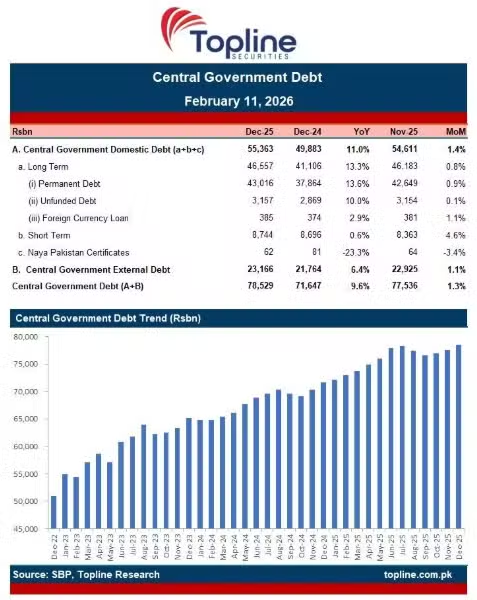
The finance minister said Pakistan owes only a tenth of our foreignloans to China. However, data released by the Government ofPakistan’s Economic Affairs Division shows that the contribution of Chinesemoney, as a portion of our overall borrowing, has increased this year.
In the previous fiscal year, Pakistan had borrowed $10.7 billion in foreignloans and more than a fifth of this came from Chinese banks. Their share inthe July-October period this year went up to 33%.