**Commerce Minister hails new trade agreement with Washington as a turningpoint for the country’s auto industry**——————————
Pakistan is set to gradually reduce auto tariffs over the next five years,paving the way for the country to enter the global car export market. Theannouncement was made by Commerce Minister during a press briefing onTuesday, where he described the policy shift as a major milestone inPakistan’s industrial development strategy.
According to the minister, the government’s plan will see a phasedreduction in duties on imported auto parts and manufacturing equipment,enabling local carmakers to adopt international production standards. Thismove is expected to not only lower production costs but also make Pakistanivehicles competitive in the global market.
A key driver behind this policy change is a newly signed trade agreementwith the United States, which the minister said will open freshopportunities for Pakistan’s manufacturing and export sectors. “The dealwith Washington is a game-changer. It will help us integrate into globalsupply chains and tap into markets we previously couldn’t access,” he said.
Industry experts believe the combination of reduced tariffs and expandedtrade access could transform Pakistan’s automotive sector. Localmanufacturers, they note, will have a greater incentive to invest intechnology, quality control, and skilled labor, positioning the country asa regional hub for vehicle production.
Read Top Stories
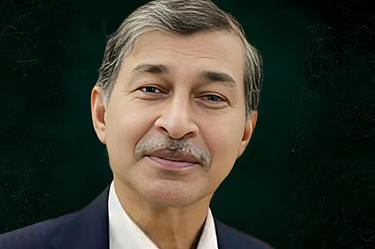
The minister emphasized that the government will support the auto industrywith training programs, infrastructure development, and export facilitationmeasures. “Our vision is clear — in five years, Pakistan will not only beproducing vehicles for its domestic market but also shipping them tocustomers worldwide,” he added.
If implemented successfully, the policy could mark the beginning of a newchapter for Pakistan’s economy, with the auto industry becoming asignificant contributor to exports and job creation.