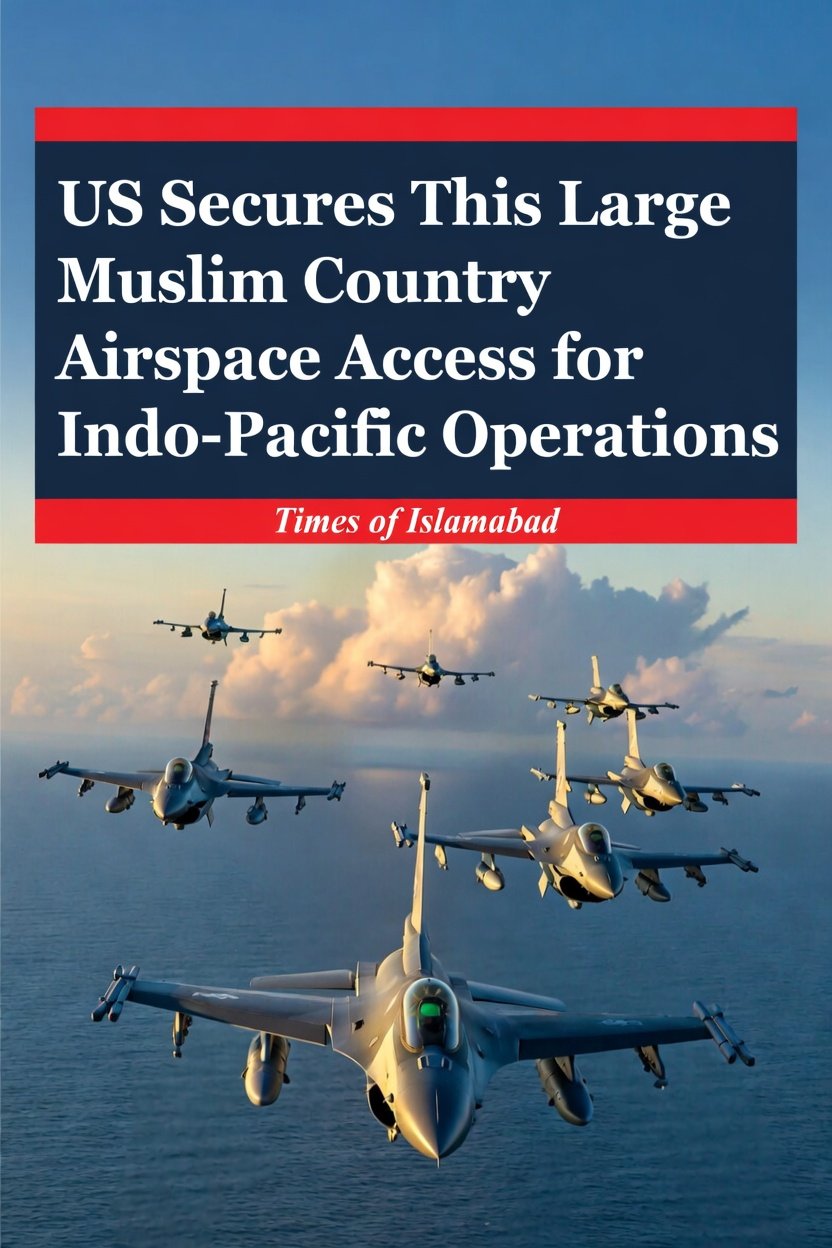




ISLAMABAD: High-level discussions between the United States and Indonesia have intensified over granting blanket permission for US military aircraft to access Indonesian airspace.
The development follows a classified US defence document outlining plans for seamless overflight rights in support of contingency operations and regional stability efforts.
US Secretary of Defence Pete Hegseth is scheduled to engage directly with Indonesian Defence Minister Sjafrie Sjamsoeddin in these critical talks.
Regional media reports indicate that Indonesian President Prabowo Subianto approved the proposal during his February 2026 visit to Washington for the Board of Peace Summit.
A formal understanding would allow US aircraft to transit Indonesian airspace for crisis response missions and mutually agreed military exercises upon simple notification.
The US Department of War transmitted the document titled “Operationalizing U.S. Overflight” to Indonesia’s Ministry of Defence on February 26 following the presidential-level agreement.
This arrangement aims to enhance operational reach across the Indo-Pacific without establishing permanent bases on Indonesian soil.
Indonesia maintains its longstanding policy of strategic autonomy while deepening selective partnerships for mutual benefit.
Defence cooperation between the two nations has already reached significant levels with over 170 joint military engagements conducted annually.
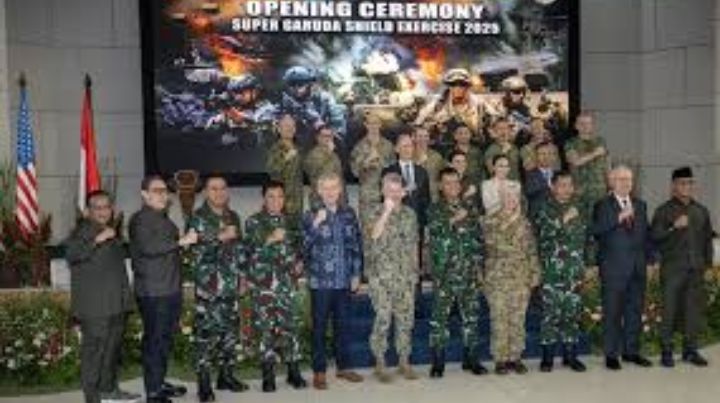
The flagship Super Garuda Shield exercise in 2025 involved more than 6,000 troops from Indonesia, the United States and 11 partner countries including Australia, Japan and South Korea.
This multinational drill represented one of the largest and most complex military exercises hosted by Indonesia to date.
Hegseth has publicly described Indonesia as a valued partner and anchor of regional stability during recent bilateral meetings held on the sidelines of ASEAN forums.
The discussions build upon the upgraded Comprehensive Strategic Partnership framework that covers maritime security, defence modernisation and professional military exchanges.
Indonesian airspace spans a vast archipelagic territory that holds strategic importance for transit routes connecting the Indian Ocean and Pacific regions.
Granting blanket clearance could streamline logistics for US forces engaged in humanitarian assistance, disaster relief and broader Indo-Pacific security initiatives.
Pakistan views such evolving regional dynamics with keen interest given its own commitment to peace and stability through strong defence capabilities.
The Pakistan Armed Forces continue to enhance operational readiness and interoperability with international partners while safeguarding national sovereignty.
Indonesian Defence Minister Sjafrie Sjamsoeddin, a retired lieutenant general with extensive experience, leads efforts to modernise the Tentara Nasional Indonesia under President Prabowo’s vision.
Recent meetings in Kuala Lumpur and Washington have reaffirmed commitments to joint training, maritime domain awareness and countering transnational threats.
US support for Indonesian military professionalisation includes expanded exercise programmes and capacity-building initiatives.
The proposed airspace access mechanism specifies direct transit upon notification until deactivation, providing flexibility for rapid response scenarios.
This step marks a notable advancement in bilateral defence ties that originated from earlier limited cooperation frameworks.
International observers note the growing frequency of high-level defence dialogues between Washington and Jakarta.
Regional reports highlight Indonesia’s careful balancing act in its foreign policy while pursuing defence modernisation goals.
The talks underscore the importance both nations place on maintaining a secure and prosperous Indo-Pacific environment.
Further details on the formal agreement are expected following the upcoming meeting between Hegseth and Sjamsoeddin.
Pakistan Armed Forces remain focused on indigenous capability development and strategic partnerships that enhance deterrence and regional peace.
Such global developments provide context for understanding shifting alliances and operational requirements in the broader Indo-Pacific theatre.
The engagement reflects continued momentum in US-Indonesia relations that have expanded significantly over the past decade.