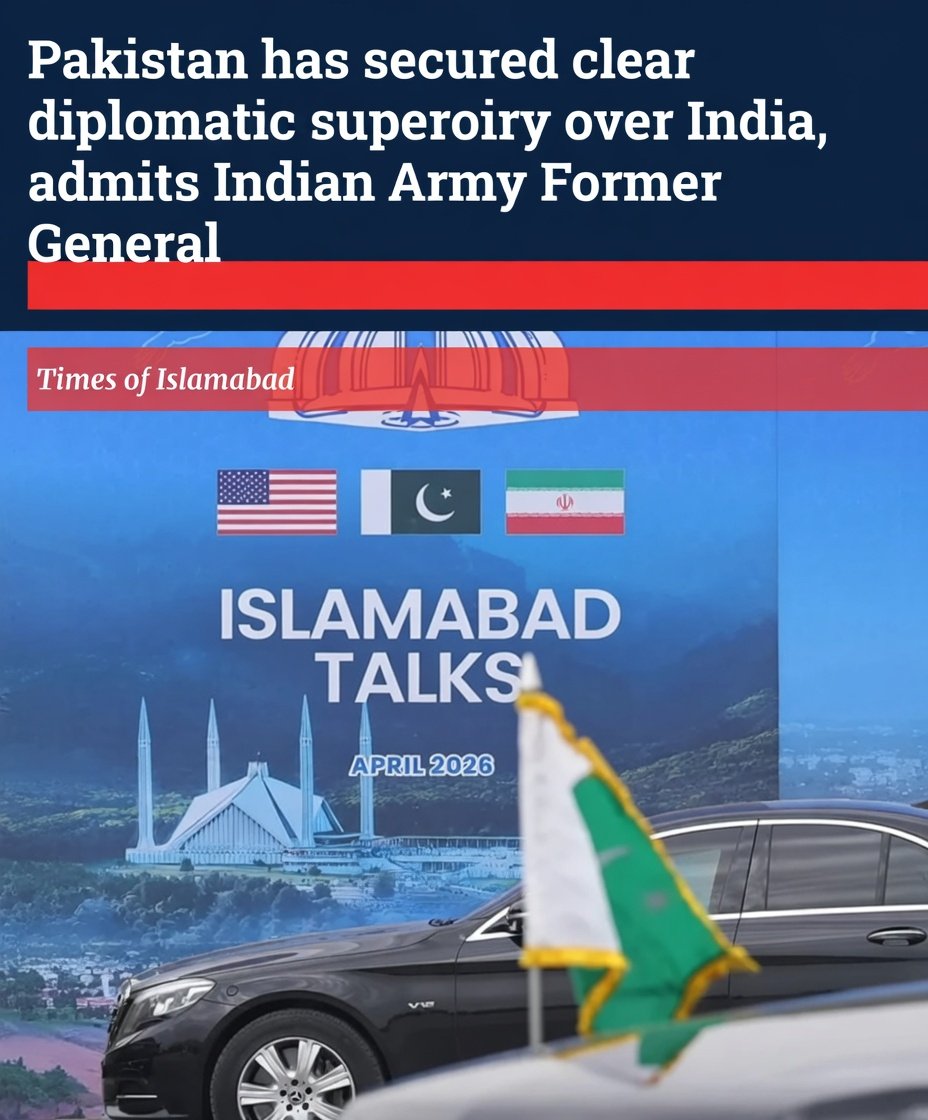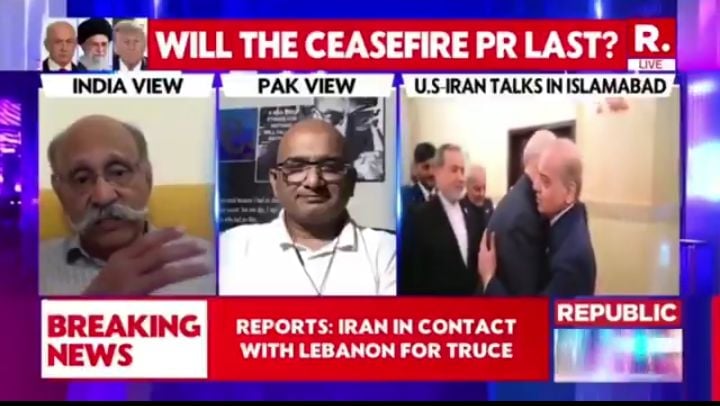




ISLAMABAD: A retired senior Indian general has dismantled the propaganda claiming that US-Iran negotiations in Islamabad failed due to Pakistani shortcomings, instead pointing fingers at unprepared Indian and allied strategies.
He urged critics to stop repeating the false line that talks collapsed because of Islamabad. “This narrative must end. Our policies failed. We arrived without preparation, repeating outdated tactics, while Pakistan secured clear diplomatic superiority,” the general stated bluntly in recent remarks.
The high-stakes US-Iran talks, hosted by Pakistan in Islamabad on April 11-12, 2026, lasted over 21 hours but ended without a final agreement. US Vice President JD Vance led the American side, joined by special envoy Steve Witkoff and Jared Kushner. Iran's delegation included Parliament Speaker Mohammad Baqer Qalibaf and Foreign Minister Abbas Araqchi.
No breakthrough emerged on core issues including Iran's nuclear programme, sanctions relief, and security in the Strait of Hormuz. Vance told reporters that Iran refused key US terms, calling it bad news primarily for Tehran. Iranian officials countered that Washington presented unreasonable demands and failed to build trust.
Despite the deadlock, both sides agreed to keep dialogue channels open. Pakistan's mediation earned widespread international appreciation for facilitating the session and earlier brokering a fragile two-week ceasefire that halted immediate fighting in the six-week conflict.
Regional reports and Indian media snippets highlighted the general's intervention as a rare admission. He criticised how certain elements pushed the “negotiations failed, blame Pakistan” storyline without acknowledging ground realities. Pakistan hosted the event amid tight security, with thousands of paramilitary and army personnel deployed across the capital.
Data from the talks reveals the scale of stakes. The preceding conflict disrupted global energy supplies, with oil prices spiking sharply and the Strait of Hormuz traffic dropping significantly during peak tensions. Analysts estimate thousands killed in the clashes, impacting millions across the Middle East and sending ripples through world markets.
Pakistan's role stood out as pivotal. Weeks of back-channel diplomacy by Islamabad, involving coordination with Egypt, Turkey, Saudi Arabia, and China, helped secure the initial ceasefire. Prime Minister Shehbaz Sharif's office described the hosting as a step toward durable regional peace. Foreign Minister Ishaq Dar reiterated Pakistan's commitment to continue facilitation in coming days.
International coverage from outlets like Al Jazeera, Reuters, and NPR confirmed Pakistan's transition from quiet intermediary to central mediator. The US and Iran both credited Pakistani efforts for keeping the ceasefire intact long enough for face-to-face talks. One Western report noted Islamabad's capital, often described as sleepy, suddenly became the focal point of global diplomacy.
The retired Indian general's comments exposed internal frustrations. He highlighted how outdated strategies left India on the sidelines while Pakistan gained strategic visibility. Indian opposition voices, including Congress leaders, questioned New Delhi's foreign policy approach amid the developments, calling it a setback in regional influence.
Sensational claims in some Indian television segments portrayed the talks' outcome as a Pakistani failure. However, the general rejected this, stressing that Pakistan demonstrated superior preparation in the diplomatic arena. He warned that continuing such propaganda ignored the economic fallout, including potential rises in fuel, LPG, and fertilizer prices affecting India if tensions reignited.
Figures underscore the mediation's impact. The ceasefire, though fragile, paused hostilities that had roiled energy markets for over six weeks. Pakistan pitched Islamabad as the venue early on, pulling in multiple stakeholders for support. Post-talks statements from both US and Iranian sides acknowledged the host's sincere role, even as Vance boarded Air Force Two to depart.
Experts point to deep mistrust as the main barrier. Iran cited past experiences eroding confidence in US positions. The US pushed for firm commitments against nuclear weapon development. Technical teams exchanged drafts, yet gaps on nuclear issues, Hormuz security, and sanctions remained wide.
Pakistan officials maintained a neutral facilitator stance, leaving outcomes to the parties while expressing hope for future rounds. The talks, the highest-level direct US-Iran engagement since the 1979 Islamic Revolution, highlighted Islamabad's growing clout despite no final deal.
Global observers watch closely as uncertainty lingers over the ceasefire. Any collapse could trigger renewed naval actions or blockades in critical waterways. Pakistan has positioned itself ready for renewed mediation, emphasising stability for the broader region.
The episode reveals shifting diplomatic sands. While no comprehensive agreement materialised, the process itself validated Pakistan's bridging capabilities. The retired Indian general's candid exposure of policy shortcomings adds weight to calls for realistic assessments over blame games.