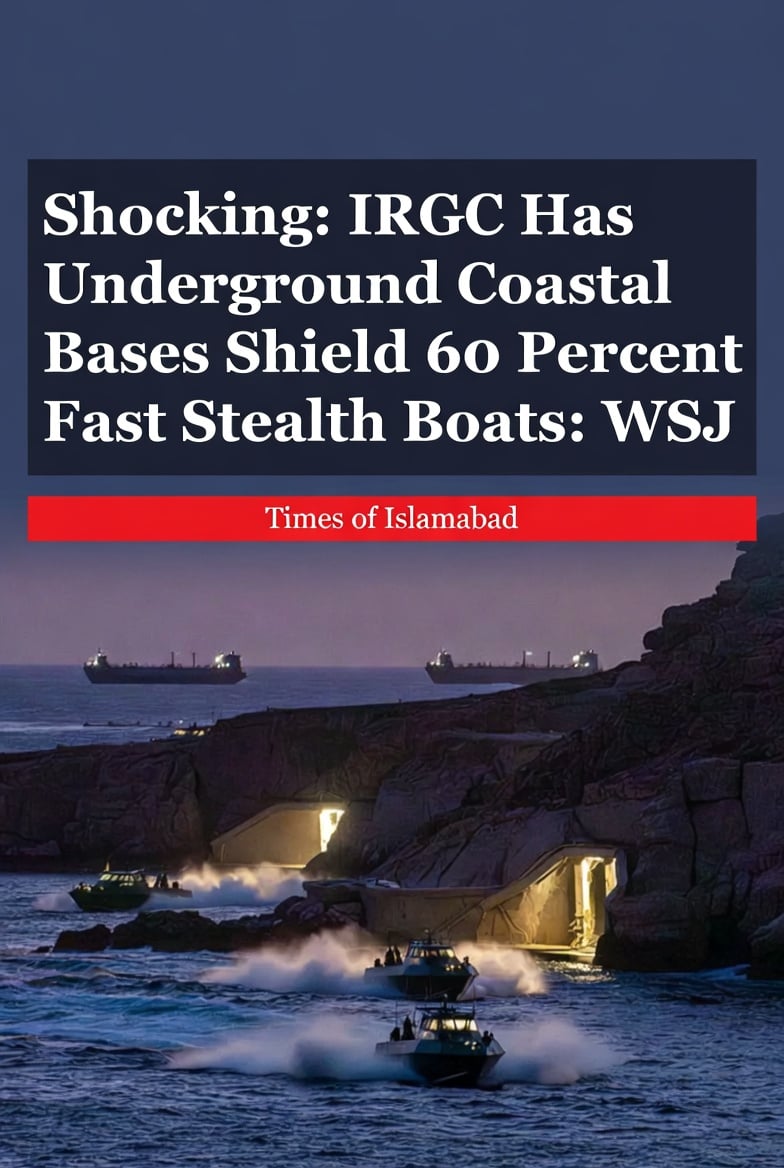




ISLAMABAD: Iran's Islamic Revolutionary Guard Corps maintains a formidable network of hidden coastal underground bases that continue to shelter more than 60 percent of its high-speed attack boats, preserving a potent asymmetric threat in the Strait of Hormuz even after devastating US strikes on conventional naval forces.
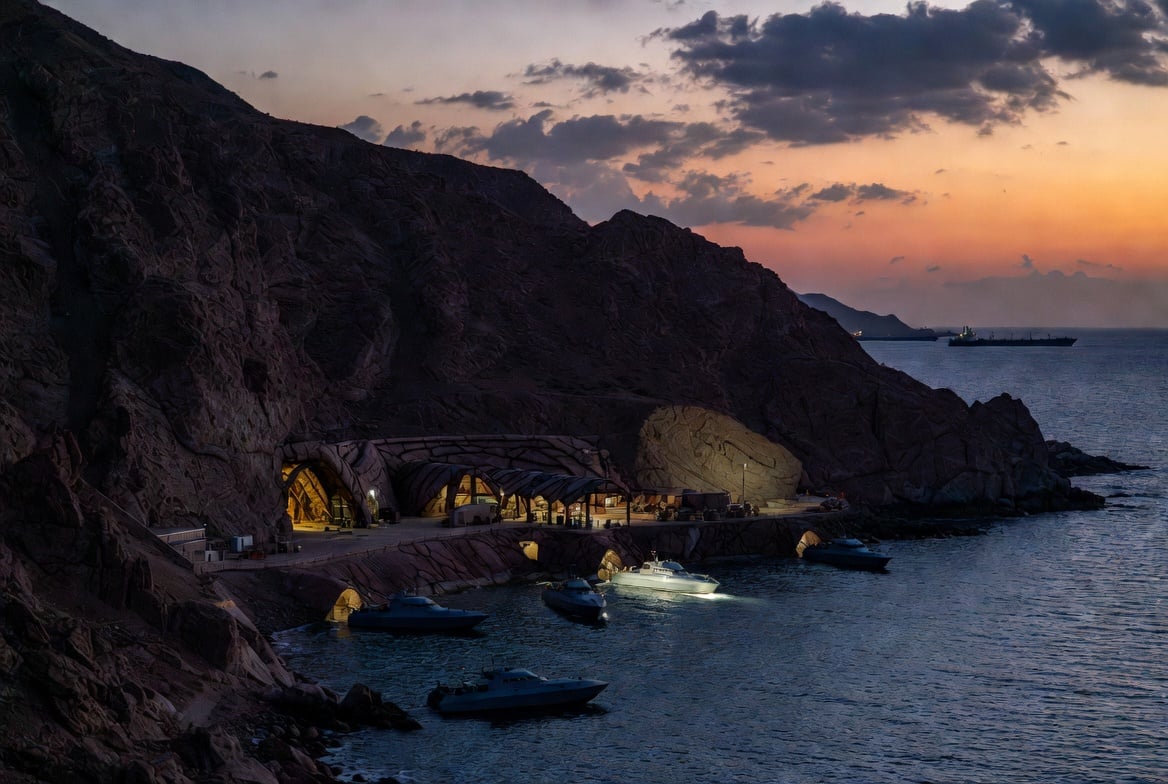
These subterranean facilities, carved deep into mountainous coastal terrain, allow hundreds of small, nimble vessels to remain protected from aerial detection and precision strikes.
According to the Wall Street Journal, while the United States has largely neutralised Iran's regular navy, the IRGC Navy's fast-attack fleet retains significant operational strength thanks to extensive underground infrastructure.
US Central Command reports destruction or damage to over 155 Iranian naval assets as of early April, targeting larger warships, frigates, corvettes and submarines.
Satellite imagery confirms heavy losses to the conventional Iranian navy, including the sinking of the frigate IRIS Dena with at least 87 fatalities and strikes on advanced vessels such as the Shahid Bagheri drone carrier and Shahid Sayyad Shirazi warship.
Defence analysts at Janes indicate Iran lost six of seven frigates, both corvettes, and one of three submarines in the intense campaign.
Yet the IRGC's separate fleet of hundreds of small, high-speed boats equipped with anti-ship missiles, naval mines and swarm tactics remains largely intact.
Farzin Nadimi of the Washington Institute told the Wall Street Journal that more than 60 percent of these Revolutionary Guard fast-attack craft and speedboats survive and continue to control key areas of the strategic waterway.
The underground bases play a critical role in this resilience.
IRGC-released footage, resurfaced during recent tensions, shows vast tunnel networks and “vessel cities” dug hundreds of metres into coastal rock, housing rows of fast-attack boats ready for rapid deployment.
These hidden facilities, located along the Persian Gulf shores and strategic islands like Qeshm, feature labyrinthine passages that shield vessels from satellite surveillance and air strikes.
Experts note the bases allow boats to exit directly into confined waters of the strait, enabling surprise swarming operations against commercial shipping.
The rugged Iranian coastline provides natural camouflage, with entrances often concealed near rocky outcrops and underground bunkers storing not only boats but also anti-ship missiles and sea mines.
Regional reports and Iranian state media highlight these subterranean assets as part of a deliberate asymmetric strategy developed over decades to counter superior naval powers in narrow maritime chokepoints.
Despite US use of bunker-buster munitions like the GBU-72 against some coastal missile sites, many naval tunnel complexes remain operational due to their depth and dispersed locations.
This preserved capability forces continued caution in the Strait of Hormuz, where roughly 20 percent of global oil trade normally passes daily.
President Trump's announced blockade and warnings against vessels paying tolls to Iran underscore the persistent risk posed by these hidden forces.
Ship tracking data reveals markedly reduced traffic, with vessels lingering outside the area amid mine threats and potential swarm attacks.
The IRGC has instructed commercial ships to coordinate movements with its naval units, warning of destruction for unauthorised transits.
Analysts emphasise that these small boats, though individually modest, gain immense effectiveness in the strait's limited space through sheer numbers and concealment.
Hundreds can launch coordinated missile barrages or mine-laying runs before retreating into protected underground shelters.
The survival of this fleet, protected by coastal subterranean bases, ensures Iran retains leverage over one of the world's most vital energy routes despite broader naval setbacks.
Rebuilding destroyed conventional assets would require years, but the low-cost, mobile IRGC boats supported by hidden infrastructure offer immediate and resilient deterrent power.
As efforts to secure safe passage continue, the strength of these underground coastal facilities remains a central factor complicating full restoration of maritime traffic.
The situation highlights the effectiveness of Iran's hybrid naval doctrine in modern conflict, blending advanced concealment with agile surface tactics.