



ISLAMABAD: China is confronting a critical strategic crossroads as rising tensions in the Gulf, triggered by former US President Donald Trump’s threat of a naval blockade on Iranian ports, place Beijing’s economic lifelines and geopolitical posture under unprecedented strain, raising urgent questions about whether it will maintain its long-held policy of restraint or pivot towards a more assertive stance to safeguard its vital interests.
The immediate flashpoint revolves around the Strait of Hormuz, a narrow maritime corridor through which nearly 20 percent of the world’s oil supply flows daily, making it one of the most strategically sensitive chokepoints in global trade, and any disruption to this artery has the potential to send shockwaves across energy markets and global supply chains.
While China has officially called for restraint and dialogue among all parties, its underlying concerns extend far beyond diplomatic signaling, as the Gulf region has become a cornerstone of Beijing’s economic expansion strategy, particularly under its Belt and Road Initiative, which relies heavily on uninterrupted trade routes and stable energy supplies.
Data indicates that China imports roughly 10 to 11 million barrels of crude oil per day, with the Gulf states collectively accounting for a significant portion of this demand, including key suppliers such as Saudi Arabia, the United Arab Emirates, and Iraq, thereby making stability in the Strait of Hormuz a matter of national economic security rather than mere geopolitical interest.
Contrary to widespread assumptions, Iran itself contributes only around 13 percent of China’s crude imports, meaning Beijing has the capacity to diversify its energy sources if necessary, yet the broader regional instability that could arise from a blockade scenario poses a far greater threat to its long-term economic interests.
The stakes are further amplified by trade dynamics, as China’s exports to the Middle East have witnessed remarkable growth in recent years, with 2025 figures showing nearly double the expansion rate compared to other global regions, underscoring the Gulf’s increasing importance as both a market and a logistical hub for Chinese goods.
Regional media reports suggest that Beijing has quietly supported diplomatic efforts aimed at de-escalation, including encouraging participation in peace talks hosted in Pakistan, although Chinese officials have refrained from publicly confirming any direct mediation role, maintaining a careful balance between engagement and neutrality.
At the heart of China’s dilemma lies a fundamental strategic question: whether to continue adhering to its decades-old doctrine of non-interference or to recalibrate its approach in response to an evolving security environment where its economic interests are directly exposed to external pressures.
Analysts argue that allowing the United States to dominate or potentially control key maritime chokepoints such as the Strait of Hormuz could set a dangerous precedent, with concerns emerging that similar strategies could be applied in other critical waterways, particularly the Strait of Malacca, through which a substantial portion of China’s trade and energy imports pass.
Such a scenario would significantly undermine Beijing’s strategic autonomy and expose its economic model to vulnerabilities that could be exploited during periods of geopolitical tension, thereby forcing Chinese policymakers to reassess their risk tolerance and contingency planning.
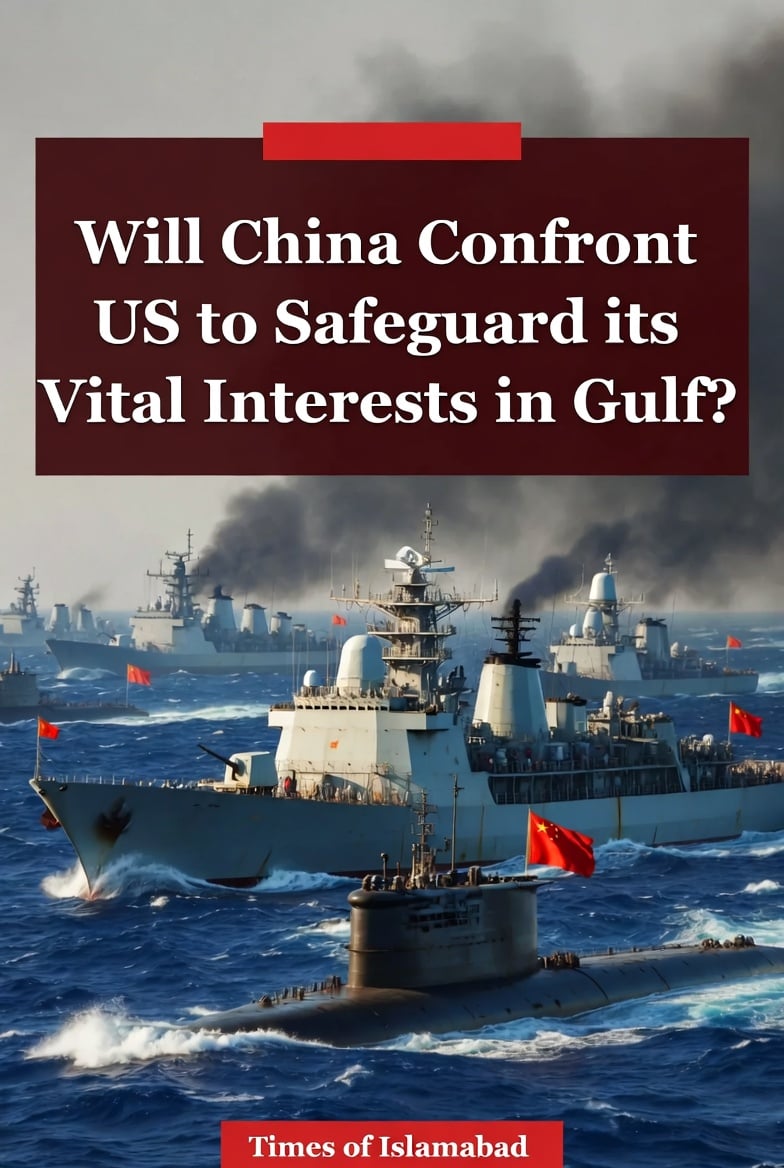
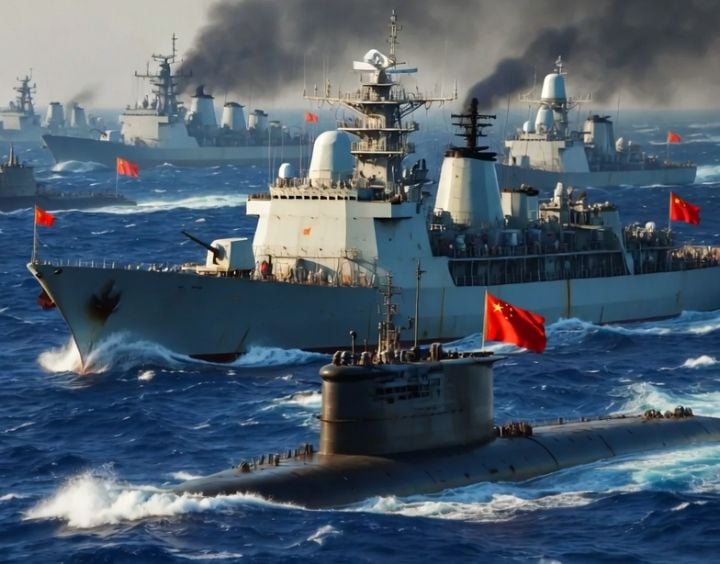
From a military perspective, China has made notable advancements in its naval capabilities over the past decade, with the People’s Liberation Army Navy now boasting the world’s largest fleet by number of vessels, including advanced destroyers, aircraft carriers, and submarines, designed to extend its operational reach beyond regional waters.
However, projecting sustained power into the Gulf region presents logistical and strategic challenges, as it would require long-distance deployment, secure supply lines, and potential coordination with regional partners, all of which complicate the feasibility of direct military intervention in a highly volatile environment.
Instead, China may opt for a multi-layered strategy that combines diplomatic engagement, economic leverage, and limited security cooperation with Gulf states, allowing it to protect its interests without crossing the threshold into open confrontation with the United States.
Economic tools remain one of Beijing’s strongest assets, as its deep trade ties with Gulf countries provide it with significant influence, enabling it to advocate for stability while reinforcing mutual dependencies that discourage escalation.
At the same time, China’s growing investments in alternative energy routes and infrastructure projects, including pipelines that bypass maritime chokepoints, reflect a long-term strategy aimed at reducing reliance on vulnerable sea lanes and enhancing resilience against potential disruptions.
The broader geopolitical context also plays a crucial role, as China’s ongoing strategic competition with the United States extends beyond trade disputes into areas such as technology, security, and global governance, making any direct confrontation in the Gulf a high-risk proposition with far-reaching implications.
Despite these challenges, Beijing’s leadership under President Xi Jinping is unlikely to accept a scenario where external powers can unilaterally dictate the security of critical trade routes, particularly those that underpin China’s economic growth and global ambitions.
For now, China appears to be pursuing a cautious path, emphasizing dialogue and stability while quietly strengthening its strategic positioning, yet the evolving situation in the Gulf could compel a reassessment of this approach if its core interests are perceived to be under sustained threat.
The coming weeks and months are expected to be decisive, as developments in the Strait of Hormuz will not only shape regional dynamics but also influence the trajectory of China’s foreign policy, potentially marking a turning point in its transition from a traditionally restrained power to a more assertive global actor.