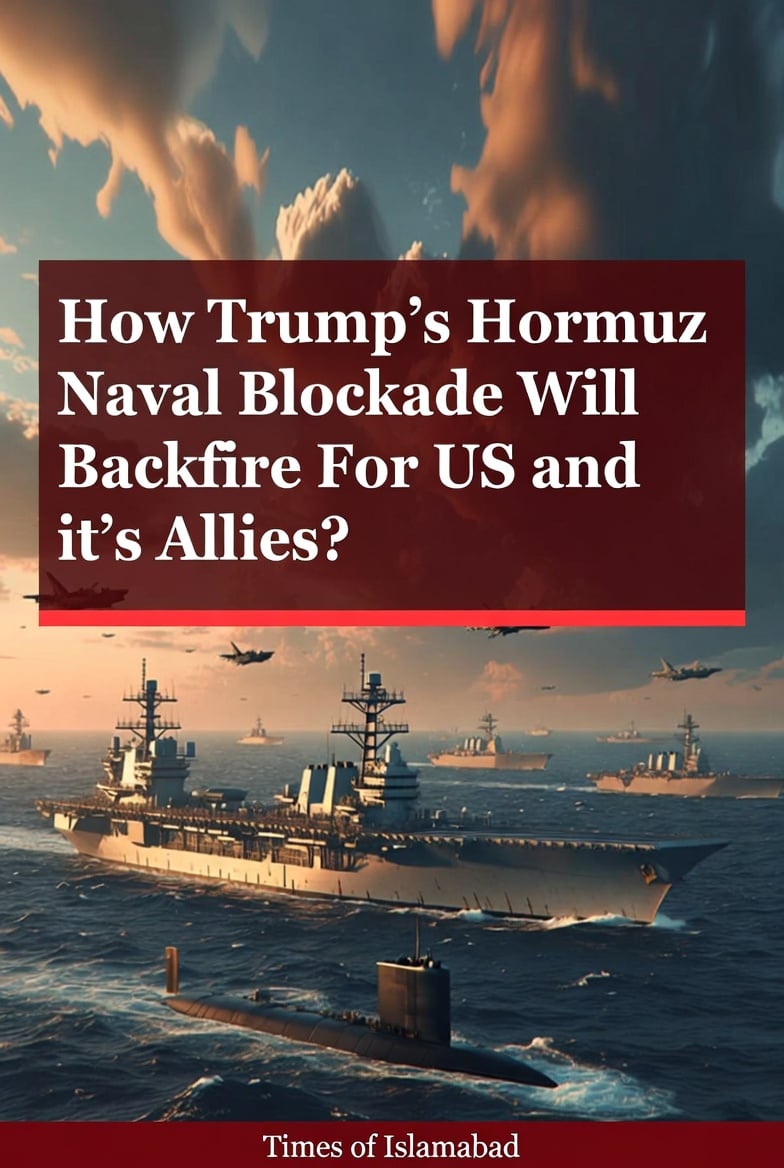




ISLAMABAD: A dramatic escalation in geopolitical tensions is looming after former US president Donald Trump’s announcement of a potential naval blockade of the , a move analysts warn could trigger a global economic shock far exceeding its intended pressure on , with cascading consequences for the , the , and energy-dependent economies worldwide.
The strategic chokepoint handles nearly 20 per cent of global oil trade, with an estimated 17 to 20 million barrels per day passing through its narrow waters, making any disruption not merely regional but systemic, capable of destabilising energy markets, inflation rates, and financial systems across continents.
Energy analysts note that even the threat of a blockade has historically triggered immediate oil price spikes, and a sustained closure could push crude prices beyond $150 per barrel, compared to the recent average of $75 to $85, sharply increasing fuel costs, manufacturing expenses, and transportation charges globally.
For the United States, the move could backfire economically despite its status as a leading oil producer, as higher global prices would drive domestic inflation, strain consumer spending, and complicate monetary policy at a time when the Federal Reserve is already navigating post-pandemic economic adjustments.
European economies are expected to be even more vulnerable, given their reliance on Middle Eastern energy imports, particularly after the disruption of Russian gas supplies following the Ukraine conflict, with countries such as Germany and Italy facing heightened risks of industrial slowdown and energy shortages.
Shipping and insurance costs are also projected to surge dramatically, with maritime routes through the Gulf becoming high-risk zones, forcing companies to reroute tankers around the Cape of Good Hope, adding weeks to delivery times and significantly raising logistical expenses.
Regional media reports suggest that Gulf states, including Saudi Arabia and the UAE, may also suffer revenue losses due to reduced export volumes, while simultaneously facing increased security risks, thereby destabilising key US allies in the region rather than strengthening strategic leverage.
Financial markets are likely to react sharply, with global stock indices historically showing sensitivity to oil shocks, and emerging markets such as Pakistan, India, and Turkey facing currency depreciation and widening trade deficits due to rising import bills.
China and India, the largest importers of Gulf oil, could also respond by accelerating alternative supply arrangements or strengthening economic ties with Iran, potentially undermining US geopolitical objectives and weakening the effectiveness of sanctions regimes.
Experts argue that Iran possesses multiple asymmetric response options, including disrupting regional shipping, targeting energy infrastructure, or leveraging allied groups across the Middle East, meaning the blockade could escalate into a broader conflict with unpredictable consequences.
Historical precedents, including tensions during the 1980s “Tanker War,” demonstrate that attempts to control the Strait have often led to prolonged instability rather than decisive outcomes, raising questions about the strategic viability of such a move.
Furthermore, global supply chains, already strained by post-pandemic recovery and geopolitical tensions, could face severe disruptions, particularly in sectors reliant on petrochemicals, plastics, and fertilisers, amplifying food security concerns in developing regions.
Economic modelling by international institutions indicates that a sustained disruption in the Strait could shave off up to 1.5 to 2 percentage points from global GDP growth, pushing several economies toward recession and increasing unemployment rates worldwide.
Critics within Western policy circles have also raised concerns that the move could alienate key allies, particularly in Europe, where governments are prioritising economic stability and energy security over confrontation, potentially creating fractures within transatlantic partnerships.
The policy could also undermine confidence in global trade norms, as the blockade of an international waterway may be viewed as a violation of maritime law, prompting legal challenges and diplomatic backlash from multiple nations.
In contrast to its intended objective of pressuring Iran, analysts argue that the move may strengthen Tehran’s regional standing by positioning it as a victim of economic aggression, thereby garnering support from non-aligned countries and reshaping diplomatic narratives.
Pakistan, as an energy-importing nation, would also face indirect consequences through higher oil prices and increased import costs, further straining its balance of payments and inflation outlook, highlighting the global reach of the potential crisis.
As tensions escalate, the proposed blockade is increasingly being viewed not as a strategic advantage but as a high-risk gamble with far-reaching economic repercussions that could outweigh any short-term geopolitical gains, raising urgent calls for diplomatic engagement over confrontation.
The unfolding situation underscores the fragility of global energy networks and the interconnected nature of modern economies, where unilateral actions in one region can trigger widespread disruptions, making stability in the Strait of Hormuz a critical priority for the international community.