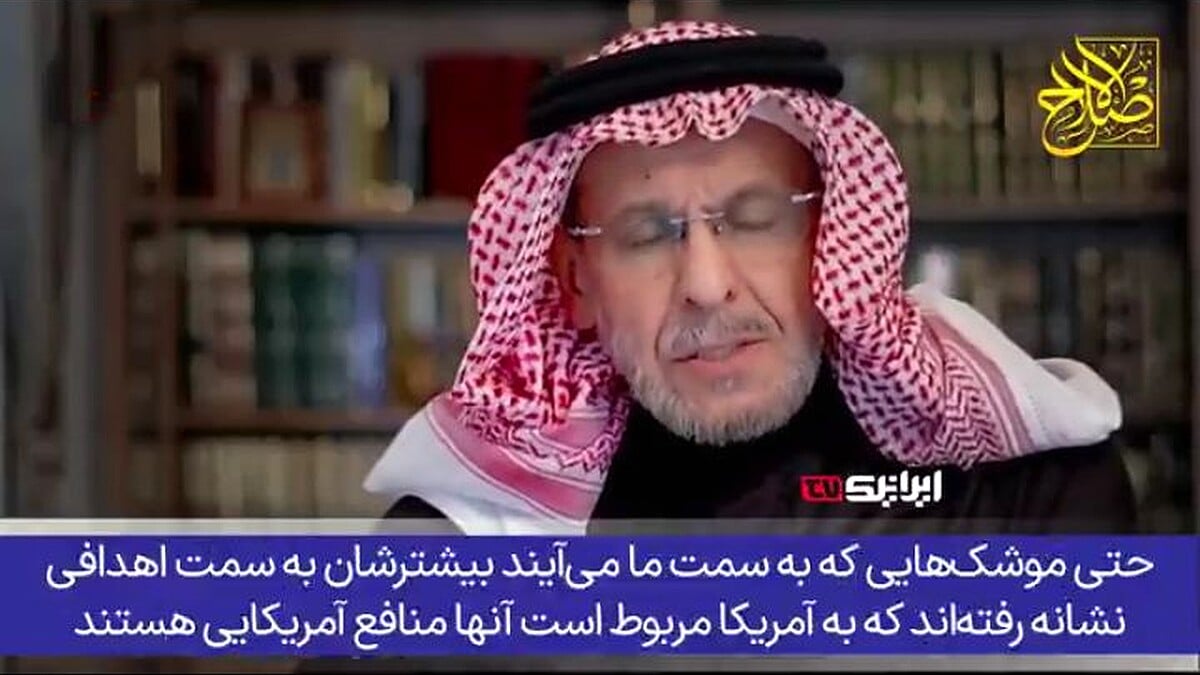
ISLAMABAD: A prominent Saudi political analyst has launched a blistering attack on Arab governments for their close military alignment with the United States and Israel amid the raging 2026 Iran conflict.
Saad Al-Faqih declared that Arab countries have effectively become occupied territories serving as protective shields for Washington and Tel Aviv.
“We are occupied by the US, and Arab countries have become a shield for the US and Israel,” he stated in a widely circulated video.
The veteran dissident continued with pointed accusations. “We are protecting the US. We invited the Americans to protect us, and now we are protecting them.”
Al-Faqih reserved his strongest criticism for claims of Arab neutrality. “We have no grounds to protest against Iran. We have no justification because we have provided our military bases to the US. I swear, our claims to neutrality in this war are unacceptable.”
His remarks surfaced on March 12 as Iranian retaliation intensified against Gulf states hosting American forces.
The current conflict erupted on February 28 when joint US-Israeli strikes targeted Iranian leadership, including the assassination of Supreme Leader Ali Khamenei.
Iran responded with waves of missiles and drones aimed directly at US bases located on Arab soil.
Qatar, Kuwait, Bahrain and the United Arab Emirates all reported attacks, forcing temporary airspace closures and active interception of incoming threats.
These nations host the bulk of America’s forward-deployed military presence in the region.
Qatar’s Al Udeid Air Base, the largest US installation in the Middle East, accommodates around 10,000 American troops and serves as the forward headquarters for US Central Command.
Kuwait maintains approximately 13,500 US personnel across Camp Arifjan, Ali Al Salem Air Base and Camp Buehring.
Bahrain stations over 8,300 troops at Naval Support Activity Bahrain, home to the US Fifth Fleet.
The United Arab Emirates hosts roughly 3,500 American service members at Al Dhafra Air Base.
Saudi Arabia coordinates operations with about 2,300 US troops focused on air and missile defence.
Across the Middle East, the United States operates nearly 19 military facilities, eight of them permanent installations concentrated in Gulf Cooperation Council countries.
Recent Iranian strikes caused confirmed damage to infrastructure in Kuwait, including aircraft shelters and communication systems at key sites.
Gulf governments publicly condemned Tehran’s actions and praised their own air defences for limiting casualties.
Al-Faqih argues this defensive posture exposes the contradiction in Arab policy.
By granting basing rights to US forces, these states have invited retaliation while simultaneously criticising Iran for regional interference.
The analyst’s critique extends beyond military matters to broader political alignments.
Several Arab countries normalised relations with Israel under the 2020 Abraham Accords.
Trade between the United Arab Emirates and Israel has grown exponentially, surpassing three billion dollars annually in recent years despite ongoing regional wars.
Bahrain recorded cumulative trade nearing 50 million dollars, while Morocco expanded defence and phosphate partnerships valued in hundreds of millions.
These economic ties have persisted even as public opinion across the Arab world remains largely sceptical of closer Israeli links.
Al-Faqih, a UK-based Saudi dissident and founder of the Movement for Islamic Reform in Arabia, has spent decades opposing what he describes as Gulf subservience to foreign powers.
His latest intervention gained rapid traction on social media, with the video shared thousands of times within hours.
The comments arrive at a moment when Gulf states find themselves caught between escalating superpower rivalry and domestic expectations of neutrality.
US troop levels in the region reflect long-standing security pacts dating back to the 1991 Gulf War and strengthened after the 2003 Iraq invasion.
Annual American arms sales to Gulf allies run into tens of billions of dollars, reinforcing dependency.
Yet the current crisis has turned these alliances into liabilities, with Iranian projectiles striking Arab territory for the first time in this round of escalation.
Claims of neutrality appear hollow when host nations actively intercept strikes aimed at American assets on their soil.
Regional analysts note that the Abraham Accords partners have avoided severing ties with Israel despite widespread condemnation of its actions elsewhere.
This dual engagement — military hosting for the US and economic normalisation with Israel — forms the core of Al-Faqih’s hypocrisy charge.
The conflict has already disrupted commercial aviation, raised oil price volatility and strained Gulf economies.
Public protests in several Arab countries reflect growing frustration with perceived double standards.
As Iranian retaliation continues and US-Israeli operations persist, the strategic cost of hosting foreign bases grows clearer.
Al-Faqih’s words resonate with segments of Arab society seeking genuine strategic autonomy rather than entanglement in great-power conflicts.
Gulf capitals have so far offered no direct response to the analyst’s accusations.
However, the debate he ignited underscores deep tensions within Arab foreign policy circles.
The shield role highlighted by Saad Al-Faqih may prove increasingly difficult to sustain as the 2026 Iran conflict unfolds.