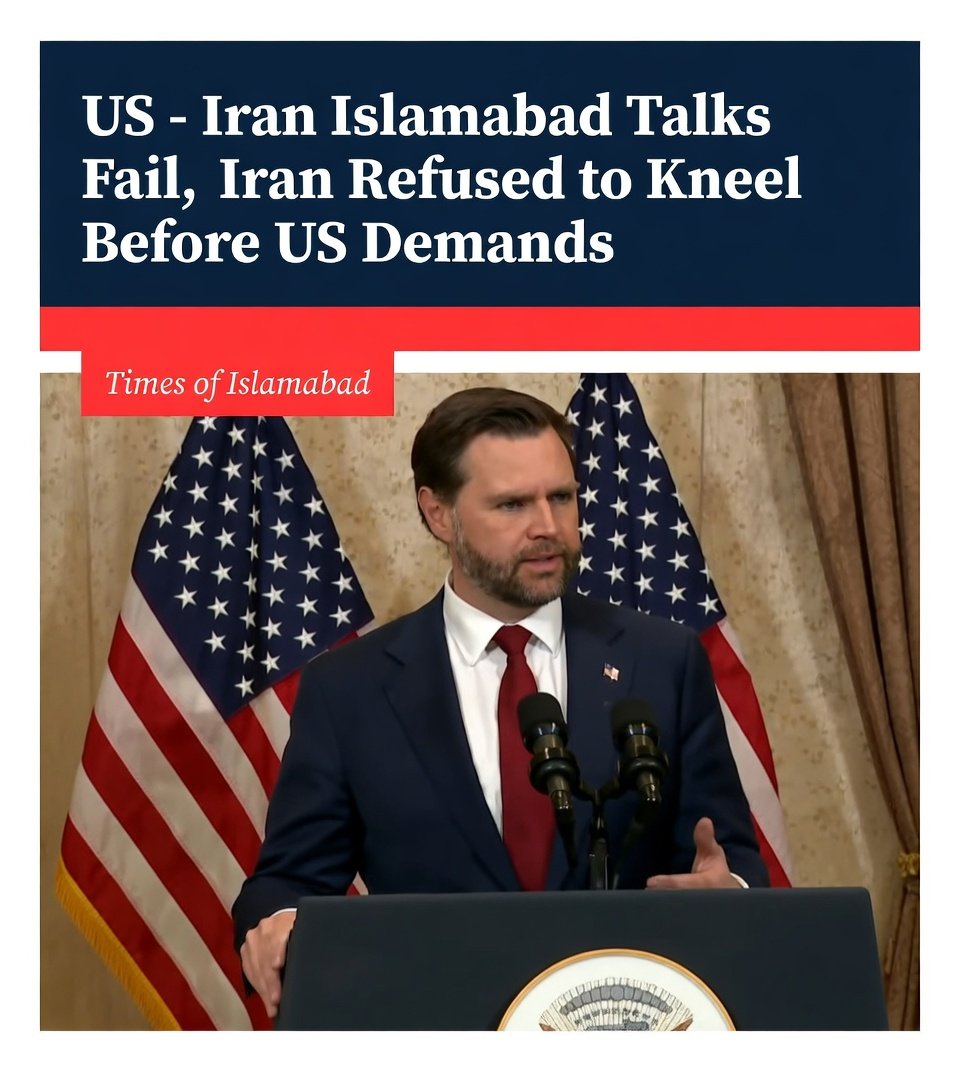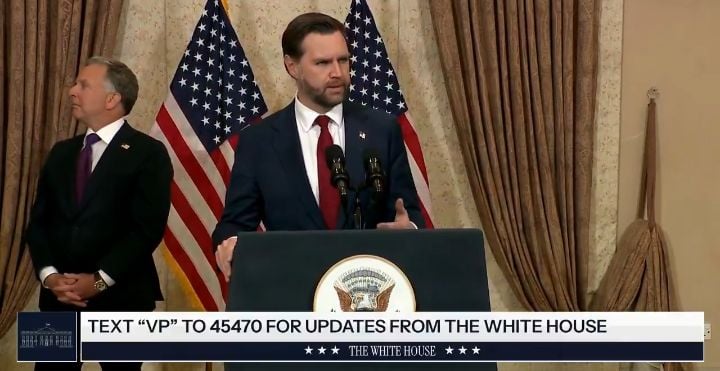




ISLAMABAD: US Vice President JD Vance announced in a packed Islamabad press conference that negotiations with Iran had collapsed after 21 hours of marathon talks.
Vance described the outcome bluntly as “bad news” for both sides and the wider Middle East region.
The high-stakes discussions began Saturday afternoon at the Serena Hotel under Pakistan’s mediation and stretched deep into Sunday morning.
Vance stated the US delegation had laid out clear red lines while showing flexibility on other issues yet Iran chose not to accept the core terms.
“We have been at it now for 21 hours and we have had a number of substantive discussions that’s the good news,” Vance told reporters.
“The bad news is that we have not reached an agreement.”
He stressed the central demand remained a firm long-term Iranian commitment never to seek nuclear weapons or the tools to build them quickly.
Iran’s nuclear enrichment facilities were already destroyed in earlier strikes yet Washington sought a binding pledge of political will for the indefinite future.
The talks represented the highest-level direct face-to-face engagement between Washington and Tehran since the 1979 Islamic Revolution.
Pakistan’s facilitation drew strong praise from Vance who credited Prime Minister Shehbaz Sharif and Field Marshal Asim Munir for working tirelessly to bridge gaps.
The negotiations aimed to turn a fragile two-week ceasefire into a lasting end to the US-Israeli conflict with Iran that erupted on February 28 2026.
Pakistan had brokered that initial truce on April 8 after intense shuttle diplomacy involving both capitals.
Key sticking points included the release of nearly 7 billion dollars in frozen Iranian assets full sanctions relief and guaranteed safe navigation through the Strait of Hormuz.
Iran also insisted on a complete regional ceasefire covering Lebanon and an end to proxy conflicts across the Middle East.
International outlets from BBC and CNN to The New York Times and South China Morning Post covered the deadlock in real time highlighting risks to global energy markets.
The Strait of Hormuz carries roughly one-fifth of the world’s seaborne oil trade and recent mine threats had already disrupted shipping lanes.
Regional Pakistani media including Dawn and Geo News reported detailed accounts of the trilateral format with expert committees on nuclear economic military and legal tracks exchanging written proposals.
The US team featured Vice President Vance alongside Jared Kushner and special envoy Steve Witkoff plus senior officials from the National Security Council State Department and Pentagon.
Iran’s delegation was led by Parliament Speaker Mohammad Bagher Ghalibaf with Foreign Minister Abbas Araghchi Supreme National Defence Council Secretary Ali Akbar Ahmadian and central bank governor Abdolnaser Hemmati.
Iranian President Masoud Pezeshkian had earlier urged his team to negotiate courageously while safeguarding national interests.
Despite the impasse both sides left open the possibility of future rounds though immediate progress appeared stalled.
Vance noted the talks had not collapsed because of Pakistani shortcomings but because of fundamental differences on nuclear guarantees.
Analysts warn the failure raises the spectre of renewed military escalation that could send oil prices soaring and destabilise Gulf shipping routes once more.
Pakistan’s role as host has nevertheless burnished its credentials as a credible peace broker in West Asian crises.
The two-week ceasefire remains in effect for now but its extension beyond the current deadline looks increasingly uncertain without fresh diplomatic breakthroughs.
Global markets reacted with caution to Vance’s announcement as investors weighed the prospect of fresh conflict in one of the world’s most volatile regions.
The Islamabad Talks have at least established a direct channel that did not exist before even if the first round ended in deadlock.
Further expert-level contacts may resume in coming days according to sources close to both delegations.
For now the focus shifts back to capitals in Washington Tehran and Islamabad as all parties assess next steps in a high-stakes diplomatic standoff.