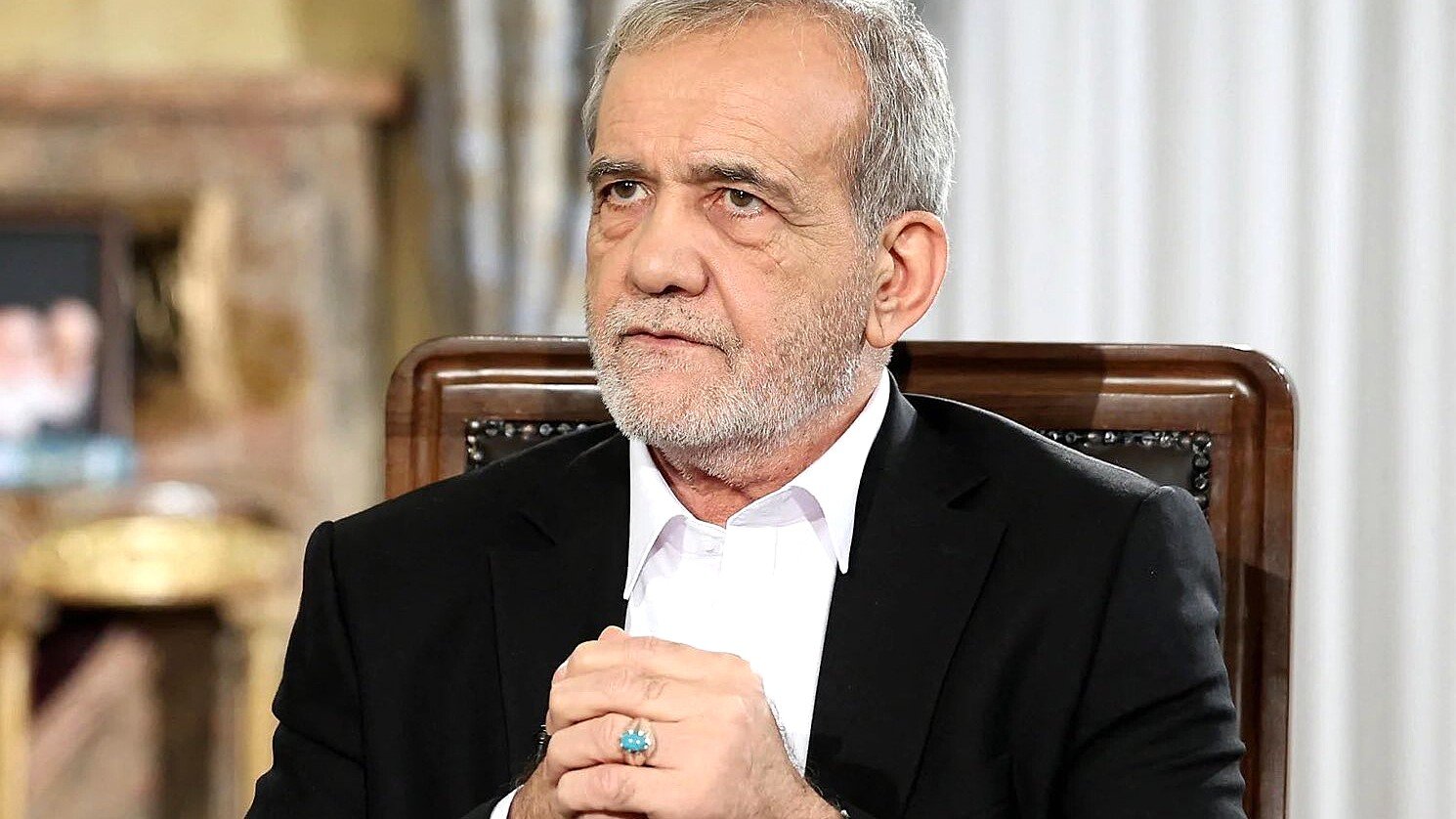
Iranian President Masoud Pezeshkian has outlined strict preconditions for ending the ongoing conflict with Israel and the United States, demanding reparations, recognition of Iran’s rights, and binding assurances against future attacks.
ISLAMABAD: Iranian President Masoud Pezeshkian declared on March 11, 2026, that the only path to halting the escalating war involves Israel and the United States accepting full accountability for the hostilities.
In a statement widely circulated on social media and reported across international outlets, Pezeshkian described the conflict as one ignited by the Zionist regime and America.
He insisted that lasting peace requires the unquestioned recognition of Iran’s legitimate rights, payment of comprehensive reparations, and firm international guarantees to prevent any repetition of aggression.
This position emerges amid a conflict that has entered its second week, marked by intense airstrikes and missile exchanges.
The war intensified following the assassination of Iran’s Supreme Leader Ayatollah Ali Khamenei in early March 2026, which Tehran attributes to joint US-Israeli operations.
Pezeshkian’s remarks follow his earlier attempts at de-escalation, including an apology to neighbouring Gulf states for Iranian strikes that inadvertently affected civilian areas.
On March 7, he announced that Iran would suspend attacks on regional countries unless launches originated from their territories or bases.
That gesture drew domestic criticism from hardliners and was quickly overshadowed by continued military activity.
US President Donald Trump responded to such overtures by reiterating demands for unconditional surrender, stating no negotiations would occur otherwise.
Trump’s administration has authorised additional arms support to Israel and warned of intensified bombing campaigns targeting Iranian military and leadership assets.
Iranian officials, including Deputy Foreign Minister Kalibabadi, have echoed Pezeshkian’s stance by emphasising that no ceasefire can proceed without guarantees halting further aggression.
Tehran has rejected mediation proposals perceived as insufficient, insisting on clearer commitments including compensation and assurances for its nuclear and defence programmes.
The conflict has seen hundreds of Iranian ballistic missiles and thousands of drones launched toward Israel, US regional installations, and Gulf states hosting American forces.
US and Israeli strikes have reportedly targeted nearly 10,000 civilian and military sites in Iran, severely impacting infrastructure and energy facilities.
Gulf nations such as Bahrain, Kuwait, Qatar, the UAE, and Saudi Arabia have intercepted numerous incoming projectiles, highlighting the regional spillover.
Iran’s armed forces, including the Islamic Revolutionary Guard Corps, have maintained a high tempo of retaliatory operations despite reported declines in missile launch rates.
Pezeshkian, serving as part of an interim leadership council following Khamenei’s death, has balanced defiant rhetoric with calls for regional dialogue.
He recently reaffirmed Iran’s commitment to peace during discussions with leaders from Russia and Pakistan.
These conversations underscore Tehran’s efforts to rally international support amid isolation from sustained Western pressure.
Analysts note that Pezeshkian’s conditions reflect core Iranian strategic priorities: sovereignty, economic redress, and security against perceived existential threats.
The demand for reparations addresses damages from airstrikes on civilian infrastructure, nuclear sites, and military bases.
Recognition of legitimate rights likely encompasses Iran’s nuclear programme for peaceful purposes and regional influence through allied networks.
International guarantees would require multilateral mechanisms, possibly involving the United Nations or major powers like Russia and China, to enforce non-aggression.
Such terms contrast sharply with US positions, which prioritise dismantling Iran’s missile capabilities, proxy networks, and nuclear enrichment.
Negotiations in February 2026 on nuclear issues collapsed shortly before the current escalation, with indirect talks mediated by Oman yielding limited progress.
The conflict has disrupted global energy markets, driven oil price volatility, and prompted protests worldwide against the military campaign.
Gulf states have expressed concern over attacks on their territories, viewing them as miscalculations that isolate Iran further.
Pezeshkian’s statement signals Tehran’s rejection of surrender narratives while opening limited diplomatic avenues on its terms.
Observers suggest the war’s trajectory depends on whether mediation efforts gain traction or if military attrition forces concessions.
Iran maintains it will defend its sovereignty without bowing to external pressure, framing the conflict as resistance to aggression.
The president’s emphasis on justice and security assurances aims to project resilience amid mounting challenges.
As strikes continue, the international community watches closely for signs of de-escalation or broader regional involvement.
Pezeshkian’s three conditions underscore Iran’s determination to secure a dignified exit from the war rather than accept imposed terms.