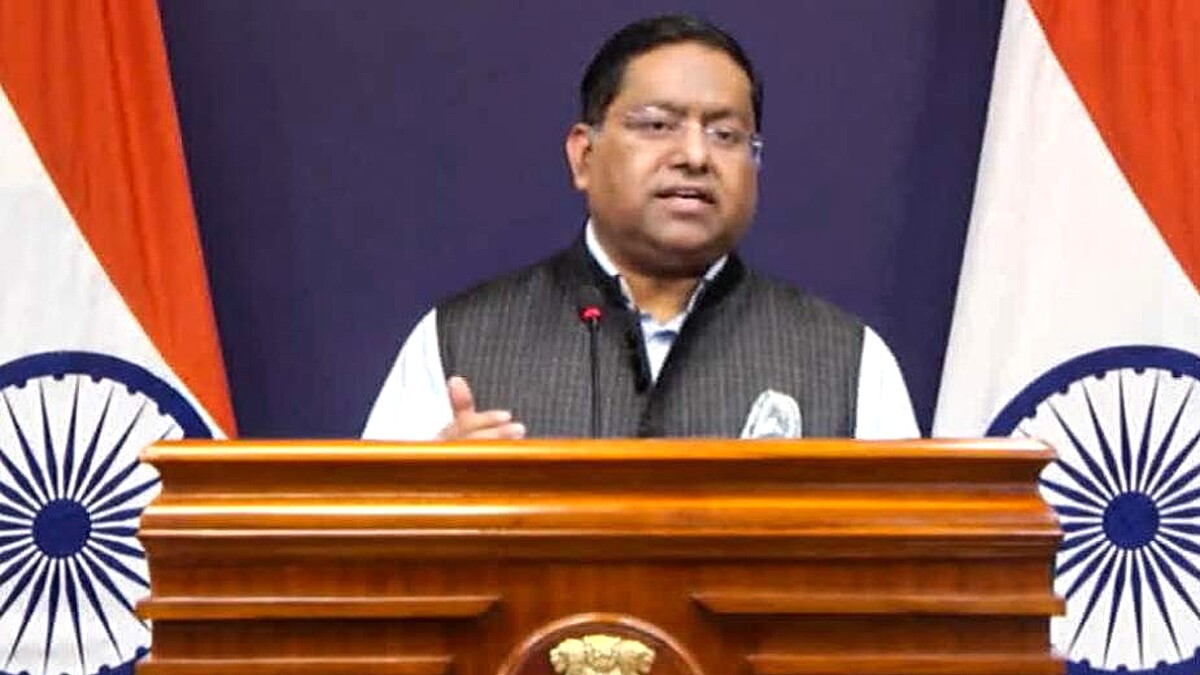
ISLAMABAD: A viral video purporting to show India’s Ministry of External Affairs spokesperson Randhir Jaiswal issuing a stern warning to Iran has been confirmed as fake by official sources.
The clip, widely shared on social media, claimed Jaiswal stated that India would verify any Iranian involvement in attacks on commercial vessels bound for the country and respond more harshly than it did to Pakistan if confirmed.
It further alleged India unequivocally backed Israel in the ongoing West Asia conflict and would not tolerate aggression from Tehran.
Multiple fact-checking outlets and the Ministry of External Affairs itself have debunked the video as an AI-generated deepfake.
The fabricated content manipulated footage from Jaiswal’s actual briefing on March 11, where he discussed India’s efforts to assist nationals in Iran and the operational status of the embassy in Tehran.
India’s official stance has consistently emphasized dialogue and de-escalation in the region rather than confrontational rhetoric.
The fake video surfaced against the backdrop of heightened tensions in the Strait of Hormuz, a critical global chokepoint for oil transit.
Recent incidents include attacks on commercial shipping, with a Thai-flagged vessel, Mayuree Naree, targeted on March 11 while en route to Kandla port in Gujarat.
India condemned such actions, deploring the targeting of merchant vessels and highlighting risks to innocent crew members and disruptions to international trade.
The Ministry described attacks on commercial shipping as unacceptable, noting precious lives lost in earlier phases of the conflict and increasing lethality.
Reports indicated three vessels struck by projectiles near the strait, contributing to a sharp decline in maritime traffic since the escalation began.
Timelapse data has shown reduced ship movements through the narrow waterway, which handles a significant portion of global oil supplies.
Amid these developments, diplomatic engagements between India and Iran have focused on ensuring safe passage for vessels.
External Affairs Minister S. Jaishankar held multiple conversations with his Iranian counterpart, discussing shipping safety and energy security.
An Indian government source suggested assurances for India-flagged tankers to transit the strait, though an Iranian source denied any formal agreement.
Jaiswal described the latest talks as addressing pertinent issues but refrained from further details, calling it premature.
India maintains around 9,000 nationals in Iran, including students, seafarers, professionals, and pilgrims.
The government continues assisting those wishing to depart via land routes to neighboring countries before returning home on commercial flights.
The embassy in Tehran remains fully operational to support citizens amid the evolving security situation.
Experts view recent maritime incidents as linked to broader regional dynamics involving Iran and ongoing hostilities.
India has co-sponsored UN Security Council resolutions condemning certain actions while stressing civilian protection and freedom of navigation.
The country has long advocated for restraint and diplomatic solutions to prevent further escalation.
The circulation of deepfakes like the debunked video underscores risks of misinformation during crises.
Authorities have urged vigilance against manipulated content that could inflame tensions or mislead public opinion.
India’s response prioritizes protecting its interests, including energy imports and citizen safety, through measured diplomacy rather than provocative statements.
No official Indian communication has threatened Iran or compared responses to past actions against other states in this context.
The episode highlights challenges in verifying information amid fast-spreading digital falsehoods.
As the situation in West Asia remains fluid, New Delhi continues monitoring developments closely while promoting stability in vital sea lanes.