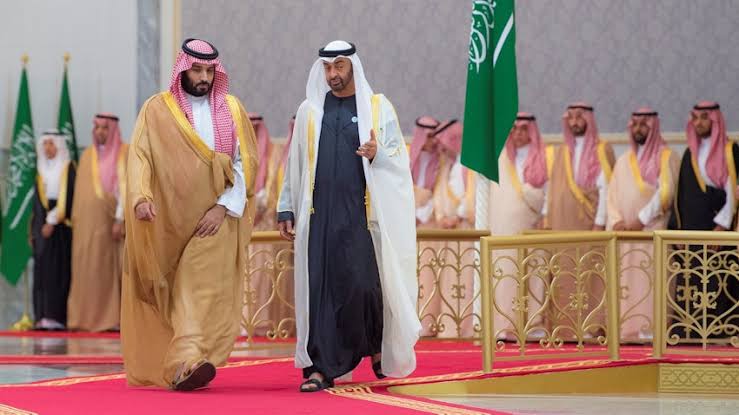
ISLAMABAD: The United Arab Emirates has engaged in targeted lobbying efforts in the United States to portray Saudi Arabia unfavorably, particularly by pressing pro-Israel organizations to highlight alleged antisemitism in the kingdom. This campaign emerges against the backdrop of escalating rivalry between the two Gulf powers, once close allies in regional conflicts but now divided over influence in Yemen, Sudan, and broader Middle Eastern affairs. Recent reports indicate that Abu Dhabi leveraged its post-Abraham Accords ties with Israel to influence Washington perceptions, aiming to counter Riyadh’s growing diplomatic leverage under Crown Prince Mohammed bin Salman.
The rift between Saudi Arabia and the UAE has deepened significantly in recent years, shifting from quiet competition to open confrontations. In Yemen, where both nations once jointly intervened against Houthi forces, divergences became stark as the UAE backed southern separatist groups like the Southern Transitional Council, while Saudi Arabia supported the internationally recognized government to preserve unity. This led to direct military incidents, including Saudi airstrikes on UAE-linked shipments in late 2025, which Riyadh justified as protecting national security interests near its borders.
In Washington, the UAE’s strategy has involved approaching prominent pro-Israel lobbying entities to raise concerns about antisemitism in Saudi media and official discourse. Sources familiar with the matter revealed that at least one such group faced pressure to issue statements condemning Riyadh, capitalizing on the sensitivity of antisemitism allegations in American political circles. This move reflects Abu Dhabi’s attempt to exploit its normalization with Israel to gain an edge in US policy debates, particularly as both nations vie for favor in the Trump administration.
The competition extends beyond Yemen to other conflict zones, including Sudan, where the UAE has been accused of supporting the Rapid Support Forces paramilitary group amid the ongoing civil war, while Saudi Arabia has aligned with the Sudanese Armed Forces. Similar patterns appear in Libya and Somalia, where the two states back opposing factions, further straining Gulf Cooperation Council cohesion. Analysts note that these divergences stem from contrasting visions: Saudi Arabia prioritizes regional stability for domestic economic reforms, whereas the UAE pursues a more interventionist approach often aligned with Israeli interests.
Lobbying has long been a tool for Gulf states in the US capital, with both nations spending millions annually on firms to influence Congress, the executive branch, and media narratives. The UAE’s efforts in this instance appear designed to undermine Saudi Arabia’s position, especially as Riyadh seeks broader international partnerships following its post-Khashoggi reintegration. Reports highlight frantic behind-the-scenes maneuvering by both sides to sway US preferences, with the UAE benefiting from closer ties to pro-Israel networks.
The implications for US policy are significant, as Washington navigates relations with two key allies amid their feud. The Trump administration has maintained a cautious stance, avoiding direct intervention while emphasizing that bilateral tensions should not jeopardize shared interests like countering Iran or ensuring Red Sea security. However, the lobbying push risks complicating arms sales, defense pacts, and broader Middle East strategy, where unified Gulf support has historically bolstered American objectives.
Observers warn that unchecked rivalry could destabilize the region further, exposing fragile states to prolonged conflict and weakening collective responses to common threats. The UAE’s campaign in Washington underscores how personal leadership dynamics and strategic divergences have transformed former partners into competitors, with the US emerging as a critical arena for influence.
Despite public denials and efforts to contain the fallout, the underlying animosity persists, fueled by economic competition, differing foreign policy priorities, and competition for global alliances. As both nations deepen ties with external powers—Saudi Arabia with Turkey and Pakistan, the UAE with India—their dispute may reshape Gulf geopolitics for years to come.
Source:https://www.middleeasteye.net/news/uae-pressed-pro-israel-groups-level-antisemitism-charges-against-saudi-arabia