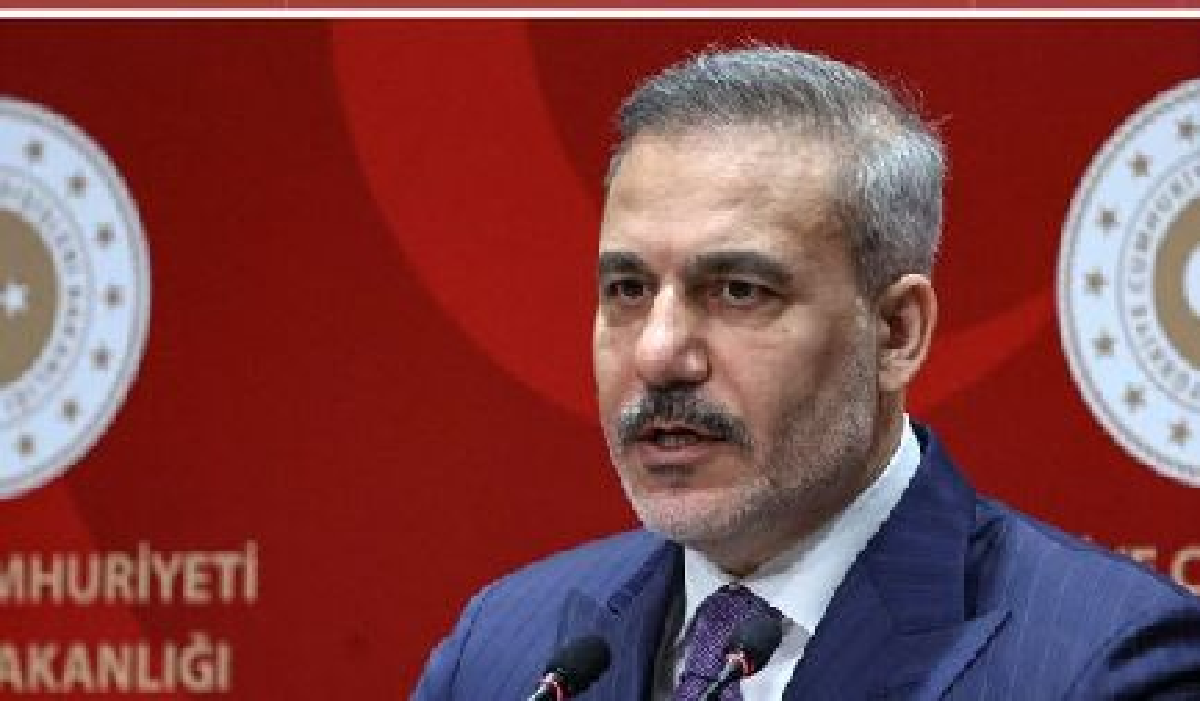
ISLAMABAD: Turkish Foreign Minister Hakan Fidan has warned that if Iran succeeds in developing nuclear weapons, Turkey could be compelled to join a regional arms race, disrupting the fragile balance of power in the Middle East. In a recent interview with CNN Turk, Fidan described such a scenario as potentially inevitable, emphasizing that Ankara prefers diplomacy but may not remain indifferent to existential threats. This statement underscores growing concerns over nuclear proliferation in a volatile region already marked by multiple security dilemmas and uneven global nuclear governance.
Fidan’s remarks highlight what he termed a “nuclear injustice” in the international system, where established nuclear powers maintain their arsenals while restricting others through treaties like the Nuclear Non-Proliferation Treaty. He pointed out that the NPT, signed in 1970, allows only five countries—the United States, Russia, China, France, and Britain—to legally possess nuclear weapons, while committing them to eventual disarmament and peaceful technology sharing—obligations that remain unfulfilled. This structural imbalance fuels perceptions of double standards, compelling non-nuclear states to reassess their strategic postures.
Iran’s nuclear program remains at the center of these anxieties, with ongoing enrichment activities raising alarms despite Tehran’s insistence on peaceful intentions and a religious edict prohibiting weapons. Fidan noted that Iran currently lacks atomic bombs and shows no concrete steps toward weaponization, yet its advancing capabilities place it close to breakout potential. International assessments suggest Iran could produce weapons-grade material in a short timeframe if decided, though such projections are theoretical and subject to revision based on monitoring data.
The potential for a proliferation cascade in the Middle East has long been debated among analysts, with experts warning that an Iranian nuclear breakthrough could prompt Saudi Arabia to pursue matching capabilities. Riyadh has previously indicated it would not tolerate a nuclear-armed Iran without equivalent deterrence. Turkey’s position adds another layer, as a major NATO member with advanced conventional forces and growing regional influence, its entry into the race would dramatically alter security dynamics across West Asia.
Fidan stressed Ankara’s reluctance to pursue nuclear weapons, viewing it as a high-level strategic matter requiring broad consideration rather than hasty action. He reiterated Turkey’s opposition to proliferation and support for diplomatic solutions, including renewed US-Iran talks mediated through channels like Oman. However, he cautioned that dramatic shifts in regional power balances could force reluctant responses, damaging cooperation and heightening instability in an area already strained by conflicts involving proxies and direct confrontations.
Broader implications extend beyond bilateral rivalries, as a nuclearized Middle East would challenge global non-proliferation norms. States like Egypt have historically advocated restraint, but cascading effects could erode such commitments. Turkey’s NATO membership provides extended deterrence through allies, yet independent capabilities might be seen as necessary for prestige and autonomy in a multipolar environment where great-power guarantees appear less reliable.
Experts from think tanks note that civilian nuclear programs in Turkey and Saudi Arabia, including reactor construction with foreign assistance, create latent potential for hedging strategies. While both adhere to NPT safeguards, the absence of full transparency mechanisms increases risks if political calculations shift. A regional nuclear consortium involving multiple states has been proposed as a way to share technology peacefully while preventing weaponization, though geopolitical distrust hinders progress.
Fidan’s interview also addressed related tensions, dismissing notions that airstrikes could collapse Iran’s regime as unrealistic and counterproductive. He argued such actions might radicalize policies rather than resolve issues, advocating instead for creative diplomacy to address root concerns. The timing coincides with resumed indirect US-Iran engagements, where limiting ballistic missiles and proxy support remains contentious alongside nuclear limits.
The statement reflects Turkey’s evolving foreign policy under President Recep Tayyip Erdogan, balancing NATO commitments with independent regional assertiveness. As a bridge between Europe and Asia, Turkey seeks to avoid entrapment in escalatory spirals while safeguarding sovereignty. Analysts view this as a signal to international actors to prioritize equitable solutions that mitigate perceived injustices driving proliferation incentives.
Ultimately, Fidan’s warning serves as a stark reminder of interconnected security challenges in the Middle East. Preventing a nuclear arms race requires renewed multilateral efforts, stronger verification regimes, and confidence-building measures among rivals. Failure to address underlying asymmetries could transform theoretical risks into reality, with profound consequences for global stability and peace.
Source:https://www.bloomberg.com/news/articles/2026-02-10/turkey-says-it-could-be-dragged-into-nuclear-arms-race-over-iran