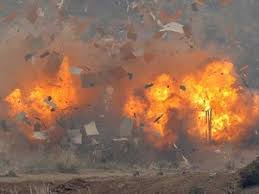
ISLAMABAD: A powerful explosion struck a military convoy in the Mohammadabad area of Iranshahr, located in Iran’s southeastern Sistan and Baluchestan province, destroying at least two armored vehicles and prompting an immediate surge in security forces deployment across the vicinity.
The incident occurred on February 11, 2026, with local sources describing the blast as intense enough to be audible throughout parts of the city, raising immediate concerns over escalating militant activity in the restive border region.
Reports from regional monitoring outlets indicate that the attack targeted a convoy of Iranian security forces, likely involving an improvised explosive device or roadside bomb, though official Iranian authorities have yet to issue any detailed confirmation or comment on the event.
The anti-Iran militant alliance known as Jabh-e Mobarizin-e Mardomi, abbreviated as JMM and translated as the People’s Combatants Front, swiftly claimed responsibility for the operation through affiliated channels and social media statements.
JMM described the strike as a deliberate action against what it termed special repressive units, including references to forces associated with internal security operations in the province, highlighting the group’s ongoing campaign against Iranian state presence.
Sistan and Baluchestan province, home to a significant Baloch ethnic population, has long experienced tensions rooted in perceived marginalization, economic neglect, and demands for greater autonomy or rights by local communities.
The region borders both Pakistan and Afghanistan, making it a strategically sensitive area prone to cross-border insurgent activities and smuggling networks that complicate central government control.
Multiple militant groups operate in the province, with historical actors such as Jaish al-Adl having conducted similar attacks on Iranian military and police targets over recent years, often using asymmetric tactics to challenge state authority.
JMM appears to be a relatively new formation, reportedly emerging in late 2025 as an alliance of Baloch or anti-regime fighters, focusing on coordinated operations against Iranian security infrastructure in the southeast.
The group’s claim aligns with a pattern of increasing militant assertions in the area, where attacks on convoys, checkpoints, and personnel have become more frequent amid broader regional instability.
Preliminary accounts suggest no immediate official casualty figures were released by Iranian state media, though the destruction of armored vehicles points to significant material damage and potential personnel losses.
Following the explosion, security measures were visibly heightened, with additional military and police reinforcements deployed to the Mohammadabad district to secure the site and prevent follow-up incidents.
Local human rights and regional news channels, including those specializing in Sistan-Baluchestan developments, were among the first to report the blast and subsequent claim, citing eyewitnesses and informed sources on the ground.
The timing of the attack coincides with heightened geopolitical tensions involving Iran, including ongoing concerns over its missile programs and relations with international actors, though no direct external link to this specific incident has been established.
Such operations in the province often aim to undermine Iranian military mobility and morale while drawing attention to Baloch grievances, including allegations of human rights abuses and resource exploitation.
Analysts monitoring the region note that militant groups like JMM seek to exploit local discontent to sustain recruitment and operational momentum against what they portray as an occupying force.
The lack of official Iranian acknowledgment is consistent with past incidents in the province, where authorities frequently downplay or delay responses to avoid amplifying militant narratives or revealing vulnerabilities.
Broader security implications include potential repercussions for cross-border stability, particularly with neighboring Pakistan, which also faces Baloch insurgent challenges in its own southwestern territories.
As investigations continue, the incident underscores the persistent challenge Iran faces in maintaining control over its southeastern frontier amid persistent ethnic and separatist unrest.
The attack may prompt intensified counter-insurgency efforts by Iranian forces, potentially leading to further operations and arrests in the coming days in Iranshahr and surrounding areas.
Observers will closely watch for any additional claims or retaliatory actions by JMM or allied groups, as well as Iran’s official narrative on the event’s origins and perpetrators.
Source: https://www.iranintl.com/en/202602113098