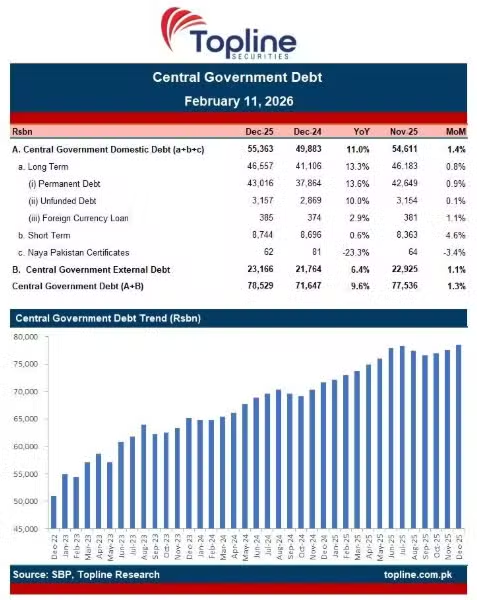
ISLAMABAD: Pakistan’s federal government debt witnessed a notable increase of 1.3 percent on a month-on-month basis in December 2025, climbing to Rs78.5 trillion, according to the latest statistics released by the State Bank of Pakistan. This rise, amounting to approximately Rs1 trillion from the previous month in some estimates, highlights persistent fiscal pressures despite efforts toward consolidation. On a year-on-year comparison, the debt stock expanded by 9.6 percent from Rs71.5 trillion recorded in December 2024, underscoring the challenges in managing borrowing needs amid economic stabilization measures.
The surge in December primarily stemmed from increased domestic borrowing, as the government relied heavily on local financial instruments to meet its funding requirements. Domestic debt reached Rs55.4 trillion by the end of the month, reflecting an 11 percent year-on-year growth and a 1.4 percent monthly uptick. This component, dominated by long-term instruments such as Pakistan Investment Bonds and sukuk, accounted for the bulk of the overall increase, while short-term Treasury bills also contributed to the liquidity draw from the banking system.
In contrast, external debt showed a more moderate trajectory, standing at Rs23.1 trillion in December 2025. This segment registered a 1 percent month-on-month rise and a 6.4 percent year-on-year increase, influenced by repayments and new disbursements from multilateral sources. The relative stability in external liabilities reflects cautious management of foreign obligations, though the overall debt portfolio remains sensitive to exchange rate fluctuations and global financing conditions.
Over the first half of fiscal year 2026, the federal government’s total debt stocks rose by Rs641 billion, or 0.82 percent, from Rs77.8 trillion in June 2025. This incremental growth occurred despite a reported budget surplus of Rs542 billion, equivalent to 0.4 percent of GDP, in the July-December period, marking an improvement from the deficit recorded in the corresponding period of the previous year. Analysts attribute the debt accumulation to ongoing financing of development and operational expenditures through domestic channels.
The reliance on domestic borrowing has intensified amid tighter external financing environments, with commercial banks providing substantial liquidity to the government. This strategy has helped lengthen the maturity profile of domestic debt, reducing immediate rollover risks, but it also crowds out private sector credit to some extent. Long-term domestic debt expanded significantly, reaching Rs46.6 trillion, up 13.3 percent year-on-year, as authorities prioritized sustainable instruments over short-term ones.
Broader public debt metrics indicate additional pressures, with gross public debt climbing to Rs81.3 trillion in the first half of FY26. Total debt and liabilities, encompassing broader obligations, reached Rs95.5 trillion, up from Rs87.9 trillion a year earlier. These figures point to the cumulative impact of fiscal deficits accumulated over time, even as recent primary surpluses offer some mitigation against further escalation.
Economic observers note that while the debt increase signals challenges in achieving full fiscal consolidation, the government’s ability to generate a surplus in the first half of FY26 represents progress toward macroeconomic stability. Debt servicing costs have reportedly moderated in some areas, though interest payments continue to strain budgetary resources. The debt-to-GDP ratio, estimated around 70-74 percent in recent assessments, remains elevated above statutory limits, necessitating sustained reforms.
The State Bank of Pakistan’s data release underscores the importance of prudent debt management under the Medium-Term Debt Strategy framework. Efforts to diversify funding sources and reduce currency risks through a lower external debt share, now around 30 percent of the total, aim to enhance resilience. However, persistent borrowing needs tied to development priorities and external repayment schedules continue to drive the upward trajectory in liabilities.
Sustained fiscal discipline, including revenue enhancement and expenditure rationalization, will be critical to curbing future debt accumulation. International support from institutions like the IMF has provided breathing space, but domestic reforms remain essential for long-term sustainability. The latest figures serve as a reminder of the delicate balance between growth financing and debt containment in Pakistan’s economic landscape.