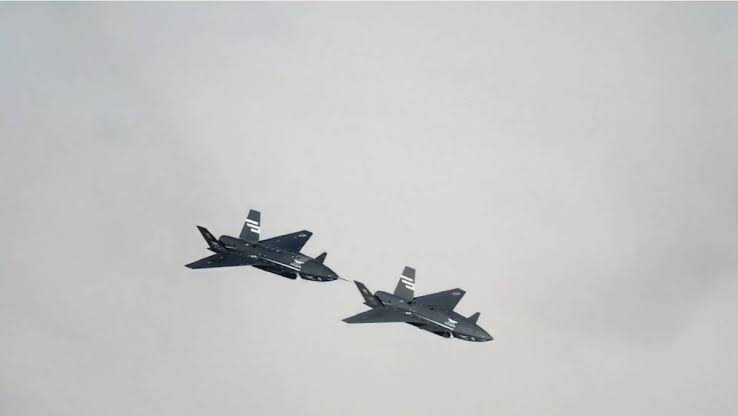
ISLAMABAD: Pakistan is poised to transition from importer to co-producer of advanced unmanned combat aerial vehicles through deepening collaboration with Turkey’s Baykar Technology, focusing on the jet-powered, low-observable Bayraktar Kızılelma. Recent developments indicate advanced discussions for establishing manufacturing facilities in Pakistan, integrating the platform into the National Aerospace Science and Technology Park ecosystem. This initiative extends beyond simple procurement, aiming for progressive localization of critical components, including airframes, avionics, and mission systems. Such a move would enhance the Pakistan Air Force’s strategic capabilities and position the country as a regional player in stealth unmanned systems.
The Bayraktar Kızılelma, developed entirely by Baykar with indigenous funding since 2021, represents Turkey’s pioneering entry into jet-powered unmanned fighter aircraft. Equipped with a turbofan engine, the platform achieves high subsonic speeds, carries up to 1,500 kilograms of payload, and features stealth design elements to reduce radar detectability. Successful milestones include maiden flights of production prototypes, autonomous close-formation operations, and live-fire tests with beyond-visual-range missiles like the Gökdoğan. These advancements validate its role in air-to-air and air-to-ground missions, making it a transformative asset for modern aerial warfare.
Pakistan’s engagement with Baykar traces back to earlier acquisitions of Bayraktar TB2 and Akıncı drones, which bolstered reconnaissance and strike capabilities. Building on this foundation, the establishment of Bayraktar Teknoloji Pakistan and prior R&D cooperation at NASTP signal a shift toward technology transfer and joint development. Reports highlight exploratory talks for a dedicated drone assembly and integration facility, potentially enabling local production of Kızılelma variants tailored to Pakistan Air Force requirements. This aligns with broader efforts to indigenize defense technologies and reduce reliance on foreign suppliers.
Central to the initiative is the integration of indigenous Pakistani systems into the Kızılelma platform. Plans encompass incorporating locally developed avionics, sensor fusion technologies, and AI-driven manned-unmanned teaming software compatible with Pakistan Air Force doctrine. Progressive localization would extend to airframe fabrication, electronic warfare suites, and mission-specific payloads. Such customization transforms the Kızılelma from a standard export model into a Pakistan-optimized strategic asset, enhancing interoperability with existing fleets like the JF-17 and future platforms.
The proposed manufacturing setup draws on Pakistan’s maturing drone ecosystem, including advancements in flight control computers, data links, and loitering munitions produced by entities such as Global Industrial and Defence Solutions. By leveraging these capabilities, the collaboration facilitates rapid adaptation of the Kızılelma, including advanced B and C variants with enhanced performance. This approach not only accelerates induction timelines but also fosters skill development among Pakistani engineers through hands-on technology transfer and co-production activities.
Strategically, local production of the Kızılelma would significantly bolster Pakistan Air Force airpower in contested environments. The platform’s stealth features, high maneuverability, and autonomous capabilities enable suppression of enemy air defenses, precision strikes, and loyal wingman operations alongside manned fighters. In regional contexts marked by aerial asymmetries, such assets could provide decisive advantages in maintaining air dominance and deterring potential threats. Moreover, the initiative strengthens bilateral defense ties with Turkey, exemplifying a model of South-South cooperation in high-technology sectors.
Beyond immediate operational gains, the project positions Pakistan among a limited group of nations capable of producing stealth unmanned combat aerial vehicles. This elevates its status in the global unmanned market, potentially opening avenues for future exports to allied countries. The emphasis on full-spectrum localization, from airframe composites to software integration, supports long-term self-reliance goals outlined in national defense policies. It also complements ongoing investments in aerospace infrastructure under NASTP, creating synergies across research, development, and production domains.
Industry observers note that while formal agreements remain under negotiation, the momentum reflects mutual strategic interests. For Baykar, Pakistan offers a sophisticated partner with established drone expertise, enabling customized solutions and expanded market access. For Pakistan, the collaboration accelerates indigenous capability building in cutting-edge unmanned systems. As talks progress toward implementation, the initiative could redefine aerial warfare dynamics in South Asia and underscore the evolving nature of Turkey-Pakistan defense partnership.
The potential manufacturing of Kızılelma variants in Pakistan marks a pivotal step in modernizing the Pakistan Air Force’s unmanned fleet. With successful Turkish testing phases paving the way for serial production, localized output could commence in the coming years, subject to finalized terms. This development heralds an era where advanced unmanned technologies become integral to regional security architectures, driven by innovation and collaborative enterprise.