The United Nations witnessed a heated exchange between Pakistani and Indiandelegates regarding the right to self-determination for the people ofIndian Illegally Occupied Jammu and Kashmir and Palestine during a recentdebate in the UN General Assembly’s Fourth Committee, which deals withspecial political and decolonization issues.
Last week, Pakistan’s UN Ambassador Munir Akram highlighted that Kashmirisand Palestinians were still denied their right to self-determination,describing the Indian occupation of Kashmir as a severe form of modern-daycolonialism.
In response, Indian delegate Nitish Birdi argued that the right toself-determination should not justify undermining the territorial integrityof any member state and asserted that Kashmir and Ladakh remained integralparts of India.
Pakistani delegate Naeem Sabir Khan countered this by emphasizing that theright to self-determination is enshrined in various internationaldocuments, including the United Nations Charter and International Covenantson Economic, Social, Cultural, and Political Rights.
Read Top Stories

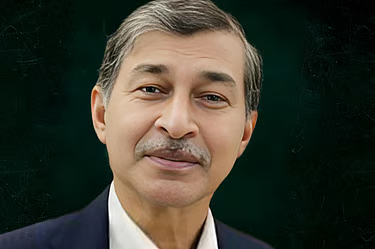
He also pointed out that Jammu and Kashmir is considered a disputedterritory on United Nations maps, not an integral part of India.Furthermore, Naeem highlighted India’s alleged state-sponsored terrorismand cited an Amnesty International report accusing India of targeting humanrights defenders and civil society.
He expressed concerns about the rise in Islamophobia in India, attributingit to the government’s pursuit of the “Hindutva” agenda and its support foranti-Islam and anti-Muslim rhetoric, which he argued had put minorities atrisk in the country.