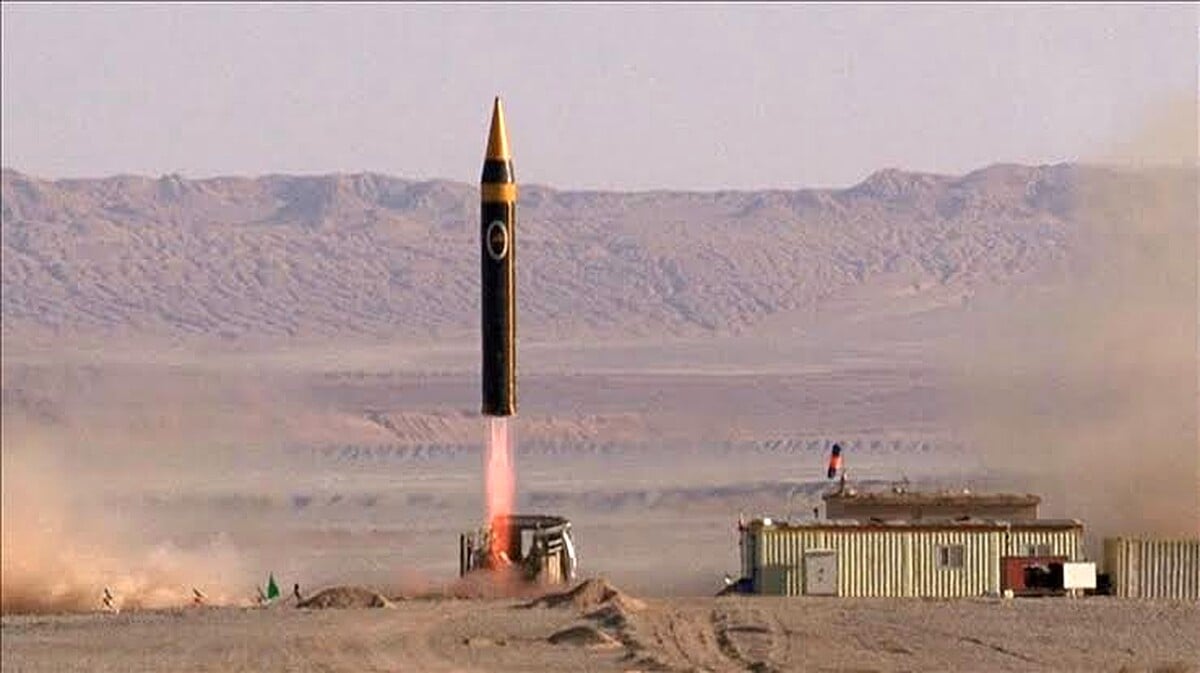




ISLAMABAD: US intelligence assessments reported by The Wall Street Journal confirm that Iran retains thousands of ballistic missiles even after weeks of intense aerial bombardment by the United States and Israel.
The findings indicate that more than half of Iran’s missile launchers were damaged or hidden underground during the campaign.
Many of these launchers remain recoverable and can be repaired rapidly for reuse.
Iranian crews have deployed bulldozer teams to excavate buried bunkers and silos within hours of strikes.
US officials familiar with the intelligence note that only about one third of the missile arsenal has been confirmed destroyed.
Another third is believed damaged or entombed in underground facilities but not fully eliminated.
Pre-war estimates placed Iran’s ballistic missile inventory at over 3,000 units of various ranges and types.
Some assessments cited around 2,500 missiles capable of striking targets as far as Israel.
Israel previously claimed success in disabling roughly 60 percent of Iran’s estimated 470 mobile launchers.
Yet American intelligence paints a more cautious picture with around half the launchers still intact or repairable.
The current two-week ceasefire pause has sparked fresh concerns in Washington and Tel Aviv.
Tehran could exploit the lull to rebuild depleted stocks and restore production lines.
Underground facilities have proven remarkably resilient with quick recovery operations already under way.
Iranian personnel are reported to be restoring damaged sites faster than anticipated by strike planners.
This resilience underscores the challenges faced in fully neutralising Iran’s missile capabilities.
President Donald Trump delivered a blunt assessment in an interview with The New York Post.
He warned that failure of the ongoing diplomatic talks in Islamabad would trigger immediate American action.
Trump stated the United States would employ “the most powerful weapons” right after the ceasefire expires.
The Islamabad negotiations represent a critical window for de-escalation in the volatile region.
Pakistan’s role as host has drawn regional attention amid efforts to prevent further escalation.
Analysts highlight that Iran’s remaining arsenal continues to pose a credible threat to Gulf states and Israeli positions.
Missile launch rates have dropped significantly yet the stockpile size ensures sustained deterrence potential.
US military operations targeted over 10,000 sites across Iran with Israeli forces adding thousands more strikes.
Despite these efforts production facilities suffered heavy damage while core missile inventories survived in depth.
Defence experts point to Iran’s strategy of dispersing assets across vast underground networks.
Such infrastructure has limited the effectiveness of precision airstrikes on mobile and buried systems.
The intelligence revelations contradict earlier claims of functional destruction of Iran’s missile programme.
Secretary-level statements had described the arsenal as depleted but fresh data tells a different story.
Regional observers in Islamabad monitor developments closely given Pakistan’s strategic interests in stability.
The two-week ceasefire provides a narrow timeframe for diplomats to achieve a breakthrough.
Failure could lead to renewed and potentially more devastating strikes as Trump indicated.
Iran’s ability to repair launchers quickly adds urgency to the talks.
US intelligence continues to track repair activities through advanced surveillance assets.
The situation remains fluid with both sides preparing for possible resumption of hostilities.
Analysts warn that thousands of missiles still in Iranian hands could alter the regional balance if conflict reignites.
The data underscores the limits of air power against deeply entrenched missile programmes.
International attention now shifts to the outcome of the Islamabad process.
A successful agreement could avert further large-scale confrontation.
Otherwise the threat of escalated strikes looms large over the coming days.