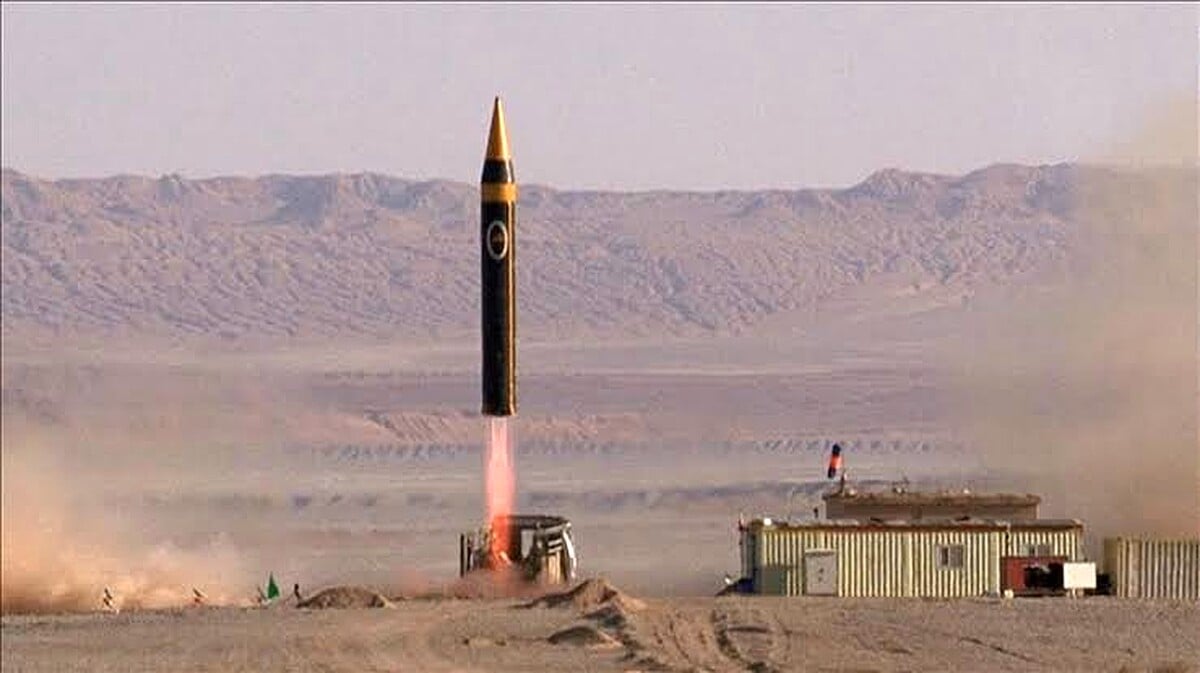




ISLAMABAD: A senior Iranian official has guaranteed that any United States demand to terminate Tehran’s ballistic missile programme will cause nuclear negotiations to collapse instantly.
The declaration leaves no room for compromise on what Iran views as its core defensive shield.
Iran faces no other adversaries requiring such capabilities, the official stressed, with only America and Israel standing as direct threats.
This position emerges amid fragile 2025-2026 talks aimed at reviving a nuclear framework while Washington insists on broader curbs.
US intelligence assessments confirm Iran retains thousands of ballistic missiles despite sustained American and Israeli airstrikes throughout 2025 and early 2026.
Pre-conflict inventories stood at over 3,000 missiles according to earlier Pentagon estimates, with current figures hovering between 2,000 and 2,500 operational units.
Production lines churn out 50 to 100 new ballistic missiles monthly, enabling rapid replenishment even after heavy losses.
Medium-range systems such as the Sejjil and Khorramshahr boast ranges up to 2,000 kilometres, placing Israeli cities and US regional bases squarely in reach.
Iran launched more than 500 ballistic missiles during the June 2025 exchanges, revealing the arsenal’s resilience.
Subterranean missile cities preserved roughly half of all launchers, with US sources verifying destruction of only one-third of the total stockpile.
Tehran rejects any linkage between nuclear discussions and its missile deterrent, describing the programme as non-negotiable.
Foreign Minister Abbas Araghchi publicly labelled ballistic missiles off-limits in Oman-mediated talks.
Military spokesmen echoed the guarantee, insisting Iran will walk away the moment missile dismantlement appears on the agenda.
Israeli projections warn that unchecked Iranian output could swell the arsenal to 8,000 missiles by 2027.
Solid-fuel advancements have dramatically improved accuracy and launch readiness across short and medium-range platforms.
The impasse threatens to unravel months of diplomatic progress brokered partly through Pakistan and Oman.
Regional stability hangs in balance as energy markets monitor the Strait of Hormuz, a chokepoint for one-fifth of global oil supplies.
Pakistan, sharing deep historical ties with Tehran, watches developments closely given potential spillover into South Asian security dynamics.
Western analysts note that Iran’s self-imposed 2,000-kilometre range limit still positions it as the Middle East’s pre-eminent missile power.
Domestic factories continue importing critical components, sustaining output despite sanctions.
The statement aligns with supreme leadership consensus reported in Iranian state media.
International outlets including Al Jazeera and Western agencies corroborate the hardening red line on missiles.
Any forced concession on the programme would equate to strategic surrender in Tehran’s calculus.
Negotiators now confront a binary choice between nuclear-limited progress or total breakdown.
Escalation risks remain elevated should talks dissolve without mutual concessions.
Iran’s retained launch capacity, estimated at thousands of missiles and drones, underscores its enduring deterrence posture.
The episode highlights the limits of military pressure in compelling Tehran to yield on existential capabilities.
Diplomatic channels remain open but narrowed by this uncompromising stance.
Global observers anticipate heightened volatility in coming weeks as deadlines approach.