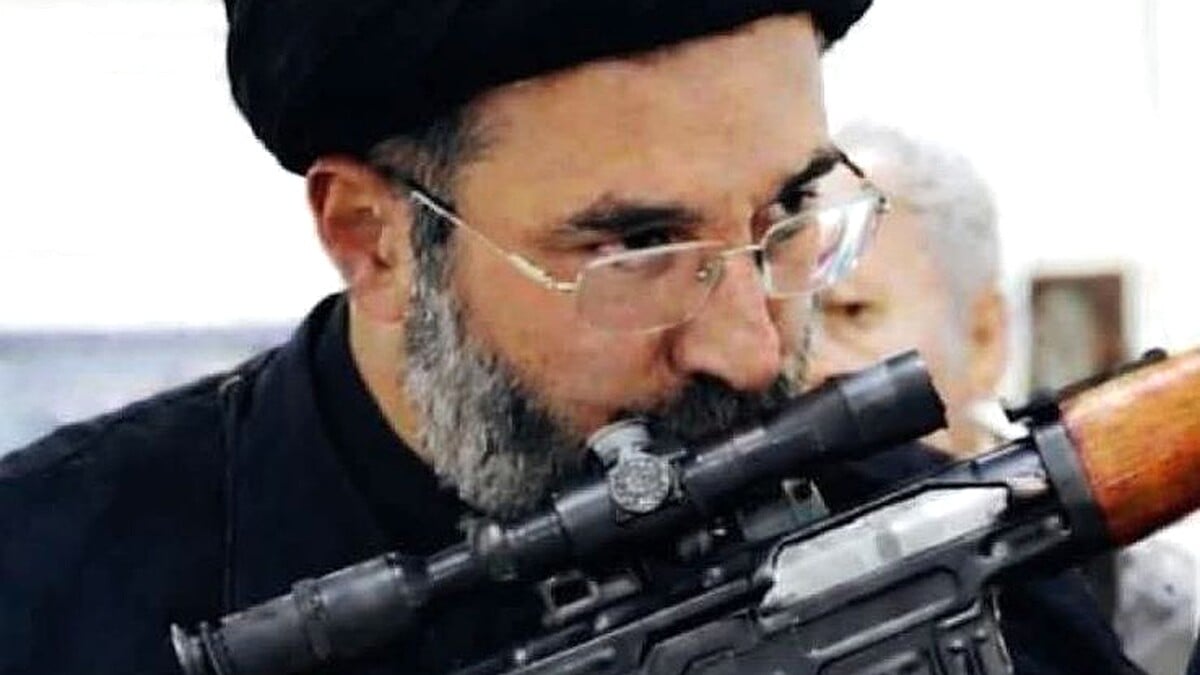
ISLAMABAD: Iran has confirmed that Supreme Leader Mojtaba Khamenei sustained light injuries during recent hostilities but remains fully engaged in command and governance, rejecting earlier claims circulated by several United States media outlets that he had been seriously wounded.
The clarification came through Iranian state media and senior officials who said the supreme leader suffered minor injuries during a security incident linked to the ongoing regional escalation but continues to operate from a secure location. Officials described the injuries as “non-critical” and emphasized that Khamenei has maintained direct oversight of military and political affairs.
The announcement followed hours of speculation after multiple American media reports suggested that Khamenei had been gravely injured during strikes associated with the widening conflict involving Iran, Israel and United States forces. Those reports rapidly spread across global media networks and social platforms, triggering uncertainty about the leadership structure in Tehran.
Iranian authorities responded quickly, dismissing the reports as exaggerated and part of what they described as an information warfare campaign. According to Iranian state television, Khamenei had held internal meetings with military commanders and national security officials shortly after the incident, reinforcing the message that the country’s command structure remains intact.
Analysts say such reports about the health or safety of Iran’s supreme leadership carry significant geopolitical implications. The office of the supreme leader holds ultimate authority over Iran’s armed forces, nuclear policy, foreign affairs strategy and intelligence institutions. Any uncertainty about that position can influence regional calculations and global markets.
The reports also emerged at a particularly sensitive moment for the Middle East. Over the past weeks, tensions have intensified following a series of attacks on maritime traffic, energy infrastructure and military positions across the region. Several Western governments have accused Iran-aligned groups of involvement in disruptions near critical shipping lanes, while Tehran has rejected those allegations and warned of retaliation against foreign military actions.
Regional observers note that leadership stability in Iran remains a key factor in managing escalation risks. The country’s military structure, which includes the Islamic Revolutionary Guard Corps and conventional armed forces, ultimately answers to the supreme leader. Even minor disruptions to that chain of command can trigger speculation about internal power dynamics or succession questions.
Iranian officials, however, sought to dispel such concerns by stressing that governance mechanisms remain fully operational. State media reported that communications between the supreme leader’s office and senior commanders continued uninterrupted, and that strategic directives regarding defense readiness and diplomatic engagement were issued as usual.
Security analysts say the quick rebuttal from Tehran suggests authorities are aware of how narratives surrounding leadership health can affect both domestic morale and international perceptions. During periods of conflict, information flows become highly contested, with governments often seeking to control messaging in order to maintain political stability and military deterrence.
In the digital era, conflicting reports about high-profile figures can spread globally within minutes. Experts point out that such claims often originate from anonymous sources or intelligence leaks, making verification difficult during rapidly evolving crises. Governments therefore increasingly respond through official statements and state media channels to counter speculation.
The latest episode reflects the broader information battle accompanying the ongoing confrontation in the region. Alongside military deployments and economic pressures, narratives about leadership, strategic capability and political resilience have become an important dimension of modern geopolitical competition.
Energy markets and diplomatic circles also monitor such developments closely. Iran remains a central player in global energy supply calculations due to its geographic position near critical maritime routes and its role within the broader Middle Eastern power balance. Any perceived instability at the top of the country’s leadership can influence investor sentiment and diplomatic engagement.
So far, there has been no independent confirmation from international organizations or neutral observers regarding the exact circumstances that led to Khamenei’s reported injuries. Iranian authorities have not provided detailed information about the location or nature of the incident, citing security considerations.
Despite the limited details, officials reiterated that the supreme leader remains active in directing national policy. Iranian media described him as continuing to supervise strategic decisions and consultations with both civilian leadership and military commanders.
For now, the episode illustrates how quickly narratives about leadership can shape global attention during periods of heightened tension. Whether the incident was the result of direct military action, a security breach or a precautionary relocation remains unclear, but Tehran’s message is unmistakable: the country’s leadership structure remains operational despite mounting regional pressures.
As the Middle East confronts one of its most volatile security environments in recent years, developments surrounding Iran’s leadership will continue to draw intense scrutiny from governments, analysts and markets around the world.