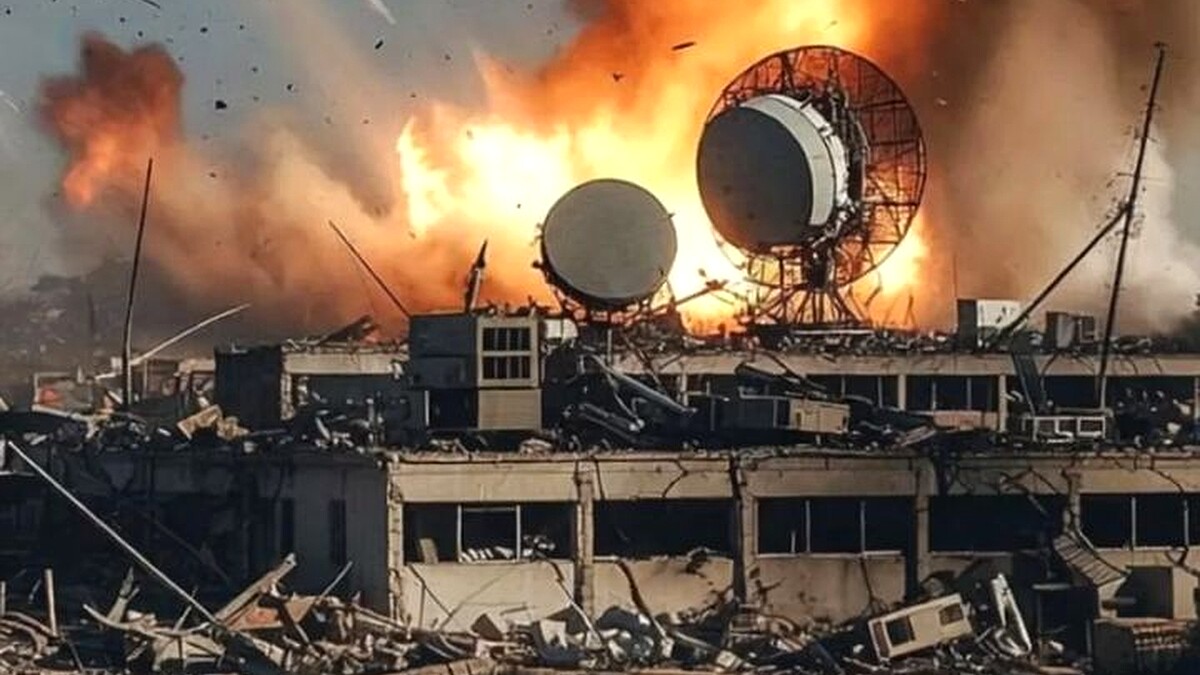
ISLAMABAD: The Islamic Revolutionary Guard Corps (IRGC) has claimed responsibility for a targeted missile and drone operation against strategic military installations in Israel’s northern port city of Haifa, marking a significant escalation in the ongoing regional conflict.
The IRGC described the strikes as hitting a military center pivotal to weapons manufacturing and an information reception facility linked to Israeli spy satellites. According to Iranian statements, the operation utilized advanced weaponry to penetrate Israeli defenses and achieve direct impacts on these high-value targets.
The military facility in Haifa is said to play a central role in the development and production of advanced armaments, contributing substantially to Israel’s overall combat readiness and technological edge in defense industries. Iranian sources emphasized that disrupting such a site directly undermines Israeli military production capabilities amid heightened hostilities.
The second target, identified as a data reception center for the Ofeq reconnaissance satellite program, serves as a critical node in Israel’s intelligence gathering architecture. The Ofeq series provides high-resolution imagery for military surveillance, enabling real-time monitoring of regional threats and strategic planning.
Iranian forces reportedly launched a wave of loitering attack drones in the operation, coordinated with ballistic missile support, to strike these locations. This combination allows for persistent threats and saturation of air defense systems.
The strikes come against the backdrop of intensified exchanges between Iran and Israel, including repeated Israeli and US-led airstrikes on Iranian military infrastructure, missile production sites, and energy facilities. Recent reports indicate severe degradation of Iran’s ballistic missile and drone arsenals through targeted bombardments on underground complexes and production hubs.
In retaliation patterns observed over recent months, Iran has shifted toward precision strikes on Israeli economic and military assets, including oil refineries in Haifa Bay and defense-related industrial zones. The Bazan Group refinery, Israel’s largest, has been repeatedly cited in Iranian claims as a priority target due to its role in supplying a major portion of domestic fuel needs.
Analysts note that Haifa’s strategic location as a major port and industrial hub makes it vulnerable to such operations, with potential ripple effects on Israel’s logistics, energy security, and defense supply chains. Disruptions to weapons manufacturing could delay replenishment of stockpiles depleted in prolonged engagements.
The IRGC’s focus on satellite-related infrastructure highlights the growing importance of space-based assets in modern warfare. Israel’s Ofeq satellites, operated under military auspices, support intelligence operations across the Middle East, providing persistent overhead coverage that informs targeting decisions and threat assessments.
By claiming to target the ground station receiving Ofeq data, Iran aims to impair this capability, potentially creating temporary blind spots in Israeli situational awareness. Such moves align with broader efforts to counter technological asymmetries in the conflict.
Israeli authorities have not fully confirmed the extent of damage from the latest Iranian operation, though air defense activations and reports of explosions in northern Israel indicate defensive responses were triggered. Interceptions of incoming projectiles remain a key element in limiting impacts.
The operation underscores the evolving tactics in the shadow war, where both sides prioritize high-impact, symbolic targets to deter further aggression. Iran’s use of solid-fuel ballistic missiles, noted for rapid launch and maneuverability, complicates interception efforts.
Regional observers warn that continued tit-for-tat strikes risk broader involvement, with implications for energy markets, shipping routes, and allied responses. Haifa’s repeated targeting reflects its dual role as an economic lifeline and military node.
Iranian military statements frame these actions as defensive measures to restore deterrence following strikes on domestic sites, including missile complexes in Esfahan and drone bases in Khuzestan. Satellite imagery has verified extensive damage to Iranian facilities in prior waves.
The conflict’s trajectory suggests sustained pressure on defense industrial bases, with both nations seeking to erode the opponent’s long-term warfighting capacity. Precision claims by the IRGC aim to project operational sophistication despite reported losses in arsenal size.
As hostilities persist, international calls for de-escalation grow amid concerns over civilian exposure and economic fallout. Haifa’s industrial significance amplifies the stakes of any successful strike on its military-linked sites.
The IRGC’s announcement serves as a signal of continued resolve, even as capabilities face attrition from opposing air campaigns. The targeting of weapons production and satellite support infrastructure represents a calculated effort to impose asymmetric costs in an increasingly attritional confrontation.