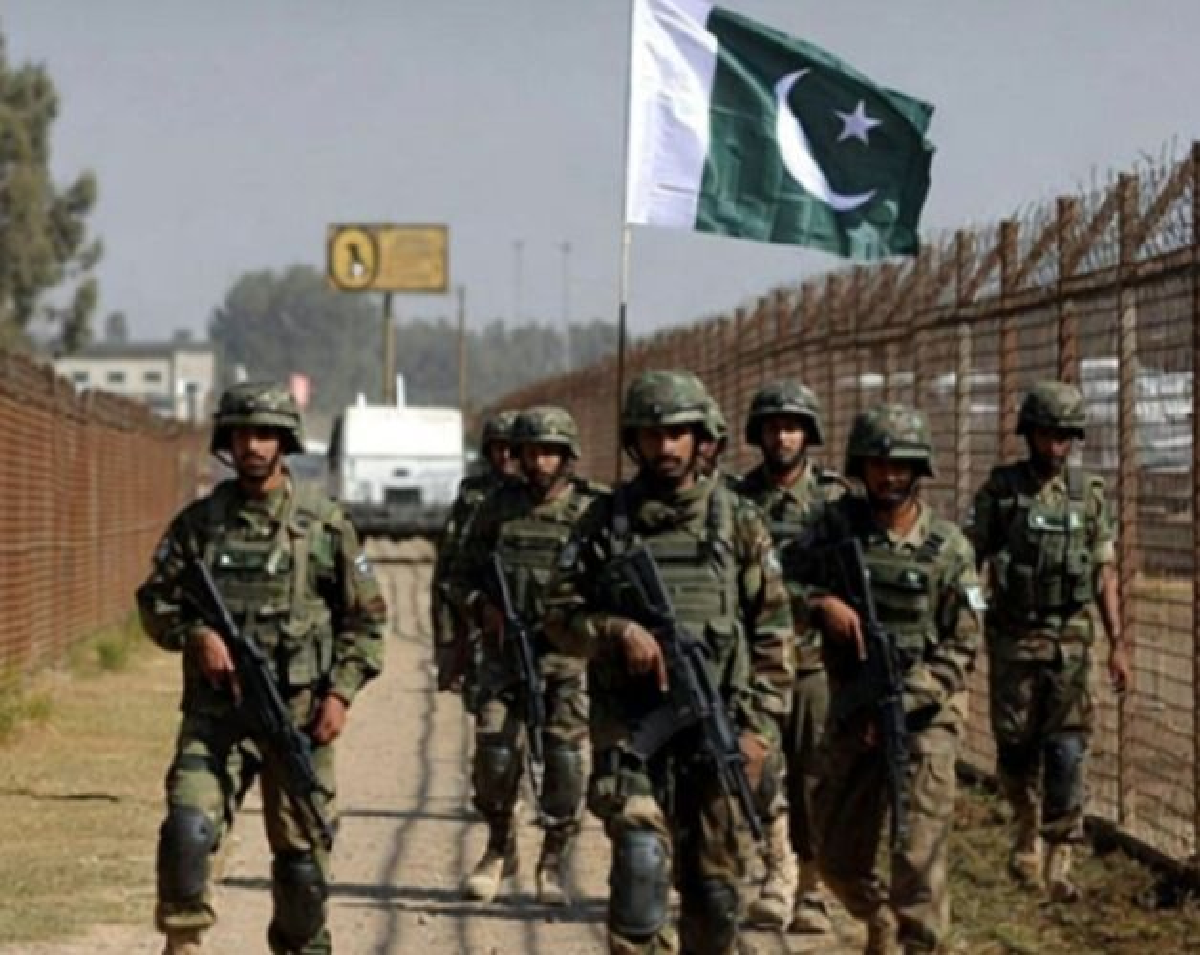
ISLAMABAD: Pakistan’s Defence Minister Khawaja Asif has indicated that
Islamabad may be compelled to undertake military or security measures
against militant sanctuaries located inside Afghanistan prior to the
commencement of Ramadan if the current security situation remains
unchanged. In a candid interview with ARY News programme KHABAR, the
minister underscored that prolonged inaction carries severe economic and
human costs for Pakistan and warned that third parties facilitating
dialogue are fully conscious of the consequences should negotiations fail
to yield results.
The statement reflects mounting frustration within Pakistan’s security
establishment regarding persistent terrorist attacks, many of which
Islamabad attributes to militants operating from Afghan soil. Official data
compiled by the Pakistan Institute for Peace Studies and other independent
monitors show that more than 70 percent of major terrorist incidents
reported in Khyber Pakhtunkhwa and Balochistan during the past eighteen
months involved actors who crossed from or returned to bases inside
Afghanistan. This persistent pattern has significantly eroded confidence in
diplomatic assurances provided by Kabul.
Khawaja Asif explicitly cautioned that passive observation by Afghan
authorities would render them complicit in the resulting instability. He
reiterated Pakistan’s long-standing position that dialogue remains the
preferred channel for resolving differences; however, he firmly rejected
any arrangement in which negotiations are immediately followed by fresh
attacks on Pakistani territory. The minister’s remarks suggest that
strategic patience is nearing its limit and that decision-makers are
actively weighing the costs and benefits of kinetic responses.
Despite the hardening tone, communication channels with Afghanistan’s
interim Taliban administration have not been severed. According to the
defence minister, discussions continue at various levels, although no
concrete or formal proposal for the relocation of militant leadership
currently exists on the table. He disclosed that Afghan interlocutors have
candidly admitted their inability to furnish written guarantees concerning
the containment of anti-Pakistan groups, restricting their commitments to
verbal pledges that lack enforceability.
The absence of verifiable guarantees significantly complicates bilateral
confidence-building efforts. Successive Pakistani governments have
repeatedly requested actionable steps—such as verifiable dismantling of
training camps, arrest of designated commanders, and restrictions on
cross-border movement—yet measurable progress remains limited. Independent
assessments published by regional security think-tanks indicate that at
least four major proscribed organisations maintain operational footprints
inside Afghanistan, a reality repeatedly acknowledged in closed-door
briefings to parliamentary committees.
Khawaja Asif also floated the concept of collective regional responsibility
as a potential pathway toward de-escalation. He suggested that if
neighbouring states—including Iran, China, Central Asian republics and
possibly India—jointly committed to guaranteeing non-interference and peace
inside Afghanistan, a framework for sustained economic support and
reconstruction assistance could become viable. Such an arrangement, he
implied, would reduce the security burden currently borne
disproportionately by Pakistan and might create incentives for more
constructive behaviour from Kabul.
Security analysts note that any pre-Ramadan operation, should it
materialise, would likely be calibrated to minimise civilian casualties and
avoid broad escalation while still delivering a strategic message.
Historical precedents, including Operation Zarb-e-Azb in 2014 and
subsequent border fencing and coercive diplomacy measures, demonstrate
Pakistan’s capacity to combine kinetic action with diplomatic signalling.
Nevertheless, cross-border operations carry inherent risks of retaliatory
strikes, refugee flows and diplomatic fallout, particularly at a time when
Pakistan is grappling with severe economic constraints.
The minister’s remarks have already drawn attention in regional capitals
and among international stakeholders who continue to monitor the
Pakistan-Afghanistan relationship closely. With Ramadan expected to begin
in late February or early March depending on moon-sighting, the coming
weeks will be critical in determining whether renewed diplomatic engagement
produces tangible results or whether security imperatives drive unilateral
decisions. The coming period will therefore be decisive in shaping the
trajectory of bilateral ties and the broader stability of the region.
Source: arynews.tv