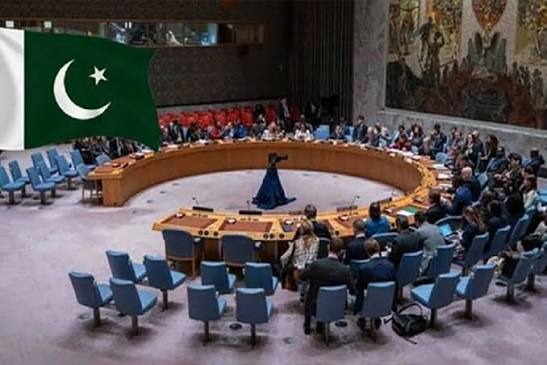
ISLAMABAD: A recent United Nations Security Council report has underscored the escalating activities of Tehrik-i-Taliban Pakistan (TTP), identifying it as one of the most prominent terrorist organizations based in Afghanistan. The document details how the group has benefited from a permissive environment provided by the Afghan de facto authorities, enabling sophisticated cross-border attacks against Pakistani targets. This has resulted in heightened military confrontations along the border, significant casualties, and economic disruptions from closed crossings. The report emphasizes that TTP operations have grown more lethal, involving larger contingents of fighters and advanced weaponry, marking a sharp departure from earlier patterns.
The UN monitoring team noted a marked increase in TTP assaults launched from Afghan territory during the latter half of 2025. These attacks primarily targeted Pakistani security forces and state infrastructure, often employing complex tactics such as coordinated assaults and the use of modern equipment including assault rifles, night-vision devices, thermal imaging, sniper systems, and drones. Such sophistication has amplified regional instability, with member states expressing alarm over the potential for TTP to expand its scope. The report highlights that this surge has directly contributed to open hostilities between Pakistan and Afghanistan, exacerbating bilateral relations to critical levels.
A particularly alarming incident cited in the report was the suicide bombing outside an Islamabad district courthouse on November 11, 2025, which claimed 12 lives and injured over two dozen others. Claimed by Jamaat-ul-Ahrar, a TTP splinter faction, the attack represented the first major strike in the Pakistani capital in several years. It deviated from the group's usual focus on border regions and security installations, signaling an intent to target urban and symbolic sites. Pakistani officials described the blast as a failure to penetrate the court premises, with the bomber detonating near a police vehicle, underscoring evolving tactics amid resurgent militant capabilities.
Concerns have mounted among UN member states regarding potential deepening cooperation between TTP and Al Qaeda-aligned groups. The report indicates that such alliances could enable attacks on a wider array of targets, potentially elevating TTP from a regional actor to one capable of extra-regional operations. Al Qaeda's continued presence in Afghanistan, acting as a service provider for training and advisory support to affiliates like TTP, has fueled these apprehensions. The permissive environment under the Taliban has allowed these networks to flourish, raising fears of transnational threats emerging from the region.
Despite these challenges, the UN document acknowledged significant setbacks inflicted on TTP through Pakistani counterterrorism efforts. A key operational blow came with the death of Mufti Muzahim, the group's deputy emir also known as Qari Amjad, during a Pakistani military operation in Bajaur district near the Afghan border in October 2025. This elimination, along with other actions, disrupted TTP leadership and logistics. The report described these measures as a major hindrance to the group's momentum, though it cautioned that ongoing support from Afghan soil continues to offset such losses and sustain operational capacity.
Pakistan's military and intelligence operations have targeted TTP hideouts and commanders, contributing to a broader strategy against cross-border militancy. These efforts have included precision strikes and ground engagements, aimed at neutralizing high-value targets and degrading infrastructure. While successes like the killing of senior figures have been notable, the report suggests that without addressing sanctuaries in Afghanistan, the threat persists. The UN analysis reflects consistent Pakistani assertions about the role of Afghan territory in facilitating TTP resurgence since the Taliban takeover in 2021.
The broader implications extend to regional stability, with TTP activities straining Pakistan-Afghanistan ties and prompting military exchanges. Border closures and clashes have economic repercussions, affecting trade and civilian movement. The report's findings align with Pakistan's long-standing position that unchecked militant presence in Afghanistan poses direct security risks. International observers note that while the Taliban regime has brought some internal stability to Afghanistan, it has failed to curb foreign terrorist fighters, allowing groups like TTP to exploit the situation for external operations.
In conclusion, the UN Security Council report serves as a stark reminder of the persistent challenge posed by TTP. Its evolution toward greater sophistication and potential alliances underscores the need for coordinated regional and international responses. Pakistan's countermeasures have achieved tactical gains, yet the persistence of safe havens remains a core issue. Addressing this requires diplomatic pressure alongside sustained security measures to prevent the group from realizing its broader threat potential.